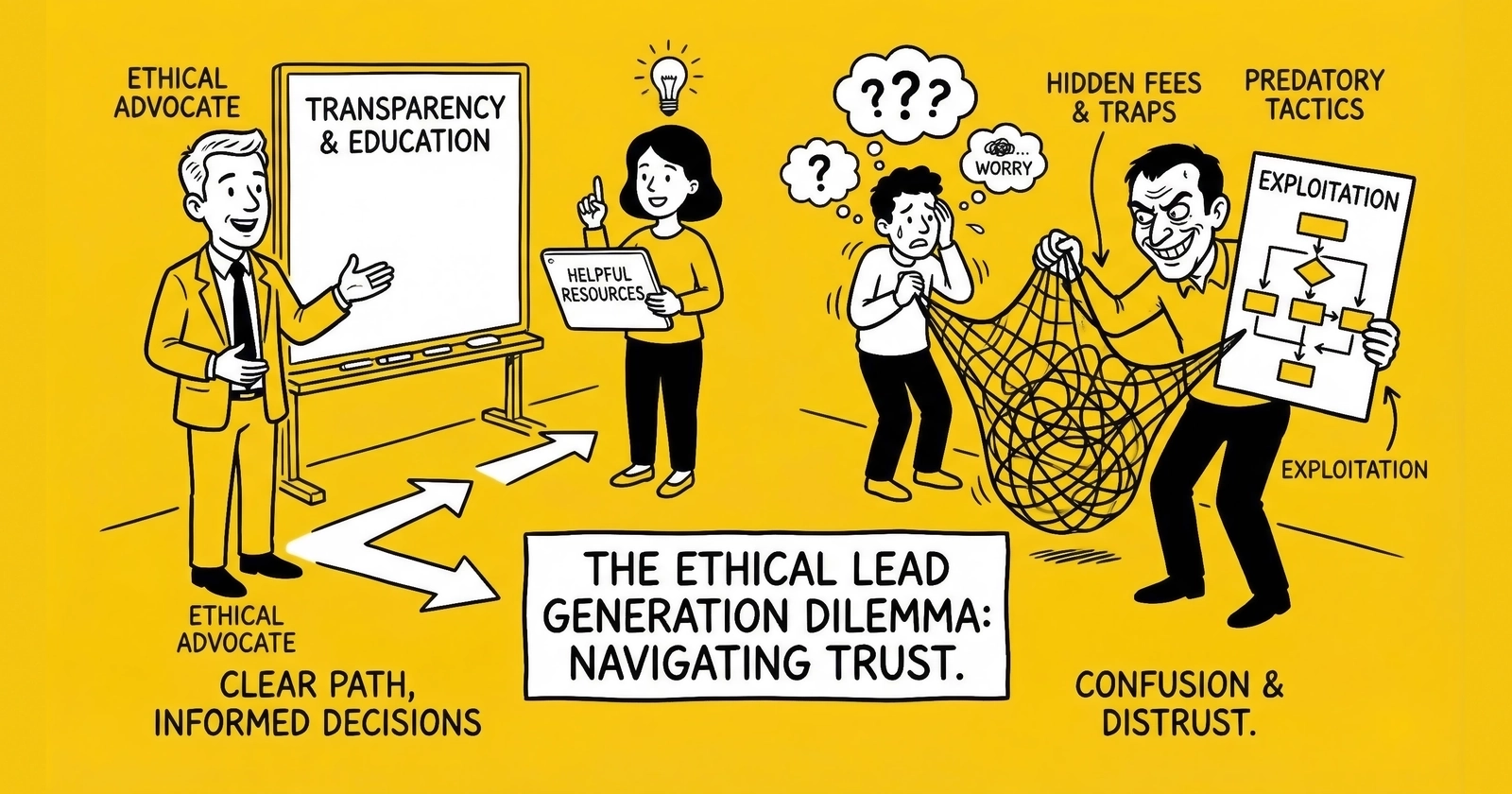
How to build a sustainable bankruptcy lead operation in a market projected to exceed 550,000 filings in 2025, navigate ethical constraints around distressed consumers, leverage trigger data responsibly, and maintain compliance with state bar advertising rules.
A consumer misses their third credit card payment in six months. Within days, their credit file triggers alerts that flow through data aggregators to lenders, debt relief companies, and – if your operation is positioned correctly – bankruptcy attorneys seeking clients.
This is the bankruptcy lead market: a vertical defined by economic cycles, ethical sensitivity, and the uncomfortable reality that you are marketing to people at their financial lowest point. In 2024, 517,308 bankruptcy cases were filed in the United States – a 14.2% increase from 2023 – with roughly 494,000 of those being consumer filings under Chapter 7 and Chapter 13. The economic pressures that drove that increase (inflation, rising borrowing costs, expired pandemic relief) show no signs of abating.
Bankruptcy lead generation occupies a unique position in the lead economy. The consumers are distressed. The attorneys are constrained by state bar advertising rules. The data sources include credit bureau triggers that raise privacy concerns. And the ethical questions are unavoidable: is it appropriate to target people in financial crisis with marketing messages?
The answer depends entirely on how you operate. Done poorly, bankruptcy lead generation exploits vulnerable consumers for profit. Done correctly, it connects people in genuine need with legal professionals who can provide real solutions – discharge of debts, protection from creditors, a path to financial recovery.
This guide covers the complete landscape: market economics, ethical frameworks, trigger data mechanics, compliance requirements, and operational best practices for building a bankruptcy lead business that serves both profitability and purpose. For foundational context on the industry, see our guide on what is lead generation.
The Bankruptcy Lead Market in 2024-2025
Understanding current market conditions enables realistic planning and opportunity assessment. The bankruptcy lead market tracks economic cycles with predictable patterns, though individual year dynamics vary based on specific economic drivers.
Filing Trends and Volume
The 2024 bankruptcy filing data reveals a market recovering from pandemic-era lows:
| Year | Total Filings | YoY Change | Key Drivers |
|---|---|---|---|
| 2019 | 752,160 | -1.5% | Pre-pandemic baseline |
| 2020 | 544,463 | -27.6% | Pandemic relief suppression |
| 2021 | 413,616 | -24.0% | Continued stimulus effects |
| 2022 | 387,721 | -6.3% | Relief programs winding down |
| 2023 | 452,990 | +16.8% | Economic pressures returning |
| 2024 | 517,308 | +14.2% | Inflation, rate increases |
The 2024 filing breakdown by chapter:
| Chapter | Total Filings | Consumer | Business |
|---|---|---|---|
| Chapter 7 | 310,631 | 298,049 | 12,582 |
| Chapter 13 | 197,244 | 195,724 | 1,520 |
| Chapter 11 | 8,884 | - | 8,884 |
| Other | 549 | - | - |
Consumer Chapter 7 filings (298,049) represent the primary lead opportunity, followed by Chapter 13 filings (195,724). These 493,773 consumer bankruptcy filings translate to roughly 500,000 consumers annually seeking bankruptcy attorney representation.
Geographic Concentration
Bankruptcy filings concentrate in specific states, creating geographic targeting opportunities:
| Rank | State | 2024 Filings | % of National |
|---|---|---|---|
| 1 | California | 47,621 | 9.2% |
| 2 | Florida | 37,156 | 7.2% |
| 3 | Texas | 31,520 | 6.1% |
| 4 | Georgia | 28,383 | 5.5% |
| 5 | Illinois | 25,997 | 5.0% |
These five states account for 33% of all U.S. bankruptcy filings, making them primary targets for bankruptcy lead operations. However, competition is correspondingly intense in these markets.
Secondary opportunity markets include Ohio, Tennessee, Alabama, and Michigan – states with above-average filing rates per capita but less sophisticated lead generation competition.
CPL Benchmarks by Lead Type
Bankruptcy lead pricing reflects case economics and lead quality:
| Lead Type | CPL Range | Characteristics |
|---|---|---|
| Shared leads | $25-$75 | Sold to 2-4 attorneys |
| Exclusive web leads | $75-$200 | Single attorney, form submission |
| Phone-verified exclusive | $150-$300 | Spoke with consumer, verified intent |
| Live transfer | $200-$400 | Real-time phone connection |
| Signed retainer | $400-$800+ | Full intake, signed engagement |
Why Bankruptcy CPLs Trail Personal Injury
The economics differ fundamentally from high-value legal verticals. Bankruptcy attorneys typically charge flat fees of $1,500-$3,500 for Chapter 7 cases and $3,500-$6,000 for Chapter 13 cases. Unlike personal injury attorneys working on 33% contingency of five-figure settlements, bankruptcy attorneys collect modest flat fees from financially distressed clients. This caps acceptable lead acquisition costs. For comparison, see our personal injury lead generation guide.
A bankruptcy attorney paying $150 per exclusive lead who converts 20% at a $2,500 average fee generates $2,500 revenue on $750 in lead costs. The math works, but there is no six-figure case value subsidizing premium CPLs.
Understanding Bankruptcy Consumer Psychology
Effective bankruptcy lead generation requires understanding the psychological state of your target consumer. These are not casual shoppers evaluating options. They are people in crisis, often experiencing shame, fear, and overwhelm.
The Distressed Consumer Mindset
Consumers considering bankruptcy typically share psychological characteristics that influence messaging and conversion.
Shame and Stigma
Despite bankruptcy’s legal legitimacy as debt relief, consumers often feel personal failure. Messaging that normalizes bankruptcy (“You’re not alone – over 500,000 Americans file annually”) outperforms messaging that emphasizes the dire situation.
Decision Paralysis
Financial distress creates cognitive overload. Consumers may research bankruptcy for months before taking action. Your lead capture must reduce friction, not add complexity.
Fear of Consequences
Consumers worry about losing homes, cars, retirement accounts. Messaging that addresses protected assets and exemptions converts better than fear-based messaging about creditor actions.
Creditor Fatigue
Many bankruptcy filers have endured months or years of collection calls, lawsuits, and garnishment threats. They seek relief from harassment as much as debt discharge.
Intent Signals That Indicate Readiness
Not all consumers researching bankruptcy are ready to hire an attorney. Qualification should identify where each consumer falls on the intent spectrum.
High-intent consumers search for “bankruptcy attorney near me” or “file bankruptcy [city],” ask questions about Chapter 7 vs. Chapter 13 qualification, inquire about wage garnishment or foreclosure timing, mention imminent lawsuit or court dates, or have already received creditor lawsuit papers. These consumers are ready to act and convert at the highest rates.
Lower-intent consumers pursue general “how to get out of debt” searches, credit score improvement queries, or debt consolidation comparisons. Their “is bankruptcy right for me” questions signal information-seeking rather than immediate purchase intent. This traffic can be nurtured but requires longer timelines to monetization.
Adjust your traffic strategy accordingly. High-intent keywords cost more but convert at higher rates.
Timing in the Decision Journey
The typical bankruptcy decision journey spans 3-18 months across four distinct stages.
During the denial stage (typically 3-6 months), the consumer ignores mounting debt and believes the situation will improve. They are not receptive to bankruptcy messaging.
The crisis recognition stage (1-3 months) begins when a major event triggers awareness – garnishment, lawsuit, foreclosure notice, utility shutoff. The consumer begins researching options and becomes reachable through targeted marketing.
Active consideration (2-4 weeks) represents the highest conversion potential. The consumer researches bankruptcy specifically, compares attorneys, and evaluates chapter options.
By the decision and action stage (1-2 weeks), the consumer has selected an attorney, begun document gathering, and filed their petition. The lead opportunity has largely passed.
Your lead generation should target the crisis recognition and active consideration stages. Trigger data (discussed below) often identifies consumers in crisis recognition before they begin active search behavior.
Trigger Data: The Ethical Tightrope
Trigger data – credit bureau alerts triggered by specific consumer actions – represents both the most powerful targeting mechanism and the most ethically sensitive aspect of bankruptcy lead generation. Understanding how triggers work, their legal status, and responsible use practices is essential.
How Credit Triggers Work
Credit bureaus (Experian, Equifax, TransUnion) monitor consumer credit files for specific events and sell alerts to marketers with permissible purposes under the Fair Credit Reporting Act (FCRA).
Common bankruptcy-relevant triggers include:
| Trigger Type | What It Indicates | Marketing Use |
|---|---|---|
| Credit inquiry | Consumer applied for new credit | Indicates active borrowing need |
| Delinquency | Payment 30, 60, 90+ days late | Financial distress signal |
| Collection placement | Account sent to collections | Active debt problem |
| Judgment | Court judgment entered | Legal action already occurring |
| High utilization | Credit card balances near limits | Debt stress |
| Address change | Consumer moved | May indicate instability |
When a trigger fires, the consumer’s information (name, address, phone, partial credit data) flows to marketers who have purchased trigger lists with specific criteria.
FCRA Permissible Purpose Requirements
The Fair Credit Reporting Act restricts who can access consumer credit data and for what purposes. Bankruptcy lead generators must understand these constraints.
Section 604(c) establishes permissible purposes for prescreened offers. A firm offer of credit or insurance requires the marketer to extend an actual offer that the consumer can accept – general marketing does not qualify. Consumer-initiated transactions cover situations where the consumer requested the communication or applied for credit with the entity. Employment purposes allow access with consumer consent for employment decisions. Legitimate business need applies to transactions initiated by the consumer.
The Legal Challenge for Bankruptcy Leads
Bankruptcy attorneys are not extending offers of credit or insurance. They are marketing legal services. Using credit trigger data to target consumers for attorney marketing exists in a gray area that has drawn regulatory scrutiny.
Most bankruptcy lead generators avoid direct trigger list purchases for attorney marketing. Instead, they use search and display advertising targeting financial distress keywords, partner with debt relief companies who have FCRA-compliant access, target demographics and behavioral signals rather than credit triggers specifically, or work with data providers who aggregate public records (judgments, liens) rather than credit bureau data. Maintaining proper consent documentation with tools like TrustedForm and Jornaya is essential for compliance.
Ethical Considerations Beyond Legal Compliance
Legal permissibility is a floor, not a ceiling. Ethical bankruptcy lead generation considers impacts beyond regulatory requirements.
Transparency matters because consumers who understand how they were targeted respond better than those who feel surveilled. Marketing that feels intrusive damages brand trust and conversion rates.
Timing sensitivity requires careful judgment. Contacting consumers immediately after a credit trigger can feel predatory. Some operators impose waiting periods before outreach.
Message framing shapes consumer perception. Does your messaging exploit fear or provide genuine information? “Creditors coming for everything you own” is legal but ethically questionable compared to educational content about debt relief options.
Service quality implicates the entire value chain. Are you connecting consumers with competent attorneys who will serve their interests? Lead generators bear some responsibility for buyer quality.
Opt-out respect extends beyond CAN-SPAM requirements. Ethical operators maintain robust suppression processes that honor consumer preferences to stop receiving communications.
Building an Ethical Framework
Document your ethical guidelines in writing and train your team on five core principles. Target behavior, not vulnerability – reach consumers actively seeking bankruptcy information, not consumers who simply have bad credit. Provide value in every communication, ensuring marketing messages include genuine information about bankruptcy options rather than just calls-to-action. Qualify honestly without promising outcomes, since bankruptcy qualification depends on means testing and individual circumstances. Vet your buyers by working with attorneys who have legitimate practices, proper licensing, and good standing with state bars. Finally, measure impact beyond conversions by tracking consumer outcomes to understand whether the attorneys you send leads to are actually helping people.
Compliance Framework for Bankruptcy Lead Generation
Bankruptcy lead generation operates under multiple regulatory frameworks: state bar advertising rules, FCRA restrictions, TCPA consent requirements, and FTC unfair practices prohibitions. Non-compliance creates liability exposure that can destroy a lead generation business.
State Bar Attorney Advertising Rules
Every state regulates attorney advertising through bar rules derived from ABA Model Rules 7.1 through 7.5. Bankruptcy lead generators must understand these rules because they often apply to marketing conducted on behalf of attorneys.
Rule 7.1 - Truthful Communications
All communications about legal services must be truthful and not misleading. This prohibits guaranteeing outcomes (“We will eliminate your debt”), misrepresenting attorney qualifications or experience, creating unjustified expectations about results, and comparing services to other attorneys without factual basis.
Rule 7.2 - Advertising
Attorneys may advertise through public media, including digital advertising. Lead generators operate within this framework. Requirements typically include identification of the responsible attorney, office address disclosure, “ADVERTISEMENT” labeling in some states, and retention of advertising copies for 2-3 years.
Rule 7.3 - Solicitation
The advertising-solicitation distinction is critical. Advertising (permitted) reaches the general public. Solicitation (generally prohibited) targets specific individuals known to need legal services.
Using judgment records to identify and contact people who lost lawsuits approaches prohibited solicitation in many jurisdictions. Purchasing lists of people who inquired about debt relief depends on how lists were compiled and how contact is initiated. Cold-calling consumers identified through credit triggers likely constitutes prohibited solicitation in most states.
State variation creates compliance complexity. California requires “ADVERTISEMENT” labeling with moderate enforcement. Texas imposes strict disclosure requirements plus criminal barratry statutes with high enforcement activity. Florida mandates 30-day waiting periods for some solicitations with high enforcement. New York brings DFS oversight on financial services marketing with high enforcement. Georgia combines high filing volume with an active bar association and moderate enforcement.
TCPA Compliance for Bankruptcy Leads
The Telephone Consumer Protection Act (TCPA) applies to bankruptcy lead generation with the same requirements as other verticals.
Prior Express Written Consent (PEWC) is required for autodialed calls to cell phones, prerecorded voice messages to cell phones, and text messages to any phone.
Though the FCC’s one-to-one consent rule was vacated by the Eleventh Circuit in January 2025, many sophisticated attorney buyers require consent specific to the entity that will contact the consumer. Blanket consent to “marketing partners” faces increasing buyer rejection. Bankruptcy lead generators should either obtain consent naming specific attorney buyers or use manual dialing processes that do not trigger ATDS requirements.
Consent documentation requires clear disclosure of who will call, consumer affirmative action (checkbox, signature, button click), timestamp and IP address, the advertising language presented at consent, and retention for the 4-year TCPA statute of limitations period.
Third-party consent certification through TrustedForm, Jornaya, or equivalent services provides defensible proof that consent was obtained properly. Given TCPA litigation exposure of $500-$1,500 per violation, consent certification is not optional for serious operators.
FTC and State Consumer Protection
The FTC Act Section 5 prohibits unfair or deceptive practices. Applied to bankruptcy lead generation, deceptive practices include implying attorney affiliation where none exists, guaranteeing debt discharge, misrepresenting costs or timelines, and failing to disclose material terms. Unfair practices include pressuring distressed consumers with aggressive tactics, sharing consumer data without disclosure, and exploiting emotional vulnerability.
State Attorneys General can pursue similar actions under state consumer protection statutes, often with stronger remedies than federal law.
Creating a Compliance Program
A documented compliance program requires five components working together.
The advertising review process ensures all creative is reviewed before launch, state-specific requirements are checked, required disclosures are verified, and archives are maintained for the retention period.
Consent management captures TCPA consent for all leads, implements one-to-one consent for named buyers, integrates certification services, and retains consent records with leads.
Vendor agreements require attorney buyers to contractually commit to compliance, include indemnification clauses for buyer violations, and establish lead return processes for compliance failures.
The training program ensures staff understand bar advertising rules, the sales team knows TCPA requirements, and escalation processes exist for compliance questions.
Audit procedures include regular review of advertising materials, consent process verification, buyer complaint tracking, and corrective action documentation.
Traffic Acquisition Strategies
Bankruptcy lead generation traffic comes from multiple channels with different economics, intent levels, and compliance considerations. Diversification across channels builds sustainable operations.
Paid Search (Google Ads)
Paid search delivers the highest-intent traffic in bankruptcy lead generation. Consumers actively searching for bankruptcy attorneys demonstrate clear purchase intent.
| Intent Level | Example Keywords | Expected CPC | Conversion Rate |
|---|---|---|---|
| High | ”bankruptcy attorney [city]“ | $15-$35 | 8-15% |
| High | ”file chapter 7 bankruptcy” | $12-$30 | 6-12% |
| Medium | ”chapter 7 vs chapter 13” | $8-$20 | 4-8% |
| Medium | ”bankruptcy lawyer cost” | $10-$25 | 5-10% |
| Lower | ”how to get rid of debt” | $5-$15 | 2-5% |
| Lower | ”will bankruptcy stop garnishment” | $6-$18 | 3-6% |
Geographic Targeting Optimization
Focus budget on high-filing states and metros. A click in California (high filings, high attorney demand) typically delivers better ROI than identical spend in low-filing markets despite higher CPCs.
Ad Copy Compliance
Include required disclosures for your target states, avoid outcome guarantees (“Get debt free”), focus on process (“Free consultation,” “Understand your options”), and include qualifying language (“See if you qualify”).
Facebook and Meta Advertising
Social advertising reaches consumers earlier in the decision journey – often in the crisis recognition stage before active search begins.
Targeting Approaches
Interest-based targeting reaches consumers interested in financial stress, debt relief, or credit repair topics. Behavioral targeting identifies those who recently moved or experienced life events indicating financial change. Lookalike audiences based on converted leads (privacy-compliant) extend reach to similar consumers. Custom audiences built from email lists of previous inquiries (with consent) enable re-engagement.
Creative Considerations
Facebook’s advertising policies restrict financial services advertising. Bankruptcy-related ads face additional scrutiny. Avoid “before and after” debt comparisons, skip images of distressed people or threatening creditors, focus on solutions and relief rather than problem amplification, and comply with Facebook’s Housing, Employment, and Credit (HEC) special ad category requirements.
Expected Economics
| Metric | Benchmark Range |
|---|---|
| CPM | $15-$40 |
| CTR | 0.8-2.0% |
| CPC | $1.50-$4.00 |
| Landing page conversion | 5-12% |
| Effective CPL | $20-$60 |
Social leads convert at lower rates to signed cases than search leads due to earlier-stage intent. Budget accordingly.
SEO and Content Marketing
Organic traffic provides the highest margins in bankruptcy lead generation once established. The investment is time and content creation rather than per-click costs.
Content Strategy for Bankruptcy SEO
Cornerstone content targets high-volume keywords: “How to file bankruptcy,” “Chapter 7 vs Chapter 13 bankruptcy,” “Bankruptcy exemptions by state,” and “How long does bankruptcy take.” These comprehensive guides establish authority and capture broad search traffic.
Long-tail content targets lower volume but higher intent queries: “Will bankruptcy stop wage garnishment,” “Can I keep my car in Chapter 7 bankruptcy,” “Bankruptcy means test calculator [state],” and “How to file bankruptcy without a lawyer.” These specific questions indicate consumers further along in their decision journey.
Local SEO supports geographic targeting through city-specific pages optimized for “[city] bankruptcy attorney,” Google Business Profile optimization (if operating local sites), and local directory citations.
Content compliance requires avoiding practicing law (do not advise on specific situations), including disclaimers about information being general rather than legal advice, and recommending consulting attorneys for individual circumstances.
Native and Display Advertising
Native advertising reaches consumers on publisher sites with content-style placements. Display reaches consumers through programmatic networks.
Native Advertising Approach
Create content pieces (“5 Signs You Should Consider Bankruptcy”) distributed through Taboola, Outbrain, or similar platforms. Traffic lands on educational content with lead capture. Expect CPCs of $0.30-$1.00, landing page conversion of 3-8%, and lead quality lower than search requiring strong qualification.
Display Advertising (Programmatic)
Target consumers based on behavioral signals (visited debt relief sites, showed financial distress indicators) through programmatic display. Be aware that behavioral targeting based on credit-related behaviors may implicate FCRA restrictions depending on data source. Verify data provider compliance claims before proceeding.
Lead Qualification and Intake
Lead qualification determines profitability in bankruptcy lead generation. Bankruptcy attorneys have specific case criteria, and leads that do not qualify create returns, damaged relationships, and wasted marketing spend.
Essential Qualification Questions
Basic Eligibility
Confirm intent by asking whether they are considering filing bankruptcy. Identify debt types including credit cards, medical, mortgage, and taxes. Ask whether they have filed bankruptcy before and when, since Chapter 7 has an 8-year refiling limitation. Verify they do not currently have an attorney for bankruptcy – already represented leads are disqualified.
Chapter 7 Means Test Indicators
Household income determines qualification – below state median typically qualifies. Household size affects the median calculation. Current employment status determines income documentation requirements. Significant non-exempt assets (home equity, vehicles, retirement) may affect eligibility.
Chapter 13 Indicators
Regular income is required for Chapter 13. Ask whether they are trying to save a home from foreclosure, since Chapter 13 offers advantages here. Identify debts that cannot be discharged in Chapter 7 (recent taxes, some student loans). Determine whether they are above the means test threshold for Chapter 7.
Urgency Indicators (Premium Pricing)
Scheduled foreclosure sale dates, wage garnishment notices, active lawsuits, and eviction notices all indicate urgency that commands premium pricing.
Building Your Qualification Process
Multi-Step Form Qualification
Structure your form in progressive steps. Step 1 captures contact information and confirms intent. Step 2 identifies debt types and amount ranges. Step 3 collects income and household information. Step 4 assesses timing and urgency indicators. Step 5 handles submission with consent capture. Each step filters lower-quality leads while capturing increasingly valuable qualification data.
Phone Qualification Enhancement
For higher-tier leads (phone-verified or live transfer), phone qualification adds value by verifying information provided on the form, assessing communication quality and seriousness, confirming no current attorney representation, identifying case urgency and complexity, and enabling warm transfer to attorney intake or scheduled callback.
Quality Scoring Model
Assign scores to qualification factors for dynamic pricing and priority routing:
| Factor | Score Range | Weighting |
|---|---|---|
| Debt amount ($50K+) | 10-30 | 20% |
| Urgency (foreclosure, garnishment) | 15-30 | 25% |
| Income vs. median | 10-25 | 20% |
| Intent strength | 5-20 | 20% |
| Contact quality | 5-15 | 15% |
Common Disqualifiers
Screen for factors that create returns. Already represented consumers cannot be solicited by other attorneys. Recent Chapter 7 filers face an 8-year limitation for discharge. Non-bankruptcy debt (student loans mostly, recent taxes, child support) survives bankruptcy. High income without Chapter 13 willingness means over-means-test consumers who do not want a 3-5 year payment plan. Primarily business debts may need Chapter 11 with a different buyer pool. Out of geographic area consumers cannot be served since attorneys need local presence.
Working with Bankruptcy Attorney Buyers
Building sustainable buyer relationships requires understanding attorney economics, capacity constraints, and quality expectations.
Attorney Economics
Typical Chapter 7 Economics
| Component | Range |
|---|---|
| Attorney fee | $1,500-$3,500 |
| Filing fee (paid by client) | $338 |
| Case duration | 3-4 months |
| Attorney time | 5-15 hours |
| Cases per month capacity | 15-40 (solo), 50-200+ (firm) |
Typical Chapter 13 Economics
| Component | Range |
|---|---|
| Attorney fee | $3,500-$6,000 |
| Filing fee (paid by client) | $313 |
| Plan duration | 3-5 years |
| Attorney time | 10-30 hours |
| Fee collection | Paid through plan over 3-5 years |
Chapter 13 fees are higher but collected over 3-5 years. Many bankruptcy attorneys prefer Chapter 7 cases for immediate revenue despite lower per-case fees.
Building Your Buyer Network
Solo Practitioners
Solo practitioners typically handle 15-30 cases monthly with high price sensitivity and moderate quality requirements driven by volume needs. Payment reliability varies, but the personal relationship tends to be responsive. Expect direct communication and flexibility on terms.
Small Bankruptcy Firms (2-5 Attorneys)
Small firms handle 40-100 cases monthly with moderate price sensitivity and higher quality requirements – they track source performance carefully. Payment reliability is generally good. Relationships typically operate at the account manager level with structured feedback processes.
High-Volume Bankruptcy Mills
High-volume operations handle 200+ cases monthly with lower price sensitivity since they focus on efficiency. Quality requirements are strict with detailed specifications. Payment reliability is strong. Relationships operate at the procurement or partnership level with formal agreements and performance metrics.
Buyer Relationship Management
Onboarding New Buyers
Verify bar membership and good standing before any lead delivery. Understand case criteria and geographic coverage thoroughly. Agree on pricing, volume commitments, and return policies upfront. Establish delivery methods (API preferred for speed and reliability, email acceptable for lower volume). Set quality metrics and review cadence to establish accountability.
Ongoing Relationship Maintenance
Conduct weekly or monthly performance reviews covering conversion rates, return rates, and qualitative feedback on lead quality. Track conversion rate by source to identify what works. Monitor return rates for early warning signs. Incorporate feedback into qualification criteria refinement. Optimize volume and pricing based on performance data.
Managing Returns
Typical return policies allow 24-72 hours for invalid contact information, already represented consumers, leads not meeting case criteria, and duplicates already in the buyer’s system.
Track return rates by buyer. Rates above 15-20% indicate qualification problems or buyer-specific criteria you are missing.
Operational Best Practices
Building sustainable bankruptcy lead operations requires systematic approaches to quality, speed, compliance, and financial management.
Speed to Delivery
Bankruptcy consumers contact multiple sources. The first attorney to respond often wins the case.
Delivery Targets
Web leads require sub-5-minute delivery to buyer. Phone-verified leads require immediate warm transfer or 15-minute callback. Live transfers require real-time connection.
Speed Infrastructure
Real-time lead delivery via API enables immediate buyer notification. Automated buyer notification through SMS, email, and CRM push ensures leads reach intake teams instantly. Backup distribution handles non-responsive primary buyers. After-hours routing directs leads to buyers with 24/7 intake capability.
Quality Monitoring
| Metric | Benchmark | Action Threshold |
|---|---|---|
| Contact rate | 65-80% | Below 60% indicates data quality issues |
| Qualification rate | 50-70% | Below 45% indicates targeting problems |
| Conversion to case | 15-30% | Below 12% indicates qualification gaps |
| Return rate | 5-15% | Above 20% requires immediate investigation |
| Buyer satisfaction | 4.0+/5.0 | Below 3.5 risks relationship |
Quality Improvement Cycle
Implement continuous improvement by collecting buyer feedback weekly, analyzing return reasons by source and campaign, adjusting qualification criteria based on patterns, optimizing traffic targeting to improve quality, testing form changes to capture better data, measuring the impact of changes, and repeating the cycle. This systematic approach compounds quality gains over time.
Financial Management
Bankruptcy lead generation has specific cash flow characteristics.
Working Capital Requirements
Traffic spend occurs 14-30 days before lead sale. Buyer payment terms typically run Net 15-30. Total float amounts to 30-60 days of operating expenses that must be funded.
Margin Management
| Cost Component | % of Revenue |
|---|---|
| Traffic acquisition | 45-60% |
| Platform/technology | 5-10% |
| Operations/labor | 10-15% |
| Compliance/legal | 3-5% |
| Returns/chargebacks | 5-10% |
| Net margin | 15-25% |
Scaling Considerations
Buyer capacity limits growth since you cannot deliver more than buyers can absorb. Quality typically declines as volume increases due to diminishing traffic quality at the margins. Geographic expansion requires new buyer relationships in each market. Compliance costs increase with scale as you operate across more jurisdictions with greater regulatory scrutiny.
Frequently Asked Questions
1. What is the average cost per lead for bankruptcy leads?
Bankruptcy lead pricing ranges from $25-$400 depending on lead type and quality tier. Shared leads sold to multiple attorneys cost $25-$75. Exclusive web leads range $75-$200. Phone-verified exclusive leads command $150-$300. Live transfers – real-time phone connections to attorney intake – price at $200-$400. Signed retainer leads, where the lead generator handles full intake and obtains signed engagement letters, range $400-$800 or higher. Geographic market, case urgency indicators, and debt amounts influence pricing within these ranges.
2. Why are bankruptcy CPLs lower than personal injury leads?
The economics differ fundamentally. Personal injury attorneys work on 33-40% contingency fees from settlements that often exceed $50,000-$200,000, generating $15,000-$80,000 per case. This supports lead acquisition costs of $300-$800. Bankruptcy attorneys charge flat fees of $1,500-$3,500 for Chapter 7 and $3,500-$6,000 for Chapter 13, collected from financially distressed clients with limited resources. A bankruptcy attorney cannot pay $500 per lead when the case generates $2,500 in fees. The market clears at CPLs that allow attorneys to maintain viable unit economics – typically meaning lead costs must stay below 15-20% of expected fee revenue.
3. Is it legal to use credit trigger data for bankruptcy lead generation?
The legality depends on how trigger data is used. The Fair Credit Reporting Act (FCRA) permits prescreened offers where the marketer extends a “firm offer of credit or insurance.” Bankruptcy attorney marketing does not qualify as a firm offer – attorneys are selling legal services, not extending credit. Direct use of credit bureau triggers for attorney marketing exists in a legal gray area. Most sophisticated bankruptcy lead generators avoid direct trigger list purchases for attorney marketing. Instead, they use search and display advertising targeting financial distress keywords, partner with debt relief companies who have FCRA-compliant access, or target public record data (judgments, liens) that falls outside FCRA restrictions.
4. What are the ethical considerations for marketing to distressed consumers?
Bankruptcy lead generation requires heightened ethical sensitivity because consumers are in financial crisis. Ethical frameworks include: targeting behavior rather than vulnerability (reach consumers actively seeking bankruptcy information, not simply those with bad credit); providing genuine value in every communication (educational content, not just sales pressure); qualifying honestly without promising outcomes; vetting attorney buyers to ensure they serve client interests; and measuring not just conversions but consumer outcomes. The question to ask: Is your marketing helping people find solutions, or exploiting their desperation? If you cannot answer confidently, revise your approach.
5. How do state bar advertising rules affect bankruptcy lead generation?
State bar rules govern attorney advertising through Rules 7.1-7.5 (based on ABA Model Rules). These rules require truthful communications, prohibit misleading claims, and critically distinguish between advertising (reaching the general public, generally permitted) and solicitation (targeting specific individuals known to need legal services, generally prohibited). Lead generators operating on behalf of attorneys must comply with these rules. Using judgment records to identify and contact specific people who lost lawsuits may constitute prohibited solicitation. Cold-calling consumers identified through credit triggers likely violates solicitation rules. Advertising that targets “people interested in bankruptcy” without identifying specific individuals generally qualifies as permitted advertising.
6. What qualification data should I collect for bankruptcy leads?
Essential qualification data includes: debt types and approximate amounts (credit cards, medical, mortgage); household income and size (for means test assessment); whether the consumer has filed bankruptcy before and when (8-year Chapter 7 limitation); current attorney representation status (represented consumers are disqualified); and urgency indicators (foreclosure dates, garnishment, active lawsuits). Urgency indicators command premium pricing because they indicate immediate need. Income data helps route leads to appropriate chapter types – below-median income typically qualifies for Chapter 7, above-median may require Chapter 13. Avoid practicing law by asking factual questions rather than advising on chapter selection.
7. How quickly should bankruptcy leads be delivered to attorney buyers?
Speed is critical in bankruptcy lead generation. Consumers in financial distress often contact multiple sources simultaneously, and the first attorney to respond frequently wins the case. Target sub-5-minute delivery for web leads, immediate warm transfer or 15-minute callback for phone-verified leads, and real-time connection for live transfers. Build infrastructure supporting this speed: API-based delivery to buyer CRMs, automated notification systems, backup distribution for non-responsive primary buyers, and after-hours routing to buyers with 24/7 intake capability. Leads delivered same-day convert at meaningfully lower rates than leads delivered within minutes.
8. What conversion rates should I expect from bankruptcy leads?
Conversion rates vary by lead type and buyer capability. Benchmark ranges: 65-80% contact rate (leads that answer attorney calls), 50-70% qualification rate (contacted leads meeting case criteria), 15-30% overall lead-to-case conversion (leads that become signed bankruptcy cases). Live transfers typically convert at 20-35% to signed cases due to real-time engagement. Web leads convert at 12-20%. Aged leads (24+ hours) convert at 5-12%. Track conversion by source to identify top performers and eliminate underperforming traffic sources. Buyers accumulate this data and shift volume to sources with strong conversion metrics.
9. How do I build relationships with bankruptcy attorney buyers?
Start with 5-10 direct relationships covering your primary geographic markets. Verify bar membership and good standing before delivering leads. Establish clear criteria (case types, geographic coverage, debt minimums, urgency preferences), agree on pricing and return policies, and implement delivery methods (API preferred, email acceptable). Conduct weekly or monthly performance reviews covering conversion rates, return rates, and feedback on lead quality. Maintain backup buyers through case acquisition networks that can absorb overflow volume. Diversification protects against individual buyer capacity constraints or relationship disruptions.
10. What are the biggest compliance risks in bankruptcy lead generation?
Primary compliance risks include: TCPA violations from contacting consumers without proper prior express written consent (with many sophisticated buyers requiring one-to-one consent to specific named entities); state bar solicitation rule violations from targeting specific individuals known to need legal services rather than the general public; FCRA violations from improper use of credit bureau data for marketing purposes; and FTC deceptive practices claims from misleading advertising about bankruptcy outcomes or attorney services. Build a documented compliance program covering advertising review, consent management, vendor agreements with indemnification, staff training, and regular audits. The cost of compliance infrastructure is trivial compared to the cost of regulatory enforcement or TCPA class action defense.
Key Takeaways
-
The bankruptcy lead market is growing. 517,308 filings in 2024 represented 14.2% year-over-year growth, driven by inflation, rising rates, and expired pandemic relief. This trend appears likely to continue into 2025-2026, creating sustained lead generation opportunity.
-
CPLs range from $25 to $400 based on lead type. Shared leads price lowest, live transfers and signed retainers price highest. The economics differ from personal injury because bankruptcy attorneys collect flat fees of $1,500-$6,000 rather than contingency percentages of large settlements.
-
Ethical considerations are unavoidable. You are marketing to people in financial crisis. Build ethical frameworks that target behavior (consumers seeking bankruptcy information) rather than vulnerability (anyone with bad credit), provide genuine value, and vet attorney buyers.
-
Credit trigger data requires careful handling. Direct trigger use for attorney marketing exists in FCRA gray areas. Most sophisticated practitioners use search/social advertising, public records, or debt relief company partnerships rather than direct credit bureau triggers.
-
Compliance spans multiple frameworks. State bar advertising rules (the advertising vs. solicitation distinction), TCPA consent requirements (with many buyers requiring one-to-one consent), FCRA restrictions on credit data use, and FTC deceptive practices prohibitions all apply. Document your compliance program.
-
Qualification determines profitability. Capture debt types and amounts, income information for means test assessment, prior filing history, representation status, and urgency indicators. Strong qualification reduces returns and increases buyer satisfaction.
-
Speed to delivery matters. First-responder advantage applies in bankruptcy as in other verticals. Target sub-5-minute delivery for web leads and real-time connection for transfers.
-
Build diversified buyer relationships. Work with solo practitioners, small firms, and high-volume operations. Diversification protects against capacity constraints and relationship disruptions while enabling geographic expansion.
Conclusion
Bankruptcy lead generation occupies a unique space in the lead economy. The consumers are distressed, the compliance requirements are substantial, and the ethical questions are real. These factors create barriers that limit competition – and opportunity for operators who navigate them thoughtfully.
The market fundamentals are strong. Over 500,000 consumer bankruptcies annually, growing at double-digit rates as pandemic relief fades and economic pressures intensify. Attorney demand for leads is consistent because bankruptcy practices require steady case flow to maintain profitability on relatively modest per-case fees.
Success requires balancing multiple considerations. Traffic acquisition that reaches consumers in decision stages 2 and 3 – when they recognize their crisis and actively seek solutions. Qualification processes that capture the data attorneys need while screening disqualifiers. Compliance programs that address bar rules, TCPA requirements, and FCRA restrictions. Ethical frameworks that ensure your marketing helps rather than exploits.
Those who build sustainable bankruptcy lead businesses will be those who treat distressed consumers with respect, provide genuine value in every interaction, and connect people in crisis with attorneys who can actually help them. The CPLs are lower than personal injury. The ethical stakes are higher. And the opportunity exists for those who approach it correctly.
Build your operations on that foundation.
Sources
- U.S. Courts Bankruptcy Statistics - Official federal court data on annual bankruptcy filings (517,308 in 2024) and chapter distribution
- Fair Credit Reporting Act (15 U.S.C. 1681) - Federal statute governing credit data use and permissible purposes for trigger data
- 47 U.S.C. 227 - TCPA Statute - Federal requirements for telemarketing consent
- ABA Model Rules of Professional Conduct - Foundation for state bar advertising rules (Rules 7.1-7.5) governing attorney marketing
- FTC Act Section 5 - Prohibition on unfair or deceptive practices in consumer marketing
Pricing and compliance information current as of late 2024. State bar rules and FCRA interpretations vary by jurisdiction. This article provides general information and does not constitute legal advice. Consult with attorneys specializing in advertising ethics and consumer financial regulation for jurisdiction-specific guidance.