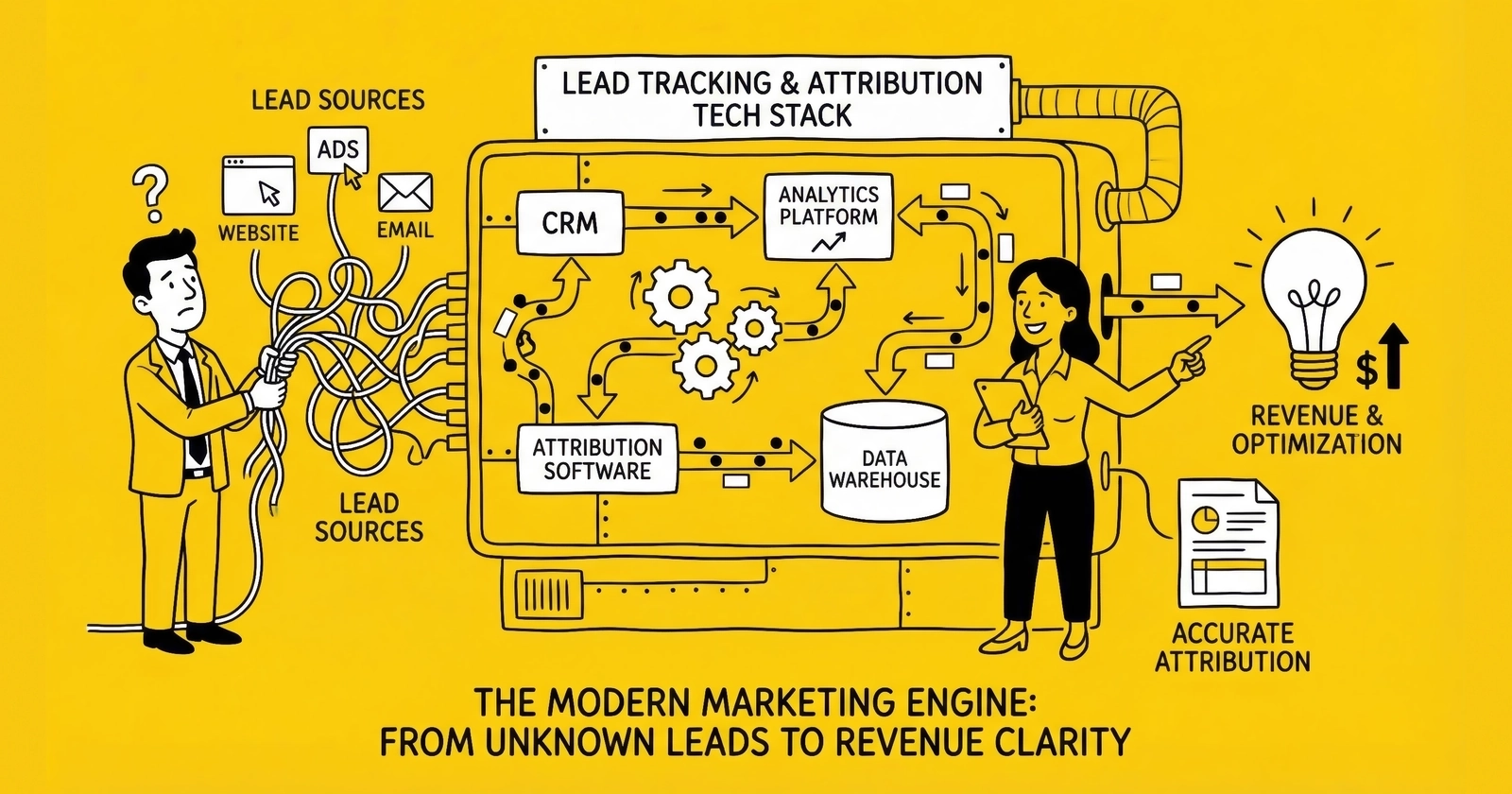
The measurement infrastructure that separates profitable lead generation operations from those flying blind on 40% of their conversion data.
You are losing conversions right now. Not because your campaigns are broken or your landing pages are poorly optimized. You are losing them because browser restrictions, privacy regulations, and consumer behavior have fundamentally changed how digital tracking works – and most lead generation operations have not adapted.
The numbers are stark. Over 31% of internet users globally employ ad blockers – 912 million people, with that figure rising to 42% among users ages 18-34 who represent your highest-intent prospects. Safari’s Intelligent Tracking Prevention limits client-set cookies to seven days, and just 24 hours for traffic arriving with link decoration from domains classified as trackers like Google and Meta. When Apple launched App Tracking Transparency in April 2021, approximately 75% of iOS users opted out when given the choice. iOS users represent roughly 60% of US smartphone market share and skew toward higher income brackets – precisely the demographics most likely to convert on insurance, mortgage, and solar leads.
This is not a technical inconvenience. This is a measurement crisis that costs lead generators millions in misallocated budgets. When 30-40% of your conversions go unmeasured, you are not optimizing campaigns based on reality. You are optimizing based on a distorted subset of data that systematically misrepresents which traffic sources actually perform.
This guide covers everything you need to understand about building a lead tracking and attribution technology stack in 2026. We will examine the core components, implementation approaches, and the strategic decisions that determine whether your measurement infrastructure enables profitable scaling or perpetuates dangerous blind spots.
The Lead Tracking Technology Stack: Core Architecture
A complete lead tracking and attribution stack comprises five functional layers, each serving a distinct purpose in connecting marketing spend to revenue outcomes.
Layer 1: Client-Side Tracking Infrastructure
Traditional tracking begins in the browser. When a consumer lands on your page from a paid ad, JavaScript pixels fire to capture session data, behavioral signals, and conversion events. This layer includes:
- Landing page tracking pixels from advertising platforms (Google, Meta, TikTok, Microsoft)
- Web analytics (Google Analytics 4, Adobe Analytics)
- Session replay and behavioral tools (Hotjar, FullStory, Microsoft Clarity)
- Heatmaps and click tracking for conversion optimization
Client-side tracking remains foundational because it captures real-time behavioral data that server-side approaches cannot replicate. However, browser restrictions now block 30-40% of these signals before they ever reach your analytics platforms.
Layer 2: Server-Side Tracking Infrastructure
Server-side tracking (SST) routes conversion data through your own servers before forwarding it to ad platforms, bypassing the browser restrictions that cause signal loss. This layer includes:
- Google Tag Manager Server-Side containers running on Google Cloud Platform, AWS, or specialized hosting
- Platform-specific conversion APIs (Google Enhanced Conversions, Meta Conversions API, TikTok Events API)
- Custom server-side implementations built directly into lead management platforms
- Click ID persistence mechanisms that store identifiers in first-party cookies and hidden form fields
Businesses implementing server-side tracking report 20-40% more tracked conversions, 18-35% lower customer acquisition costs, and campaigns that finally optimize toward reality rather than whatever fraction of conversions survive browser restrictions.
Layer 3: Consent and Compliance Documentation
Before a lead can be tracked, sold, or contacted, consent must be captured and documented. This layer protects against regulatory exposure while providing the audit trail buyers increasingly require:
- Consent certification services (TrustedForm, Jornaya LeadiD, Jornaya TCPA Guardian)
- Consent management platforms for multi-jurisdictional compliance
- Session replay storage for litigation defense
- Cookie consent mechanisms compliant with CCPA, GDPR, and state regulations
TrustedForm generates a certificate URL for each lead, capturing complete session replay of the consumer’s interaction with your form – exactly what disclosure language was displayed, whether consent checkboxes were actively checked versus pre-filled, and visual proof of the entire form completion process. This documentation has become essential both for compliance defense and for buyer acceptance.
Layer 4: Lead Distribution and Attribution Core
The central nervous system of your operation connects acquisition to distribution while maintaining attribution across the complete customer journey:
- Lead distribution platforms (boberdoo, LeadsPedia, LeadExec, Lead Prosper)
- Lead flow middleware (LeadConduit by ActiveProspect)
- Attribution tracking connecting click IDs to leads to downstream conversions
- Multi-buyer routing with real-time matching and pricing
This layer must capture and persist the click identifiers (gclid, fbclid, ttclid, msclkid) that enable attribution. When a lead sells or converts downstream – often days or weeks after initial capture – this infrastructure fires conversion events back to the original advertising platforms with the preserved click IDs.
Layer 5: Analytics and Reporting
The final layer transforms raw data into actionable intelligence:
- Platform-native reporting from distribution systems
- Business intelligence tools (Tableau, Looker, Power BI)
- Custom dashboards aggregating cross-platform performance
- Attribution modeling connecting marketing touchpoints to revenue outcomes
Modern lead distribution platforms offer extensive built-in reporting. boberdoo provides approximately 85 standard reports covering lead flow, profit analysis by source-buyer pair, and payment reconciliation. LeadExec offers customizable pivot reports with real-time dashboards. However, strategic analysis often requires dedicated BI tools that aggregate data across multiple systems.
Server-Side Tracking: The Critical Investment for 2026
Browser restrictions have not just complicated tracking – they have created a measurement crisis that distorts every budget decision you make.
Why Client-Side Tracking Fails
Traditional pixel-based tracking depends on browser cooperation. When a consumer submits a lead form, JavaScript attempts to fire a conversion event to Google, Meta, or other platforms. That request must survive multiple obstacles:
Ad blockers prevent tracking scripts from loading. With 31% of internet users globally employing ad blockers (42% among ages 18-34), a significant portion of your highest-value audience never fires client-side pixels.
Safari’s Intelligent Tracking Prevention (ITP) limits first-party cookies set via JavaScript to 7 days. For traffic arriving with link decoration from classified trackers, that window shrinks to just 24 hours. A Safari user who clicks your Google ad on Monday but returns to convert on Thursday appears as a completely new visitor – breaking attribution entirely.
iOS App Tracking Transparency (ATT) has seen approximately 75% of iOS users opt out of tracking. For advertisers, the rate of installs with an IDFA dropped from 80% to just 27%. When three-quarters of your highest-value mobile audience becomes unmeasurable, your attribution model systematically misrepresents reality.
iOS 26’s Link Tracking Protection now strips click identifiers like gclid and fbclid in Private Browsing, Mail, and Messages. Testing in Safari Technology Preview indicates Apple is preparing to extend this to all browsing – potentially devastating signal into advertising platforms that rely on these parameters.
How Server-Side Tracking Restores Visibility
Server-side tracking restructures data collection to survive browser restrictions. Instead of the browser communicating directly with ad platforms, it sends data to your server first. Your server processes the data and forwards it via API to Google, Meta, or other destinations.
To the browser, this appears as a standard request to your own domain. There is nothing for ad blockers to intercept because the tracking request never goes to a third-party domain from the client side.
First-party cookie advantages: When properly configured with a same-origin subdomain, server-set cookies can extend beyond ITP’s seven-day limitation because the browser treats them as genuinely first-party storage rather than tracking infrastructure.
Direct API connections: Server-to-server API calls bypass every client-side restriction. Ad blockers cannot intercept requests that never leave your server. Browser privacy settings do not affect your internal data collection. ITP restrictions do not apply to server-side infrastructure.
Deterministic matching: Server-side tracking with enhanced conversions enables deterministic matching using hashed email addresses, phone numbers, or other customer identifiers. When a user clicks an ad on mobile but submits a lead form on desktop using the same email address, that email serves as a match key connecting both events.
Implementation Approaches
Google Tag Manager Server-Side provides the most accessible entry point. You deploy a server container on Google Cloud Platform, AWS, or a specialized hosting provider. Google Cloud’s Cloud Run costs approximately $120-300 monthly for production environments. Specialized providers like Stape.io offer hosting starting at $20 per month for up to 500,000 requests, scaling to $100 monthly for 5 million requests.
Platform-Specific APIs allow direct integration without the GTM layer. Meta’s Conversions API, Google’s Enhanced Conversions, TikTok Events API, and LinkedIn Conversions API all support server-side event transmission.
Custom Implementations build server-side tracking directly into your lead management platform. When a form submission processes through your backend, you fire API calls to each relevant ad platform as part of the same transaction. This approach offers maximum control and eliminates additional infrastructure costs.
Attribution Models for Lead Generation
Attribution answers a fundamental question: which marketing activities deserve credit for conversions? The answer determines where your budget flows.
Last-Click Attribution
Last-click attribution assigns 100% credit to the final interaction before conversion. The logic: whatever happened last was the decisive factor.
When it works: Decision processes that are impulse-driven, short sales cycles, budget constraints requiring prioritization of proven closers.
When it fails: Last-click systematically overvalues channels that capture existing demand (brand search, retargeting) while undervaluing channels that create demand (video, social prospecting, display). A consumer who discovers your offer through TikTok, researches on mobile, and converts via branded Google Search gives 100% credit to Google – while TikTok receives nothing for initiating the journey.
For lead generation verticals with considered purchase decisions – solar leads involving 7-12 touchpoints over 2-3 weeks, mortgage leads researched across 30-60 days – last-click attribution is catastrophically wrong. Understanding your lead ROI requires more sophisticated models.
First-Click Attribution
First-click attribution gives 100% credit to the initial marketing interaction that introduced the consumer to your brand. The logic: without that first touch, nothing else would have happened.
When it works: Measuring brand awareness and demand generation, short sales cycles under 7 days, new businesses focused on expanding reach.
When it fails: Customer journeys spanning weeks or months, operations where retargeting and nurture play significant conversion roles, optimization for efficiency rather than reach.
Multi-Touch Attribution
Multi-touch attribution distributes credit across all touchpoints in the customer journey. Distribution methods vary:
Linear attribution splits credit equally across all touches. Five touchpoints means each receives 20%. Simple to understand, but treats a fleeting impression the same as an engaged click.
Time-decay attribution weights recent touchpoints more heavily. The conversion-proximate touch might receive 40% credit, with diminishing weights backward through the journey.
Position-based (U-shaped) attribution emphasizes first and last touches – typically 40% each – with the remaining 20% spread across middle interactions. This honors both introduction and closing while acknowledging the nurture path.
W-shaped attribution adds weight to the lead creation moment, distributing approximately 30% to first touch, 30% to lead creation, 30% to conversion, and 10% across other touchpoints. This works well for longer cycles where the transition from anonymous visitor to identified lead represents a meaningful milestone.
In 2024, over half of brands and agencies reported using multi-touch attribution despite its complexity. The methodology is imperfect, but it provides better understanding of complex journeys than single-touch models.
Data-Driven Attribution
Algorithmic attribution uses machine learning to assign credit based on actual conversion patterns in your data. Rather than applying predetermined rules, these models analyze which touchpoint sequences actually correlate with conversions versus non-conversion.
Google’s data-driven attribution analyzes conversion paths to identify which interactions most influence outcomes. Requirements include sufficient conversion volume (typically 600+ monthly conversions), consistent tracking infrastructure, and historical data spanning multiple months.
When it works, algorithmic attribution reveals counterintuitive patterns: that creative appearing weak in last-touch might be an essential assist player. When it does not work – insufficient data, poor tracking, changing conditions – it produces unreliable outputs.
For most lead generation operations, data-driven attribution serves better as a diagnostic tool than a real-time optimization mechanism.
Incrementality Testing
The limitations of attribution models drive growing interest in incrementality testing – measuring what actually changes when you turn marketing on or off.
Geo experiments compare regions where you advertise versus similar regions where you do not. If sales increase 15% in test markets but only 2% in control markets, you have 13% incremental lift.
Holdout tests randomly exclude a portion of your audience from campaigns and compare their conversion rates to exposed audiences.
Platform lift studies (Meta Conversion Lift, Google Conversion Lift) handle randomization and measurement within their ecosystems.
A 2026 industry report showed that 52% of brands and agencies now use incrementality testing, up significantly from prior years. Companies implementing proper incrementality measurement have achieved 10-20% improvements in marketing efficiency by reallocating spend from campaigns that look good to campaigns that actually work.
Click ID Persistence: The Foundation of Attribution
When a user lands on your page from a paid ad, the platform appends a unique click identifier: Google’s gclid, Meta’s fbclid, TikTok’s ttclid, Microsoft’s msclkid. Without this identifier, ad platforms cannot connect conversions back to the clicks that drove them.
The problem is that click IDs are ephemeral. They exist only in the URL of the landing page. If the user navigates away, submits a form on a different page, or returns days later to convert, the click ID is gone unless you have captured and stored it.
Capture on Landing
Your implementation must capture click IDs immediately on landing page arrival. JavaScript should detect these parameters in the URL and store them before any navigation occurs.
First-Party Cookie Storage
Store captured click IDs in first-party cookies on your domain. Because these are genuinely first-party (set by your domain, used only by your domain), Safari’s ITP and Firefox’s ETP treat them more permissively than third-party tracking cookies.
For maximum resilience, set cookies server-side rather than via JavaScript. Server-set cookies can extend beyond the 7-day JavaScript cookie limitation because browsers recognize them as legitimate first-party storage.
Hidden Form Fields
For lead generation specifically, pass click IDs into hidden form fields so the identifier persists directly with the lead record. This approach survives cookie deletion and provides a permanent link between the lead and its traffic source.
When implementing backup parameters for iOS 26 resilience, consider using custom parameter names (like aclid for Google’s gclid) that are not on Apple’s known tracking parameter list. Your server container can swap these back to native names before forwarding to ad platforms.
Extended Click ID Lifecycle
The most sophisticated implementations extend click ID persistence beyond lead capture to track downstream conversions. When a lead sells weeks after delivery, a webhook from your buyer or distribution platform can trigger your server-side infrastructure to fire a “purchase” conversion event to the original ad platforms. This enables optimization based on actual revenue rather than just form submissions.
Enhanced Conversions: Platform-Specific Implementation
Google Enhanced Conversions
Enhanced Conversions supplements standard conversion tracking by sending hashed first-party customer data alongside conversion events. Google matches this data against its own user database to improve attribution, particularly for cross-device conversions.
Google reports that advertisers using first-party data alongside GCLIDs see a median 10% increase in conversions compared to standard offline conversion imports. The feature also enables cross-device and engaged-view conversions that would otherwise go unattributed.
Enhanced Conversions for Leads is particularly valuable for lead generation. When a lead eventually converts to a sale – often days or weeks after initial capture – you upload the conversion with the original lead’s hashed email. Google attributes the sale back to the initial ad click, improving understanding of which campaigns drive actual revenue, not just form fills.
Meta Conversions API
Meta’s Conversions API (CAPI) sends conversion events directly from your server, complementing browser-based Pixel tracking. Meta recommends running both together – the Pixel captures real-time browser signals while CAPI ensures conversion events survive when browser-based tracking fails.
The key metric Meta uses to evaluate implementation is Event Match Quality (EMQ) – a score from 0-10 reflecting how well your customer data matches actual Meta users. Industry benchmarks show average EMQ scores between 4-6, while top-performing campaigns maintain scores of 8-10. EMQ improvements of 2-3 points typically correlate with 15-25% better ROAS; poor EMQ scores can increase customer acquisition costs by 40-60%.
To achieve high EMQ: send complete customer data with each event (hashed email, phone number, first name, last name), and forward Meta’s browser identifiers – the _fbp cookie and _fbc cookie derived from the fbclid URL parameter.
Event deduplication is critical when running both Pixel and CAPI. Include a consistent event_id parameter in both browser and server events. Meta’s data shows advertisers using CAPI alongside Pixel achieve 13% lower cost per result and 19% additional attributed events compared to Pixel-only implementations.
TikTok Events API
TikTok’s Events API follows similar patterns to Meta CAPI. Server-side events supplement the TikTok Pixel, improving signal quality as browser restrictions intensify. The ttclid parameter requires the same persistence approach as other click identifiers.
Cost Considerations and ROI
Infrastructure Investment
Server-side tracking infrastructure requires investment, but costs are manageable relative to the signal recovery value:
Google Cloud Platform hosting: $120-300 monthly for production environments running Google Tag Manager Server-Side.
Specialized SST hosting: Providers like Stape.io offer hosting starting at $20 monthly for up to 500,000 requests, scaling to $100 monthly for 5 million requests – significantly cheaper than self-managed cloud infrastructure.
Custom implementation: If building server-side tracking directly into your lead platform, the primary cost is development time. Ongoing infrastructure costs fold into existing server expenses.
Consent certification: TrustedForm starts at $0.15 per certificate. At 100,000 monthly leads, consent documentation runs $15,000 monthly. Add Jornaya’s TCPA Guardian at similar rates, and compliance documentation alone can reach $25,000+ monthly for moderate volume operations.
Expected Returns
The infrastructure cost typically pays for itself through improved campaign efficiency within the first month of operation:
Signal recovery: 20-40% more tracked conversions means your CPL calculations finally reflect reality. Traffic sources that appeared expensive may actually be efficient once hidden conversions surface.
Improved optimization: Ad platform algorithms respond to data volume. More conversion signals mean faster learning, better optimization, and improved campaign performance. Studies have found a 23% average ROAS lift after implementing server-side tracking with enhanced conversions – not from changing campaign strategy, but simply from feeding better data into existing campaigns.
Customer acquisition cost reduction: Implementations report 18-35% lower CAC through improved targeting from better signal data.
For lead generators operating on 10-20% net margins, a 30-40% attribution gap does not just reduce visibility – it destroys the fundamental feedback loop that makes traffic arbitrage profitable. The ROI on proper tracking infrastructure is not measured in months; it is measured in weeks.
Common Implementation Mistakes
Mistake 1: Running Server-Side Without Client-Side
Server-side tracking supplements client-side; it does not replace it. The Pixel captures real-time browser signals – user agent, screen resolution, behavioral data – that add context to server-side events. Run both together for optimal signal quality.
Mistake 2: Poor Event Deduplication
Without consistent event_id parameters, the same conversion fires to platforms twice – once from the browser Pixel, once from server-side API. This inflates conversion counts and corrupts optimization algorithms. Implement deduplication from day one.
Mistake 3: Incomplete Customer Data
Server-side tracking with only IP addresses and user agents provides marginal improvement. The real value comes from deterministic matching using hashed emails and phone numbers. Capture this data during lead submission and pass it with every server-side event.
Mistake 4: Ignoring Click ID Persistence
Server-side infrastructure means nothing if you cannot connect conversions to their originating clicks. Capture click IDs on landing, store in first-party cookies AND hidden form fields, and retrieve them when firing conversion events.
Mistake 5: Set-and-Forget Implementation
Tracking infrastructure requires ongoing maintenance. Browser restrictions evolve. Platform APIs change. Cookie policies shift. Quarterly audits should verify signal quality, test click ID persistence, and confirm event deduplication.
The True Cost of Measurement Blind Spots
When you optimize campaigns based on distorted signal, you make budget allocation decisions that appear rational but compound measurement bias.
Consider a simplified scenario:
Traffic Source A (Google Search): Appears to drive 1,000 leads at $40 CPL = $40,000 spend
Traffic Source B (TikTok Video): Appears to drive 500 leads at $80 CPL = $40,000 spend
Based on this data, you double down on Source A and reduce Source B. But the reality hidden by attribution blind spots might be:
Traffic Source A: Actually drives 1,100 leads (10% signal loss) at $36.36 true CPL
Traffic Source B: Actually drives 800 leads (60% signal loss) at $50 true CPL
Source B is actually more efficient, but browser restrictions hide 60% of its conversions (mobile users, iOS ATT opt-outs, multi-day conversion windows) while Source A’s conversions persist better (desktop users, single-session conversions). Your budget allocation based on measured performance actively defunds your best source.
This is not hypothetical. It is the operating reality for any lead generator who has not implemented proper tracking infrastructure.
Building Your Stack: Priority Order
If you are starting from scratch or upgrading existing infrastructure, prioritize implementation in this order:
Phase 1: Foundation (Week 1-2)
- Implement click ID capture on all landing pages
- Store click IDs in first-party cookies (server-set if possible) AND hidden form fields
- Pass click IDs through to lead records in your distribution platform
- Verify click ID persistence across multi-day conversion windows
Phase 2: Server-Side Core (Week 3-4)
- Deploy Google Tag Manager Server-Side container (or custom implementation)
- Configure Google Enhanced Conversions with hashed customer data
- Implement Meta Conversions API with full customer data parameters
- Set up event deduplication across client-side and server-side
Phase 3: Attribution Enhancement (Week 5-6)
- Implement conversion tracking for downstream buyer outcomes
- Configure webhook triggers for lead sale events
- Fire purchase/sale conversion events with original click IDs
- Build reporting comparing platform-reported conversions to actual lead sales
Phase 4: Optimization (Ongoing)
- Monitor Event Match Quality and signal quality metrics
- Test attribution models beyond last-click
- Run incrementality tests on major traffic sources
- Quarterly audits of tracking infrastructure health
Frequently Asked Questions
What is server-side tracking and why does it matter for lead generation?
Server-side tracking routes conversion data through your own servers before forwarding it to advertising platforms, bypassing browser restrictions that cause signal loss. For lead generation, this matters because browser-based tracking now misses 30-40% of conversions due to ad blockers, Safari’s Intelligent Tracking Prevention, iOS App Tracking Transparency, and cookie limitations. Without server-side tracking, you are optimizing campaigns based on incomplete data that systematically misrepresents which traffic sources actually perform.
How much conversion signal am I losing with client-side tracking only?
Industry measurements consistently show client-side tracking missing 30-60% of conversion signals depending on vertical, traffic source mix, and device distribution. Over 31% of internet users globally employ ad blockers (42% among ages 18-34). Safari limits cookies to 7 days for JavaScript-set cookies, or 24 hours for traffic arriving from classified trackers. Approximately 75% of iOS users have opted out of tracking via App Tracking Transparency. The combined effect means you are likely missing 30-40% of actual conversions, with the gap being even larger for mobile-heavy traffic sources.
What is Meta Event Match Quality and what score should I target?
Meta Event Match Quality (EMQ) is a score from 0-10 reflecting how well your customer data matches actual Meta users. Industry benchmarks show average EMQ scores between 4-6, while top-performing campaigns maintain scores of 8-10. EMQ improvements of 2-3 points typically correlate with 15-25% better ROAS. To achieve high EMQ, send complete customer data with each event: hashed email, phone number, first name, and last name, plus Meta’s browser identifiers (the _fbp and _fbc cookies).
How do I persist click IDs when browsers keep deleting cookies?
Implement a multi-layer persistence strategy. First, capture click IDs (gclid, fbclid, ttclid, msclkid) immediately on landing page arrival. Second, store them in first-party cookies set server-side rather than via JavaScript – server-set cookies receive more permissive treatment from browser privacy features. Third, pass click IDs into hidden form fields so they persist directly with lead records regardless of cookie status. Fourth, consider backup parameter names not on Apple’s known tracking parameter list for iOS 26 resilience.
What is the difference between first-touch, last-touch, and multi-touch attribution?
First-touch attribution gives 100% credit to the initial marketing interaction that introduced the consumer to your brand. Last-touch attribution assigns 100% credit to the final interaction before conversion. Multi-touch attribution distributes credit across all touchpoints in the customer journey using various weighting models (linear, time-decay, position-based). For lead generation with considered purchase decisions spanning multiple touchpoints over days or weeks, multi-touch attribution provides more accurate understanding of what drives conversions.
How much does server-side tracking infrastructure cost to implement?
Google Cloud Platform hosting for Google Tag Manager Server-Side runs approximately $120-300 monthly for production environments. Specialized SST hosting providers like Stape.io offer hosting starting at $20 monthly for up to 500,000 requests, scaling to $100 monthly for 5 million requests. Custom implementations built directly into your lead platform primarily cost development time, with ongoing infrastructure costs folding into existing server expenses. The infrastructure investment typically pays for itself through improved campaign efficiency within the first month.
Should I run both client-side pixels and server-side tracking?
Yes. Meta and Google both recommend running client-side and server-side together. The Pixel captures real-time browser signals – user agent, screen resolution, behavioral data – that add context to server-side events. Server-side tracking ensures conversion events survive when browser-based tracking fails. Running both with proper event deduplication provides maximum signal quality and attribution accuracy.
What is incrementality testing and when should I use it?
Incrementality testing measures what actually changes when you turn marketing on or off, revealing true incremental lift rather than attributed conversions. Methods include geo experiments (comparing regions with and without advertising), holdout tests (excluding random audience portions from campaigns), and platform lift studies. Use incrementality testing when you need to validate attribution model findings, justify budget for channels that appear weak in last-touch attribution, or identify campaigns capturing existing demand versus creating new demand.
How do I handle cross-device conversions in lead generation?
Cross-device conversions require deterministic matching using consistent identifiers across devices. When implementing enhanced conversions with hashed email addresses or phone numbers, server-side tracking can match conversions across devices. A user who clicks a mobile ad but submits a lead form on desktop gets properly attributed because the hashed email matches across both sessions. This is impossible with cookie-based tracking alone, where each device maintains separate identifiers.
What compliance considerations apply to lead tracking technology?
Lead tracking must comply with TCPA for consent documentation, CCPA and state privacy laws for consumer data handling, and platform-specific requirements. Consent certification services like TrustedForm and Jornaya LeadiD provide independent documentation of consent that many buyers require. Cookie consent mechanisms must comply with applicable regulations. Server-side tracking does not bypass consent requirements – it restructures data collection to survive browser restrictions while maintaining compliance with proper consent capture and documentation.
Key Takeaways
-
Browser restrictions have created a measurement crisis where client-side tracking misses 30-40% of conversions. This is not a technical inconvenience – it fundamentally distorts budget allocation decisions.
-
Server-side tracking routes conversion data through your servers via direct API calls, bypassing browser restrictions and recovering 20-40% of lost conversion signals. The infrastructure investment ($20-300 monthly) typically pays for itself within 30 days.
-
Click ID persistence is foundational. Capture
gclid,fbclid,ttclid, andmsclkidon arrival, store in first-party cookies AND hidden form fields, and preserve them through the complete lead lifecycle including downstream buyer conversions. -
Meta’s Event Match Quality (EMQ) score determines attribution accuracy. Aim for scores of 8+ by sending complete customer data (hashed email, phone, name) through the Conversions API alongside browser identifiers.
-
Multi-touch attribution provides more accurate understanding than last-click for lead generation verticals with considered purchase decisions spanning multiple touchpoints over days or weeks.
-
Enhanced Conversions from Google and Meta Conversions API enable cross-device matching and downstream conversion tracking – connecting lead captures to actual sales that may occur weeks later.
-
Incrementality testing validates attribution model findings and identifies campaigns capturing existing demand versus creating new demand. 52% of brands and agencies now use incrementality testing.
-
Those who win in lead generation are those who know their true numbers – not the distorted subset visible through browser-restricted tracking, but the complete picture that proper measurement infrastructure reveals.
Statistics and implementation guidance current as of late 2024 and early 2025. Browser privacy features and platform APIs continue evolving; verify current specifications before implementation.