Phone validation is not optional in lead generation. Every invalid phone number represents wasted ad spend, failed contact attempts, and potential TCPA liability. The difference between a profitable lead operation and a money pit often comes down to whether you validate phone data before it enters your system or after it costs you money.
The market offers dozens of phone validation APIs, each with different strengths, pricing models, and data coverage. Choosing the wrong vendor means overpaying for features you do not need or, worse, missing critical validation checks that expose you to fraud and compliance risk.
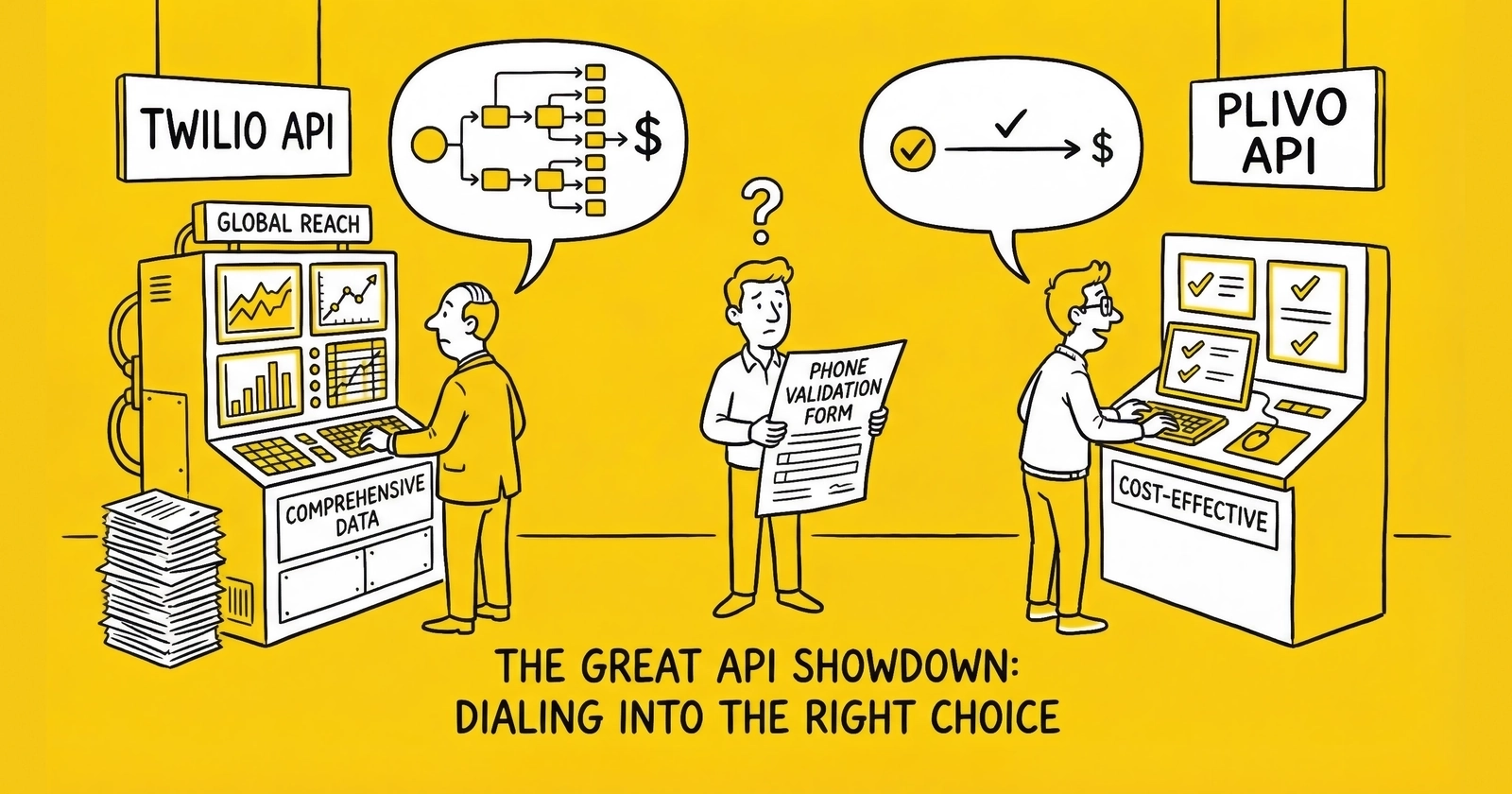
This guide covers the complete phone validation API landscape: the dominant players like Twilio and Plivo, the specialized alternatives worth considering, implementation best practices, and the ROI math that justifies your validation investment. Whether you process 1,000 leads monthly or 100,000, you will learn exactly how to build a validation stack that protects your margins and keeps you compliant.
Why Phone Validation APIs Matter for Lead Generation
Phone validation serves four critical functions in any lead generation operation:
Cost protection. Without validation, 8-12% of phone numbers in your lead database are invalid, disconnected, or unreachable. At $30 CPL, that means $2,400-$3,600 wasted per 1,000 leads before your sales team makes a single call. That waste compounds across the entire operation – a lead generation business processing 50,000 leads monthly faces $120,000-$180,000 in annual exposure from invalid phone data alone.
Conversion optimization. Sales teams waste 20-30% of dial time on wrong numbers, voicemails that never return calls, and non-working numbers. Validation eliminates this waste, letting reps focus on prospects who can actually convert. The productivity impact extends beyond raw efficiency – sales representatives who consistently reach live prospects maintain higher morale and lower turnover than those who spend shifts dialing dead numbers.
TCPA compliance. The Telephone Consumer Protection Act imposes different requirements for mobile phones versus landlines. Calling a mobile number with an autodialer without proper consent exposes you to $500-$1,500 per-call statutory damages. Line type detection is not optional, it is compliance infrastructure.
Fraud detection. Non-fixed VoIP numbers (Google Voice, TextNow, and similar services) correlate with 3-5x higher fraud rates than mobile numbers. Carrier intelligence helps you identify high-risk submissions before they cost you money.
The validation API you choose determines how effectively you accomplish these goals. Not all APIs are equal. Some excel at carrier intelligence but lack fraud detection. Others offer comprehensive data packages but at premium pricing that destroys your unit economics at scale.
Understanding Phone Validation Data Types
Before comparing vendors, you need to understand what phone validation actually validates. Different API providers offer different data packages, and choosing the right combination depends on your specific use case.
Format Verification
Format verification confirms a phone number follows valid patterns for its country code. This is the most basic validation layer, catching obvious errors like wrong digit counts, invalid area codes, and impossible number sequences.
What Format Verification Catches
The format layer identifies numbers with incorrect digit counts, since US numbers require exactly 10 digits after the country code. It flags invalid area codes not assigned by the North American Numbering Plan Administration and catches obvious test patterns like 123-456-7890 or 555-555-5555. Numbers starting with invalid prefixes also fail format verification.
Format verification is essentially free and instantaneous. Every validation stack should include it as the first gate, rejecting obviously invalid numbers before incurring costs from deeper verification.
Carrier Lookup
Carrier lookup queries telecommunications databases to identify which carrier currently operates a phone number. This intelligence reveals critical information about number provenance and potential risk factors.
What Carrier Data Reveals
A typical carrier lookup returns the current operating carrier (Verizon, AT&T, T-Mobile, etc.) alongside the original issuing carrier. You also receive port status indicating whether the number has transferred between carriers, plus country and region of origin.
Carrier data matters because certain carriers correlate with different lead quality profiles. Prepaid carriers may indicate higher churn risk. Multiple port events can signal number recycling or fraud. International carriers appearing on domestic leads suggest data manipulation.
Line Type Intelligence
Line type detection is the most valuable validation check for lead generators. It identifies whether a phone number connects to a mobile device, a traditional landline, or a VoIP service.
Standard Line Type Categories
Line type APIs classify numbers into five primary categories. Mobile numbers represent personal cell phones, typically delivering the highest contact rates for consumer leads. Landline designates fixed-line residential or business phones. Fixed VoIP indicates business phone systems like RingCentral or Vonage business lines. Non-fixed VoIP covers virtual numbers from services like Google Voice, TextNow, or Burner. Toll-free numbers (800/888/877 prefixes) are not valid for outbound consumer contact.
For TCPA compliance, line type detection is mandatory. The statute imposes stricter consent requirements for calls to wireless numbers. Calling a mobile phone without proper prior express consent using an automatic telephone dialing system (ATDS) violates federal law.
Non-fixed VoIP numbers deserve special attention. These virtual numbers, obtainable in minutes with minimal identity verification, show 3-5x higher fraud rates than mobile numbers. Many lead buyers reject non-fixed VoIP entirely or apply 30-50% price discounts.
SIM Swap Detection
SIM swap detection identifies when a phone number’s SIM card has recently changed, potentially indicating account takeover fraud. When criminals port a victim’s number to a new SIM, they gain access to SMS-based authentication codes.
For lead generation, SIM swap data serves as a fraud signal. A phone number that experienced a SIM swap in the past 24-72 hours warrants additional verification before accepting as a valid lead.
Line Status and Reachability
Line status verification checks whether a phone number is currently active and reachable on the carrier network. This goes beyond format validity to confirm the number can actually receive calls or messages.
Status Categories
Line status APIs return one of several states: active and reachable, temporarily disconnected, permanently disconnected, suspended, or unknown when the carrier does not provide status information.
Line status checks prevent you from purchasing leads with disconnected numbers that passed format validation but cannot actually be contacted.
Call Forwarding Detection
Call forwarding detection identifies whether a phone number has unconditional call forwarding enabled, meaning all calls automatically redirect to another number. This can indicate legitimate business use or potential fraud schemes.
Currently, call forwarding detection availability is limited. Twilio offers this feature for UK carriers only. Coverage varies significantly by region and carrier.
Reassigned Number Identification
Phone numbers get recycled. When a subscriber cancels service, carriers typically hold the number for 90 days before reassigning it to a new customer. This creates a compliance risk: you might have valid consent from the original subscriber but call someone who now owns that number.
Reassigned number databases track when phone numbers changed hands, helping you identify leads where the consenting party may no longer own the number. The FCC established the Reassigned Numbers Database (RND) specifically to help callers avoid this compliance trap, and several validation providers now integrate RND lookups into their offerings.
Understanding Data Source Limitations
No validation API provides perfect accuracy, and understanding the underlying data sources helps set realistic expectations about what validation can and cannot accomplish.
Carrier databases represent the authoritative source for phone number ownership and line type, but carrier data varies in completeness and update frequency. Major carriers like Verizon, AT&T, and T-Mobile maintain comprehensive records that validation providers can query. Smaller regional carriers and MVNOs (Mobile Virtual Network Operators) may have less complete integration with validation systems, resulting in “unknown” responses for some numbers.
Number portability creates additional complexity. When a subscriber ports their number from one carrier to another, databases must update to reflect the new carrier ownership. This process typically completes within 24-48 hours, but during the transition period, validation queries may return outdated information about the original carrier.
International coverage varies dramatically by country. US and Canadian numbers benefit from mature carrier integration and standardized data exchange protocols. European markets have reasonable coverage through HLR (Home Location Register) queries. Emerging markets may have incomplete carrier participation, resulting in lower accuracy rates and higher “unknown” response frequencies.
Twilio Lookup API: The Industry Standard
Twilio dominates the communications API market for good reason. Their Lookup API offers comprehensive phone validation with developer-friendly implementation, transparent pricing, and reliable uptime. For most lead generation operations, Twilio serves as the default starting point.
Twilio Lookup Features
Core Validation
Twilio’s base validation layer handles phone number formatting and standardization for 200+ countries. You receive carrier identification with both original and current carrier data, plus port history tracking to identify numbers that have moved between carriers.
Line Type Intelligence
The paid Line Type Intelligence add-on identifies mobile, landline, fixed VoIP, non-fixed VoIP, and toll-free numbers with accuracy rates exceeding 95% for US numbers. Global coverage extends to most countries, though accuracy varies by market.
Fraud Prevention Packages
Twilio offers several fraud detection layers. The SMS Pumping Risk Score uses machine learning to identify numbers likely involved in SMS fraud. SIM swap detection provides last swap timestamps for Europe, Latin America, and North America. Call forwarding status is available for UK carriers only. Reassigned number detection helps identify recycled US numbers.
Identity Verification
Identity Match compares user-supplied data against authoritative sources, validating first name, last name, address, and date of birth. This layer proves useful for high-value leads requiring additional verification beyond phone validity.
Twilio Lookup Pricing
Twilio uses pay-as-you-go pricing with no minimum commitments. As of 2024-2025:
| Data Package | Cost Per Lookup | Notes |
|---|---|---|
| Formatting (validation only) | Free | Basic format check |
| Line Type Intelligence | $0.008 | Mobile/landline/VoIP detection |
| Caller Name (CNAM) | $0.01 | US only |
| SIM Swap | $0.05 | Limited regional availability |
| Line Status | $0.04 | 140+ countries |
| Identity Match | $0.05 | Per matching query |
| SMS Pumping Risk | $0.03 | Per risk assessment |
| Reassigned Number | $0.005 | US only |
Multiple packages can be combined in a single API call. A typical lead generation validation combining Line Type Intelligence and Caller Name costs $0.018 per lookup.
Volume discounts apply through Twilio’s committed use programs, typically offering 10-25% reductions for annual commitments at scale.
Twilio Strengths and Limitations
Why Teams Choose Twilio
Twilio delivers extensive documentation and developer resources that accelerate implementation. The platform maintains high reliability with a 99.95%+ uptime SLA. Comprehensive SDK support spans Python, JavaScript, Java, C#, PHP, and Ruby. Transparent pricing without hidden fees lets you model costs accurately. The large community and proven track record mean solutions exist for most integration challenges.
Where Twilio Falls Short
Premium pricing compared to some alternatives increases per-lead costs at scale. SIM swap and call forwarding availability remain limited to specific regions. No native DNC screening means you need a separate vendor for compliance. Identity verification capabilities are less comprehensive than specialized providers like TeleSign.
Plivo: The Cost-Effective Alternative
Plivo positions itself as a lower-cost alternative to Twilio while maintaining enterprise-grade reliability. For budget-conscious operations processing high volumes, Plivo deserves serious consideration.
Plivo Lookup Features
Plivo’s Lookup API provides core phone validation capabilities across three areas.
Number Validation
The base layer handles phone number format verification, country code standardization, and invalid number detection. This catches obviously malformed numbers before deeper validation.
Carrier Intelligence
Carrier lookups return network carrier identification, number type detection (mobile, landline, VoIP), and country and region information. This data supports TCPA compliance and lead quality assessment.
Number Portability
Port status indication reveals whether numbers have moved between carriers. Original versus current carrier tracking helps identify numbers with complex histories that may warrant additional scrutiny.
Plivo Pricing Structure
Plivo uses a tiered pricing model. The Starter tier costs $25/month base plus usage charges, including $10 in free credits. The Team tier runs $25/month plus usage with additional features. Enterprise tier offers custom pricing with volume discounts.
Lookup API pricing typically runs 15-25% lower than Twilio for equivalent features, though exact rates require contacting sales for volume quotes.
Plivo Strengths and Limitations
Why Teams Choose Plivo
Lower per-lookup costs than Twilio at most volume levels make Plivo attractive for cost-conscious operations. The platform delivers solid API reliability and documentation. Good support for voice and SMS alongside validation simplifies your vendor stack. Simpler pricing structure works well for basic use cases without premium feature requirements.
Where Plivo Falls Short
A smaller feature set than Twilio’s comprehensive packages means you may need additional vendors for advanced needs. Less extensive fraud detection capabilities limit protection against sophisticated attacks. A smaller developer community means fewer integration examples and community solutions. Limited advanced features like SIM swap detection may require supplemental vendors.
TeleSign: Enterprise-Grade Identity Intelligence
TeleSign (now part of Telesign Holdings) targets enterprise customers requiring comprehensive identity verification alongside phone validation. Their Phone ID product goes beyond basic validation into full identity intelligence.
TeleSign Phone ID Features
Core Validation
TeleSign provides global phone validation across 230+ countries with number format standardization, carrier identification, and line type detection matching standard industry capabilities.
Identity Intelligence
Where TeleSign differentiates is depth of identity data. The platform accesses over 5 billion unique phone numbers in their database. Risk assessment draws on 2,200+ digital identity signals. Real-time mobile identity attributes include device type and registration details unavailable from basic validation APIs.
Fraud Prevention
Account takeover protection detects SIM swaps, number porting, and call forwarding changes. Synthetic identity fraud detection catches manufactured identities built from multiple sources. Data breach compromise checking flags numbers associated with known breaches. Subscriber attribute verification confirms phone ownership claims.
Compliance Tools
TeleSign supports TCPA, HIPAA, and PSD2 regulatory requirements with purpose-built compliance features. Porting history enhances risk models for heavily regulated industries. Age verification capabilities address Know Your Customer requirements.
TeleSign Pricing
TeleSign does not publish standard pricing. Enterprise customers receive custom quotes based on volume, features selected, and contract terms. Expect pricing 20-50% higher than Twilio for equivalent lookups, offset by deeper identity intelligence unavailable elsewhere.
TeleSign Strengths and Limitations
Why Teams Choose TeleSign
TeleSign delivers the deepest identity intelligence in the market, going far beyond what standard validation APIs provide. Comprehensive fraud prevention extends beyond basic validation into behavioral and contextual signals. Strong enterprise support and SLAs ensure reliable operation for mission-critical systems. Regulatory compliance expertise helps navigate TCPA, HIPAA, and financial services requirements.
Where TeleSign Falls Short
Premium pricing makes TeleSign unsuitable for low-margin lead operations where per-lead validation costs must stay minimal. The platform is overkill for basic validation needs when you only need format and line type. Requiring sales engagement for pricing slows evaluation. Longer implementation timelines delay time-to-value compared to self-service alternatives.
Vonage Number Insight: Three-Tier Approach
Vonage (formerly Nexmo) offers Number Insight in three tiers, allowing you to pay only for the depth of validation you need.
Vonage Number Insight Tiers
Basic Tier
The Basic tier handles phone number format validation, country and region identification, local and international formatting, and carrier network identification. This level satisfies format verification needs at minimal cost.
Standard Tier
Building on Basic, the Standard tier adds current carrier with port status, number type classification (mobile, landline, VoIP, virtual), and network switching and roaming status. Most lead generation operations need at least Standard for TCPA compliance.
Advanced Tier
The Advanced tier includes reachability status (active, decommissioned, unreachable), risk scores and fraud indicators, IP address matching, and real-time HLR lookup against carrier databases. This level suits high-value leads requiring maximum validation depth.
Vonage Pricing
Vonage publishes tier-based pricing:
| Tier | Price Per Lookup | Best For |
|---|---|---|
| Basic | $0.005 | Format validation only |
| Standard | $0.02 | Line type + carrier |
| Advanced | $0.04 | Full validation + fraud |
The tiered structure allows cost optimization by matching validation depth to lead value. Low-CPL leads might only need Basic tier while high-value exclusive leads warrant Advanced.
Sinch Verification: Multi-Channel Authentication
Sinch acquired MessageBird and focuses on verification across multiple channels. Their platform serves both validation and authentication use cases.
Sinch Verification Methods
Sinch supports multiple verification approaches. Flash Call verification uses a missed call as the verification signal, proving more cost-efficient than SMS OTP in many markets. SMS verification provides traditional one-time password delivery with global reach. Data verification offers instant verification using mobile data connections, eliminating user input friction. Phone call verification enables voice-based verification for mobile and landline numbers globally.
Sinch Infrastructure
Sinch operates 600+ direct carrier connections globally, providing reliable delivery and validation accuracy. The platform holds GDPR compliance, ISO27001 certification, and MEF Code of Conduct approval.
For lead generation, Sinch serves better as an authentication layer (verifying the person submitting a lead can receive calls/texts at that number) than pure validation (checking if the number is valid).
The Vendor Selection Matrix: A Framework for Decision-Making
Selecting the right phone validation vendor requires evaluating multiple dimensions simultaneously. The “V.A.L.I.D. Framework” provides a structured approach to vendor comparison:
V - Volume Economics. Calculate total cost at your actual volume, including base fees, per-lookup charges, and overage penalties. A vendor cheap at 10,000 lookups monthly may become expensive at 100,000.
A - Accuracy Requirements. Match validation depth to your quality requirements. TCPA compliance demands line type accuracy above 95%. Fraud prevention requires SIM swap detection. Basic format checking suffices for low-stakes applications.
L - Latency Tolerance. Real-time form validation requires sub-200ms response times. Batch processing tolerates seconds. Your use case determines which vendors qualify based on their performance characteristics.
I - Integration Complexity. Evaluate SDK availability, documentation quality, and compatibility with your existing stack. A technically superior API that requires six weeks of integration work may cost more than a slightly inferior option with plug-and-play connectors.
D - Data Coverage. Assess geographic coverage, carrier relationships, and data freshness for your specific markets. A vendor excellent for US numbers may perform poorly on international traffic.
Apply this framework systematically when evaluating the vendors detailed below.
Specialized Alternatives Worth Considering
Beyond the major players, several specialized providers excel in specific use cases.
Telnyx Number Lookup
Telnyx positions as a developer-focused alternative with competitive pricing. Their Number Lookup API provides carrier identification, line type detection, and portability status.
Competitive per-lookup pricing makes Telnyx attractive at scale. Strong developer documentation accelerates integration. The Mission Control portal provides easy management of validation operations. Good uptime and reliability support production workloads. Teams with development resources seeking cost optimization find Telnyx particularly appealing.
Infobip Number Lookup
Infobip leverages connections to 700+ global operators for validation. Their HLR (Home Location Register) lookups provide real-time carrier data directly from network sources.
Real-time HLR lookup against operator databases delivers authoritative carrier information. SIM swap protection monitoring flags recent SIM changes indicating potential fraud. Roaming detection supports fraud prevention by identifying numbers currently on foreign networks. Number portability tracking reveals carrier transfer history. Operations with significant international lead volume find Infobip’s global network particularly valuable.
Abstract Phone Validation API
Abstract offers a developer-friendly API with straightforward pricing and a generous free tier. The Free tier provides 100 requests/month at no cost. Starter tier costs $19/month for 5,000+ requests. Standard tier adds messaging details at $19/month. Professional tier includes risk scoring at $19/month.
Features span carrier and line type detection, geographic information (country, region, city), disposable/VoIP number flagging, and risk assessment on the professional tier. Startups and small operations seeking simple, affordable validation find Abstract’s low barrier to entry particularly appealing.
Numverify
Numverify from APILayer provides budget-friendly validation across 232 countries.
Pricing:
| Plan | Monthly Cost | Requests/Month | Cost Per Request |
|---|---|---|---|
| Free | $0 | 100 | Free |
| Starter | $14.99 | 5,000 | $0.003 |
| Pro | $59.99 | 50,000 | $0.0012 |
| Enterprise | $129.99 | 250,000 | $0.0005 |
At scale, Numverify offers the lowest per-lookup pricing in the market. Trade-offs include less comprehensive data packages and fewer fraud detection features. High-volume operations prioritizing cost over feature depth find Numverify’s economics compelling, particularly for basic validation where premium features are unnecessary.
Ekata (Mastercard Identity)
Ekata, now part of Mastercard, provides enterprise-grade identity verification including comprehensive phone intelligence. Their Phone Intelligence product goes beyond basic validation into identity correlation.
Core Capabilities:
Ekata connects phone numbers to identity attributes including name, address, email, and behavioral signals. The Phone Intelligence API returns validation status, carrier information, line type, and crucially, identity linkage scores indicating how strongly a phone number associates with claimed identity.
Identity Verification Features:
The platform excels at phone-to-identity matching. When a consumer submits phone 555-123-4567 and claims to be John Smith at 123 Main Street, Ekata evaluates whether that phone number has historical association with that identity. Match scores help detect both synthetic identity fraud and simple data entry errors.
Risk signals include first-seen date for phone-identity combinations, velocity indicators showing rapid changes in phone associations, and network analysis revealing connections to known fraud clusters.
Pricing Model:
Ekata operates on enterprise pricing requiring sales engagement. Expect $0.03-0.08 per lookup depending on volume and feature selection. The premium pricing reflects depth of identity intelligence unavailable from basic validation APIs.
Best For: High-value lead verticals (financial services, healthcare, insurance) where identity verification matters as much as phone validity. Operations willing to pay premium pricing for fraud reduction and identity confidence.
Prove (formerly Payfone)
Prove specializes in phone-centric identity verification with unique carrier-level data access. Their technology authenticates identity through phone possession rather than knowledge-based verification.
Instant Link:
Prove’s flagship product verifies identity by confirming the consumer possesses the phone number claimed. When a lead submits a phone number, Prove can silently verify that the form submission device actually controls that number, providing authentication without SMS codes or callbacks.
Pre-Fill:
The Pre-Fill product retrieves verified identity data (name, address, email) associated with a phone number from carrier records. This enables form pre-population with accurate data while simultaneously validating the phone.
Trust Score:
Phone Trust Score aggregates signals including account tenure, phone-identity stability, SIM tenure, and behavioral patterns into a single risk assessment. Scores help stratify leads by identity confidence.
Pricing:
Enterprise pricing starts around $0.05 per verification, scaling down with volume. The unique carrier-level data access commands premium pricing.
Best For: Operations prioritizing identity authentication over simple validation. Financial services, healthcare, and other regulated verticals where proving consumer identity matters.
Bandwidth
Bandwidth operates as both a communications platform and validation provider. Their Number Lookup API leverages direct carrier relationships as a facilities-based provider.
Infrastructure Advantage:
Unlike aggregators who purchase carrier data through intermediaries, Bandwidth maintains direct interconnection with major US carriers. This infrastructure provides fresher data and potentially higher accuracy for domestic numbers.
API Capabilities:
Number Lookup returns carrier identification, line type (wireless, landline, VoIP), and porting status. The API integrates naturally with Bandwidth’s voice and messaging services for operations already using their communications infrastructure.
Pricing:
Number Lookup costs $0.004 per query at standard rates, with volume discounts available. The competitive pricing combined with infrastructure quality makes Bandwidth attractive for high-volume domestic operations.
Best For: Operations already using or considering Bandwidth for voice/SMS services. High-volume domestic operations prioritizing cost efficiency with infrastructure-grade reliability.
Melissa
Melissa provides data quality services including phone verification as part of comprehensive contact data validation. Their approach emphasizes data hygiene across multiple contact points.
Global Phone Verification:
Melissa’s phone verification covers 240+ countries with carrier identification, line type detection, and connection status. The global coverage suits operations with significant international lead volume.
Integrated Data Quality:
Phone verification integrates with Melissa’s address verification, email verification, and identity matching services. Operations can validate complete contact records through unified APIs rather than managing multiple vendors.
Batch Processing:
Melissa excels at batch processing scenarios. Upload files of phone numbers for bulk verification with volume-optimized pricing. The approach suits periodic database cleansing alongside real-time validation.
Pricing:
Melissa uses tiered pricing with batch processing discounts. Standard rates run $0.01-0.02 per phone verification, dropping with volume commitments and batch processing.
Best For: Operations needing comprehensive contact data validation beyond phone. International operations requiring broad geographic coverage. Batch processing scenarios for database maintenance.
Emerging Vendor Landscape: 2025 Developments
The phone validation market continues evolving with new entrants and capability expansions worth monitoring.
Carrier-Direct Integration Trends
Several carriers now offer validation services directly, bypassing third-party aggregators. T-Mobile’s Scam Shield APIs, Verizon’s Number Verification, and AT&T’s identity services provide authoritative data from the source. These carrier-direct options typically offer superior accuracy for their own subscribers but require managing multiple vendor relationships for comprehensive coverage.
AI-Enhanced Validation
Emerging providers incorporate machine learning to supplement carrier data. These systems analyze calling patterns, device intelligence, and behavioral signals to assess phone validity and fraud risk beyond what carrier databases reveal. Expect continued integration of AI-powered fraud scoring into traditional validation APIs.
Privacy-Preserving Verification
New protocols enable phone verification without transmitting actual phone numbers to third parties. Zero-knowledge proofs and federated verification approaches address growing privacy concerns while maintaining validation accuracy. These technologies remain nascent but warrant attention as privacy regulations expand.
Choosing the Right Phone Validation API
Selection criteria depend on your specific operation. Consider these factors:
Volume and Budget
| Monthly Volume | Recommended Approach |
|---|---|
| Under 5,000 | Abstract or Numverify free/starter tiers |
| 5,000-50,000 | Twilio or Plivo with line type |
| 50,000-500,000 | Plivo or Telnyx for cost; Twilio for features |
| 500,000+ | Enterprise negotiations with Twilio, TeleSign, or multiple vendors |
Feature Requirements
Your validation needs dictate appropriate vendors. For basic validation only covering format, carrier, and type, consider Numverify, Abstract, or Plivo. When standard validation with fraud detection is required, Twilio and Vonage Advanced deliver comprehensive packages. Enterprise identity intelligence needs point toward TeleSign or Ekata (Mastercard). Operations with international coverage as a priority should evaluate Infobip, Twilio, or Sinch.
Compliance Requirements
For TCPA compliance, line type detection is mandatory. Any API providing mobile vs. landline differentiation satisfies this requirement.
For healthcare (HIPAA) or financial services with enhanced requirements, TeleSign’s compliance-focused approach and BAA availability may be necessary.
Development Resources
Operations with strong development teams can leverage Twilio’s extensive SDKs and documentation for rapid implementation. Teams with limited dev resources might prefer Abstract’s simpler integration or managed services through lead platforms like boberdoo or LeadsPedia that include validation.
Implementation Best Practices
How you implement phone validation matters as much as which API you choose.
When to Validate
Real-Time Validation
Validating during form submission catches errors before leads enter your system and allows users to correct typos immediately. The trade-off is 200-500ms latency added to form submission and higher per-validation costs since batch discounts do not apply.
Post-Capture Validation
Validating after submission eliminates form latency impact and enables batch pricing discounts. However, you cannot provide user feedback for correction, and bad data enters your system before filtering removes it.
The Hybrid Approach
The recommended approach combines both methods strategically. Start with client-side format validation, which is free and instant. Add real-time line type checking during submission to catch critical issues. Process carrier lookup and fraud scoring in batch hourly. Schedule DNC and litigator screening daily. This layered approach optimizes both data quality and cost efficiency.
Handling Validation Failures
Not every validation failure should reject a lead. Configure your system with appropriate thresholds.
Hard Reject Conditions
Always block leads with invalid format (wrong digit count, impossible area code), disconnected or deactivated numbers, and known fraud indicators. These conditions indicate leads that cannot convert regardless of downstream handling.
Soft Flag Conditions
Accept with notation leads showing non-fixed VoIP (some buyers accept, some reject), inability to determine type (carrier not responding), and possible recent ports that may need re-verification. These conditions reduce lead value but do not eliminate it entirely.
Accept with Monitoring
Mobile numbers without caller ID available and numbers in carrier transition states warrant acceptance with monitoring rather than rejection. Track downstream conversion rates to determine if these populations warrant stricter handling.
Caching Considerations
Phone validation data has varying lifespans:
| Data Type | Cache Duration | Reason |
|---|---|---|
| Format validity | Permanent | Number formats do not change |
| Line type | 30-90 days | Rarely changes except for ports |
| Carrier | 30 days | Ports take time to process |
| Line status | 24 hours | Can change quickly |
| SIM swap | Do not cache | Real-time fraud signal |
Implement appropriate caching to reduce API costs while maintaining accuracy.
Error Handling
Validation APIs experience downtime. Your implementation must handle several failure modes gracefully.
API timeouts require a fail open versus fail closed decision based on your risk tolerance. Rate limiting demands exponential backoff implementation to avoid service degradation. Partial responses where some data packages return as unavailable need graceful handling with sensible defaults. Regional outages call for fallback vendor strategies to maintain coverage.
For critical validation, consider multi-vendor failover: primary validation through Twilio, fallback to Plivo or Telnyx when primary fails.
Building a Multi-Vendor Validation Strategy
Relying on a single validation provider creates operational risk. API outages, rate limit issues, and coverage gaps can disrupt lead processing at critical moments. Sophisticated operations implement multi-vendor strategies that balance cost, coverage, and reliability.
Primary and Failover Architecture
The most common approach designates one provider as primary and another as failover. Leads flow through the primary provider under normal conditions. When the primary experiences latency spikes, error rates, or complete outages, traffic automatically routes to the secondary provider.
Implementation requires monitoring response times and error rates from the primary provider, establishing thresholds that trigger failover (for example, three consecutive failures or latency exceeding 500 milliseconds), maintaining credentials and integration code for the secondary provider, and implementing automatic switchback when primary recovery is detected.
The cost of maintaining a secondary provider – minimal when unused – provides insurance against processing disruptions that could cost thousands in rejected leads or compliance exposure.
Provider Specialization
Different providers excel at different capabilities. Rather than choosing a single provider for all validation needs, consider matching providers to specific data requirements.
One provider might handle line type detection at the lowest cost, while another offers superior fraud scoring. A third might provide the best international coverage for operations with global traffic. This specialized approach requires more integration complexity but optimizes both cost and capability.
The practical implementation routes different validation packages to different providers based on their strengths. Format validation and line type through the lowest-cost provider with acceptable accuracy. Fraud scoring and SIM swap detection through a provider with strong signal coverage. International lookups through a provider with carrier relationships in target markets.
Geographic Routing
For operations with significant international lead volume, geographic routing sends US numbers to providers with strong domestic coverage and international numbers to providers with superior global reach.
Infobip and Sinch, with their extensive international carrier networks, often outperform US-centric providers like Twilio on emerging market validation. Routing based on country code optimizes both accuracy and cost across geographic segments.
The ROI of Phone Validation
Validation costs money. Skipping validation costs more. The mathematics are compelling when calculated honestly.
Cost-Benefit Analysis
Consider a lead operation processing 10,000 leads monthly at $25 CPL:
Without Validation
The 10% industry average invalid phone rate means $25,000 in wasted lead spend each month. Sales time on dead numbers (10% of calls at $30/hour) adds another $9,000. Buyer returns for bad phone data contribute $15,000 in lost revenue and penalties. Total monthly waste reaches $49,000.
With Comprehensive Validation
At $0.02 per lead, validation costs $200 monthly. That $200 catches 900 invalid leads (90% detection rate), with only 100 still passing through. This saves $22,500 in lead spend, $8,100 in sales time, and $13,500 in reduced returns. Monthly savings total $44,100 for a 22,000% ROI.
Even at conservative assumptions, validation delivers 100x+ returns.
Validation Investment by Lead Value
| Lead CPL | Recommended Validation Spend | ROI at 10% Invalid Rate |
|---|---|---|
| $10 | $0.01-0.02 | 5,000%+ |
| $25 | $0.02-0.05 | 10,000%+ |
| $50 | $0.05-0.10 | 10,000%+ |
| $100+ | $0.10-0.20 | 5,000%+ |
Higher-value leads justify deeper validation investment, but even the cheapest leads benefit from basic format and type checking.
Calculating Validation ROI for Your Operation
Use this framework to calculate validation ROI for your specific volume and economics:
Step 1: Calculate current invalid phone costs Monthly lead volume multiplied by industry invalid rate (8-12%) multiplied by average CPL equals monthly wasted lead spend. Add sales time cost (invalid percentage multiplied by monthly dial hours multiplied by hourly cost). Add buyer return penalties for phone-related issues.
Step 2: Calculate validation costs Monthly lead volume multiplied by per-lookup cost (typically $0.02-0.05 for comprehensive validation).
Step 3: Calculate expected savings Expected detection rate (typically 85-95% of invalids caught) multiplied by costs from Step 1.
Step 4: Calculate net ROI Savings minus validation costs. For most operations, this yields 50-200x return on validation investment.
Future Trends in Phone Validation
The phone validation market continues evolving. Several trends are reshaping how lead generators approach phone data quality, and understanding these developments helps operations prepare for coming changes.
AI-powered fraud scoring. Machine learning models analyzing behavioral patterns, device signals, and network data alongside traditional phone validation. Twilio’s SMS Pumping Risk Score represents early implementation. These models go beyond binary valid/invalid determinations to provide risk probability scores that enable more nuanced decision-making. A number might be technically valid but exhibit patterns correlated with fraud – unusual acquisition timing, association with known fraud clusters, or behavioral signatures that suggest synthetic identity.
Real-time SIM swap alerts. Expanding beyond point-in-time lookup to event-driven notifications when phone numbers experience SIM changes. Critical for ongoing relationship validation, not just initial lead capture.
Rich Communication Services (RCS) validation. As RCS messaging gains adoption, validation APIs will need to identify RCS-capable numbers for enhanced messaging experiences.
Privacy-preserving validation. Techniques allowing phone validation without transmitting actual numbers, addressing growing privacy regulations worldwide.
Blockchain-based identity. Early experiments in decentralized identity could eventually provide phone validation through cryptographic attestation rather than carrier database queries.
Frequently Asked Questions
What is a phone validation API and how does it work?
A phone validation API queries telecommunications databases and carrier networks to verify phone number validity, identify the carrier and line type (mobile, landline, VoIP), and detect potential fraud indicators. APIs typically receive a phone number, query multiple data sources in real-time, and return structured data about the number’s validity and characteristics within 200-500 milliseconds.
How much do phone validation APIs cost per lookup?
Costs range from free for basic format validation to $0.05+ for comprehensive packages. Twilio Line Type Intelligence costs $0.008 per lookup. Plivo offers similar features 15-25% cheaper. Budget alternatives like Numverify can cost under $0.001 at volume. Most operations spend $0.02-0.05 per lead for standard validation including line type and carrier lookup.
What is the difference between Twilio and Plivo for phone validation?
Twilio offers more comprehensive data packages including SIM swap detection, SMS pumping risk scores, and identity matching. Plivo provides core validation features (format, carrier, line type) at lower prices. Choose Twilio for feature depth and enterprise support. Choose Plivo for cost optimization when basic validation suffices.
Why is line type detection important for lead generation?
Line type detection identifies whether a number connects to a mobile phone, landline, or VoIP service. This matters for TCPA compliance (different consent requirements for mobile vs. landline), fraud detection (non-fixed VoIP shows 3-5x higher fraud rates), and contact strategy (mobile numbers typically have higher answer rates than landlines).
How do phone validation APIs help with TCPA compliance?
TCPA imposes stricter consent requirements for calls to wireless numbers using automatic telephone dialing systems. Line type detection identifies which numbers are mobile, enabling compliant calling practices. Additional features like DNC screening (through separate vendors) and consent verification complement phone validation for comprehensive TCPA compliance.
What is the difference between fixed and non-fixed VoIP?
Fixed VoIP associates with a physical location, like a business phone system from RingCentral or 8x8. Non-fixed VoIP can be obtained online without address verification, including services like Google Voice, TextNow, or Burner. Non-fixed VoIP correlates with higher fraud rates and many lead buyers reject or discount leads with non-fixed VoIP numbers.
How accurate are phone validation APIs?
Major providers like Twilio and Plivo report 95%+ accuracy for US numbers with comprehensive carrier coverage. Accuracy varies by country, with developed markets showing higher accuracy than emerging markets with fragmented carrier landscapes. Line type detection may return “unknown” for 5-15% of numbers where carrier data is unavailable.
Should I validate phone numbers in real-time or batch?
Use hybrid approaches. Validate format and line type in real-time during form submission to catch obvious errors and enable user correction. Process carrier lookups, fraud scoring, and DNC screening in batch for cost efficiency. Real-time validation adds 200-500ms latency but prevents bad data from entering your system.
What happens when a phone validation API is unavailable?
Your system must handle API failures gracefully. Options include: fail open (accept leads without validation during outages), fail closed (reject all leads until API recovers), or failover to secondary vendor. Critical operations should implement multi-vendor strategies with automatic failover to maintain validation during primary vendor outages.
How often should I revalidate phone numbers in my database?
Phone data decays over time. Line types rarely change except during number ports. Carrier data should refresh every 30-90 days. Line status (active/disconnected) changes more frequently and warrants 24-48 hour refresh for active campaigns. For ongoing customer relationships, consider monthly revalidation to identify numbers that have been reassigned or disconnected.
Key Takeaways
-
Phone validation prevents 8-12% waste from invalid numbers in typical lead databases, delivering 100x+ ROI at costs of $0.02-0.05 per lead.
-
Line type detection is mandatory for TCPA compliance. Know whether you are calling mobile phones, landlines, or VoIP numbers before dialing.
-
Non-fixed VoIP numbers (Google Voice, TextNow) show 3-5x higher fraud rates than mobile numbers. Flag or reject these based on your vertical and buyer requirements.
-
Twilio offers the most comprehensive feature set with Line Type Intelligence at $0.008 per lookup, SIM swap detection, and SMS pumping risk scores.
-
Plivo provides core validation at 15-25% lower cost than Twilio, making it the better choice when basic format, carrier, and line type suffice.
-
For enterprise identity verification needs, TeleSign offers 2,200+ digital identity signals beyond basic phone validation, though at premium pricing.
-
Budget operations can use Numverify or Abstract for validation under $0.01 per lookup, trading feature depth for cost savings.
-
Implement hybrid validation: real-time format and line type checks during submission, batch carrier lookup and fraud scoring afterward.
-
Phone data decays. Revalidate carrier and line status every 30-90 days. Check line status (active/disconnected) every 24-48 hours for active campaigns.
-
Build failover strategies. When your primary validation API experiences downtime, secondary vendors should activate automatically to maintain data quality.
The phone validation landscape continues evolving with AI-powered fraud detection and expanding SIM swap coverage. Review vendor capabilities annually and adjust your validation stack as new features become available and pricing structures change.