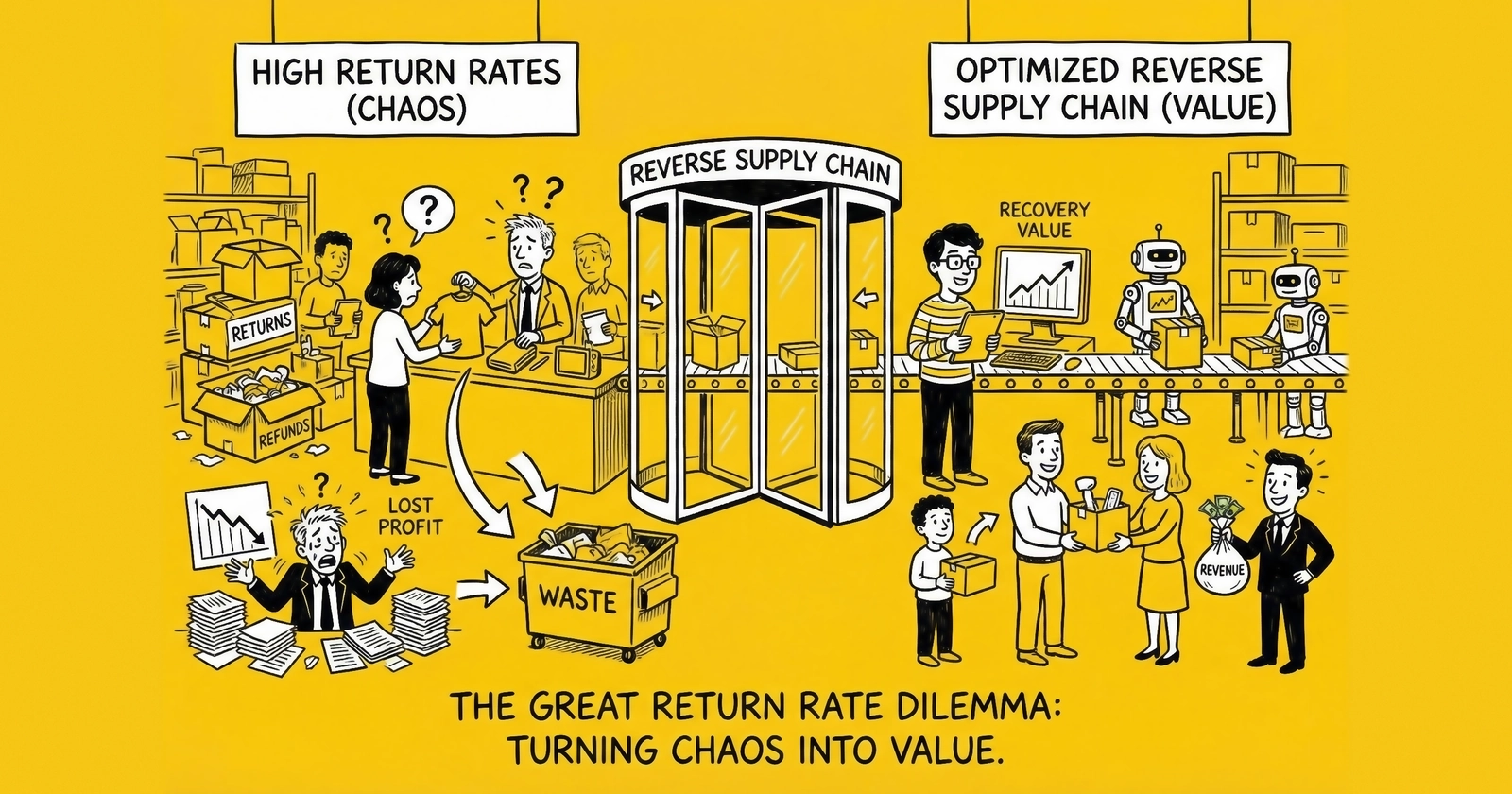
The same 15% return rate might signal a crisis in one vertical and excellent performance in another. Without industry-specific context, return rate disputes generate friction instead of improvement.
The conversation between a lead generator and a lead buyer often reaches a tense moment when return rates enter the discussion. A buyer claims returns are too high, quality has declined, and adjustments are necessary. A seller counters that return rates fall within normal parameters, that the buyer’s follow-up practices are the real problem, or that the buyer’s expectations have become unrealistic. Both parties cite numbers, but without context those numbers create conflict rather than resolution.
This tension reflects a deeper challenge in the lead generation industry: return rates are simultaneously one of the most important metrics and one of the most poorly understood. The same 15% return rate might indicate a serious quality problem in one vertical, excellent performance in another, and a buyer capability issue in a third. Understanding what return rates actually mean requires moving beyond the raw percentages to examine the structural factors, reason codes, and operational dynamics that drive variation.
The stakes extend beyond individual transactions. Organizations that understand return rate benchmarks negotiate better contracts, identify problems earlier, and build more sustainable buyer-seller relationships. Those that treat return rates as simple pass-fail metrics find themselves in endless disputes, misallocating resources toward problems that do not exist while ignoring issues that do.
Lead return rates serve as one of the most telling diagnostic indicators in the lead generation industry, yet they remain among the least understood metrics across the buyer-seller relationship. When a lead buyer returns a lead, that return carries information – about lead quality, buyer expectations, market conditions, and operational alignment – that both parties can apply toward systematic improvement. Understanding return rate benchmarks by industry provides essential context for evaluating performance, identifying problems, and structuring agreements that align incentives appropriately.
This analysis examines return rate patterns across major lead generation verticals, exploring the underlying factors that drive industry-specific benchmarks, the return reason codes that reveal actionable insights, and the operational frameworks that enable organizations to improve return rate performance systematically. For lead generators, buyers, and the intermediaries connecting them, return rate intelligence transforms a friction point into a diagnostic tool that improves outcomes for all parties.
The Return Rate Landscape: Establishing Context
Return rates measure the percentage of delivered leads that buyers reject and return for credit or replacement, typically within a contractual return window. While the calculation appears straightforward, meaningful interpretation requires understanding the complex factors that influence what constitutes an acceptable return rate in any given context.
Why Return Rates Vary So Dramatically
Industry return rate benchmarks range from under 5% in some verticals to over 30% in others, a variation that reflects fundamental differences in lead characteristics, buyer capabilities, and market dynamics rather than quality differences alone.
Lead complexity and verification difficulty represent primary drivers of return rate variation. In verticals where lead validity can be confirmed through simple verification – email deliverability, phone number connectivity, address existence – return rates tend to run lower because invalid leads are filtered before delivery. In verticals where quality determination requires attempted contact and substantive conversation, more leads that appear valid at delivery prove problematic upon follow-up.
Buyer follow-up capability and speed significantly impact return rates. Buyers who contact leads within minutes of delivery encounter far fewer disconnected numbers, changed minds, and competitor captures than buyers who delay hours or days. The same lead pool delivered to a fast-response buyer versus a slow-response buyer will generate dramatically different return rates based on buyer behavior rather than lead quality.
Market volatility and consumer intent duration vary by vertical. Some purchase categories involve extended consideration periods where intent persists; others involve impulse inquiries where interest evaporates quickly. Returns in volatile intent categories may reflect market characteristics rather than lead deficiencies.
Contractual return windows and policies directly affect reported rates. A 72-hour return window with broad return eligibility will generate higher return rates than a 24-hour window with narrow criteria, even for identical lead quality. Comparing return rates across different policy structures requires normalization that many benchmarking efforts overlook.
The Information Value of Returns
Returns carry diagnostic information that often exceeds their immediate economic impact. A returned lead, properly coded with return reason, reveals something about what went wrong – information that enables systematic improvement.
Quality signals emerge from return reason patterns. High rates of “wrong number” returns indicate verification system failures. “Not interested” returns may reveal targeting or timing issues. “Already purchased” returns suggest duplicate delivery or slow follow-up. Each pattern points toward different root causes and remediation approaches.
Buyer alignment signals surface through return patterns across buyers. A lead generator delivering to multiple buyers will observe return rate variation that partially reflects buyer performance differences. Buyers with systematically high returns may have follow-up problems, unrealistic expectations, or capabilities misaligned with the lead type being delivered.
Market condition signals appear in temporal return patterns. Rising return rates across buyers during specific periods may indicate market shifts – economic changes affecting purchase intent, competitive dynamics, or seasonal patterns – rather than quality changes in lead generation.
Organizations that treat returns merely as economic events miss the diagnostic value. Those that analyze return patterns systematically gain insights that improve quality, buyer matching, and operational processes. For frameworks on systematic quality improvement, see our lead quality control protocols guide.
Industry-Specific Benchmarks and Analysis
Return rate benchmarks vary substantially by vertical, reflecting the distinct characteristics of each market. The following analysis examines major lead generation verticals, establishing benchmarks and exploring the factors that drive industry-specific patterns.
Insurance Lead Generation
Insurance lead generation presents a complex return rate picture, with benchmarks varying significantly by insurance type, lead source, and buyer segment.
Health insurance leads demonstrate the highest return rates in the insurance category, with industry benchmarks ranging from 18-28% depending on enrollment period timing and lead source. Open enrollment periods generate higher return rates as consumer intent proves more volatile and competition for consumer attention intensifies. Off-enrollment period leads show lower return rates but also lower volume.
Auto insurance leads typically benchmark at 12-18% return rates, with the primary drivers being contact validity and intent qualification. The commoditized nature of auto insurance creates price-sensitive consumers who submit multiple inquiries, contributing to “already quoted” and “not interested” returns that reflect market dynamics rather than quality failures.
Life insurance leads occupy a middle position at 15-22% return rates, with particular sensitivity to lead age and qualification depth. Life insurance involves longer consideration cycles, creating return patterns where leads that appeared qualified at generation show diminished intent by the time buyers achieve contact.
Medicare leads during Annual Enrollment Period (AEP) experience return rates of 20-30%, driven by intense competition and consumer confusion about the enrollment process. Post-AEP periods show dramatically lower return rates of 8-15% as intent becomes more concentrated among genuinely interested consumers.
| Insurance Type | Return Rate Benchmark | Primary Return Drivers | Seasonal Variation |
|---|---|---|---|
| Health (ACA) | 18-28% | Intent volatility, enrollment timing | Higher during OEP |
| Auto | 12-18% | Duplicate inquiries, price shopping | Moderate seasonality |
| Life | 15-22% | Intent decay, qualification accuracy | Low seasonality |
| Medicare | 8-30% | Enrollment period dependent | Extreme AEP variation |
| Home | 10-16% | Property validation, intent verification | Renewal period spikes |
| Commercial | 8-14% | Business verification, decision-maker access | Fiscal year patterns |
Source: Insurance lead industry surveys 2024, Lead Economy analysis
The insurance vertical illustrates how regulatory and market structure factors influence return rates beyond lead quality. Licensed agent requirements mean many returns reflect buyers unable to write business in the consumer’s state rather than lead problems. Compliance requirements around consent and disclosure add return categories specific to the vertical.
Home Services Lead Generation
Home services lead generation encompasses diverse categories – HVAC, roofing, solar, windows, general contractors – with return rate patterns that reflect category-specific characteristics.
HVAC leads benchmark at 10-15% return rates, benefiting from clear intent signals (equipment failure, comfort issues) and straightforward verification. Emergency HVAC leads show the lowest return rates as urgent need correlates with genuine intent and immediate follow-up. Planned replacement leads show higher returns as longer decision timelines allow intent to decay.
Roofing leads demonstrate significant variation based on lead source, with benchmarks ranging from 12-20%. Storm-related leads show higher initial volume but also higher return rates as assessment outcomes determine project viability. Consumers who discover no significant damage become returns categorized as “not qualified” even though the initial inquiry was genuine.
Solar leads present challenging return rate profiles, typically 18-28%, driven by qualification complexity. Homeownership verification, roof suitability, utility eligibility, and credit qualification all create return categories where leads that appeared qualified fail subsequent verification. The high-ticket nature of solar purchases also creates longer consideration timelines that increase intent decay.
Window and siding leads benchmark at 14-20% return rates, with “just looking” and “getting estimates” representing significant return categories. The replacement window market includes many consumers who inquire speculatively, creating returns that reflect market characteristics rather than generation quality.
| Home Services Category | Return Rate Benchmark | Intent Clarity | Verification Complexity |
|---|---|---|---|
| HVAC (emergency) | 8-12% | Very high | Low |
| HVAC (planned) | 12-16% | Moderate | Low |
| Roofing (storm) | 15-22% | High but conditional | Moderate |
| Roofing (replacement) | 12-18% | Moderate | Low |
| Solar | 18-28% | Moderate | High |
| Windows/Siding | 14-20% | Lower | Low |
| General Contractor | 12-18% | Varies by project | Moderate |
The home services vertical demonstrates how qualification complexity affects return rates. Verticals with simple qualification (does the consumer need the service?) show lower returns than those requiring multiple qualification criteria that may not be determinable at lead generation.
Financial Services Lead Generation
Financial services lead generation operates under regulatory constraints that shape return rate patterns distinctly from less regulated verticals.
Mortgage leads have experienced significant return rate fluctuation tied to interest rate environments. In stable rate environments, return rates benchmark at 15-22%. During periods of rate volatility, return rates can spike to 25-35% as consumers who inquired based on one rate environment find changed circumstances by the time of contact.
Personal loan leads typically benchmark at 18-25% return rates, with credit qualification representing the dominant return driver. Many consumers who express intent cannot meet lending criteria, creating returns for “not qualified” that reflect market characteristics rather than generation errors.
Debt relief leads show return rates of 20-30%, driven by consumer hesitation, qualification complexity, and the sensitive nature of debt discussions. Consumers who inquire may not be psychologically prepared to engage when contacted, creating “not interested” returns from leads who were interested at the moment of inquiry.
Credit card leads demonstrate wide variation based on card type and consumer segment, with return rates ranging from 12-25%. Premium cards with strict qualification show higher returns; mass-market cards with broader eligibility show lower returns. The return rate often reflects the alignment between lead targeting and card qualification requirements.
The financial services vertical illustrates how downstream qualification requirements influence return rates. Lead generators cannot fully determine credit qualification, income verification, or regulatory eligibility at generation. Returns often represent qualification failures that become apparent only upon buyer underwriting rather than generation quality issues.
Education Lead Generation
Education lead generation encompasses diverse institutional types with dramatically different return rate profiles.
For-profit education leads historically showed return rates of 15-25%, though regulatory changes have altered the landscape. Increased disclosure requirements and enrollment restrictions have affected both lead quality and return patterns.
Traditional higher education leads for undergraduate admissions show return rates of 12-18%, with primary drivers including student qualification and genuine enrollment intent versus casual exploration.
Graduate and professional education leads typically benchmark at 10-15% return rates, benefiting from more focused intent among graduate program seekers who have made conscious decisions to pursue additional education.
Trade and vocational education leads demonstrate return rates of 12-20%, with program availability and scheduling representing significant return categories. Geographic constraints on in-person programs create returns when consumers cannot feasibly attend available programs.
Legal Lead Generation
Legal lead generation presents vertical-specific patterns driven by case type and qualification requirements.
Personal injury leads benchmark at 15-25% return rates, with case viability representing the dominant driver. Many consumers believe they have valid claims that legal review determines don’t meet case acceptance criteria.
Mass tort leads show higher return rates of 20-35%, reflecting the qualification complexity of determining whether potential clients meet the specific criteria for particular litigation campaigns.
Family law leads typically run 12-18% return rates, with consumer readiness representing a significant factor. Consumers inquiring about divorce or custody matters may not be prepared to proceed when contacted.
Criminal defense leads demonstrate the lowest return rates in legal at 8-15%, driven by urgent need and clear intent that generates genuine engagement when contacted.
| Legal Category | Return Rate Benchmark | Primary Qualification Factor |
|---|---|---|
| Personal Injury | 15-25% | Case viability determination |
| Mass Tort | 20-35% | Criteria matching complexity |
| Family Law | 12-18% | Consumer readiness/commitment |
| Criminal Defense | 8-15% | Urgency and clear need |
| Bankruptcy | 15-22% | Income/debt qualification |
| Workers’ Compensation | 12-20% | Claim validity assessment |
B2B Lead Generation
B2B lead generation operates under different dynamics than consumer verticals, with return rate patterns reflecting organizational buying complexity.
Technology/SaaS leads benchmark at 12-18% return rates for marketing qualified leads (MQLs), with the primary drivers being decision-maker verification and organizational fit. Company size, technology stack, and budget authority all create return categories.
Professional services leads typically show return rates of 10-15%, with timing and budget representing dominant factors. Consulting and service purchases often face budget cycles and project timing constraints that create returns from genuinely interested but not-currently-buying organizations.
Industrial and manufacturing leads demonstrate return rates of 8-14%, benefiting from clearer need identification and longer sales cycles that accommodate relationship building with leads who don’t convert immediately.
The B2B context introduces return complexity around lead definition. Returns for “wrong contact” may reflect database decay rather than generation errors. Returns for “not decision maker” involve organizational navigation challenges that sellers and generators share.
Return Reason Code Analysis
Return reason codes transform aggregate return rates into actionable diagnostic information. Standardized reason codes enable pattern recognition that identifies root causes and improvement opportunities.
Standard Return Reason Code Framework
The industry has evolved toward standardized reason codes that enable cross-buyer comparison and systematic analysis, though implementation varies across lead exchanges and direct relationships.
| Code Category | Description | Root Cause Indication | Remediation Owner |
|---|---|---|---|
| Invalid Contact | |||
| IC-01 | Disconnected phone number | Verification failure or data decay | Generator |
| IC-02 | Wrong number | Incorrect data capture | Generator |
| IC-03 | Invalid email (bounce) | Validation system failure | Generator |
| IC-04 | No such address | Address verification failure | Generator |
| Not Qualified | |||
| NQ-01 | Does not meet credit requirements | Lead-buyer mismatch or targeting | Shared |
| NQ-02 | Outside service area | Geographic targeting or routing | Generator |
| NQ-03 | Does not own home | Qualification accuracy | Generator |
| NQ-04 | Already has product/service | Exclusion list management | Generator |
| Intent Issues | |||
| IN-01 | Denies submitting inquiry | Consent or verification failure | Generator |
| IN-02 | Changed mind/no longer interested | Intent decay or timing | Shared |
| IN-03 | Just looking/not serious | Intent qualification accuracy | Shared |
| IN-04 | Already purchased elsewhere | Competitor speed or duplicate delivery | Shared |
| Contact Failure | |||
| CF-01 | Cannot reach after X attempts | Contact information may be valid | Buyer |
| CF-02 | Voicemail only | Contact behavior, not validity | Buyer |
| CF-03 | Contact refused to engage | Buyer communication approach | Buyer |
| Compliance | |||
| CO-01 | Missing required consent | Consent documentation failure | Generator |
| CO-02 | On do-not-call list | DNC scrubbing failure | Generator |
| CO-03 | Duplicate within exclusion period | Duplicate management | Generator |
Interpreting Return Reason Patterns
Return reason distribution reveals specific operational issues that aggregate return rates obscure.
Invalid contact returns above 5% indicate verification system failures requiring technical remediation. Phone validation should catch disconnected numbers before delivery; email verification should eliminate bounces; address validation should confirm deliverability. Improved invalid contact rates represent clear generator-side issues with defined technical solutions.
Not qualified returns above 10% suggest targeting or buyer matching problems. When leads consistently fail buyer qualification criteria, either the targeting needs refinement or the buyer isn’t appropriate for the lead type being generated. Analysis should determine whether qualification failures are predictable from available lead data, indicating routing opportunities.
Intent issue returns are most complex to interpret. “Denies submitting inquiry” returns may indicate form abandonment counting, affiliate fraud, or genuine consumer confusion. “Changed mind” returns in reasonable percentages reflect normal market dynamics; improved rates suggest speed-to-contact issues or market timing problems.
Contact failure returns at high rates often indicate buyer-side performance issues rather than lead quality. Leads that cannot be reached may reflect inadequate follow-up cadences, poor contact timing, or insufficient attempt volume rather than invalid contact information.
Diagnostic Questions by Return Reason
Systematic return analysis should address specific diagnostic questions for each reason category:
For invalid contact returns:
- What validation systems are in place and are they functioning?
- Has there been a change in data sources or capture methods?
- What is the time gap between capture and validation?
- Are validation rates consistent across traffic sources?
For qualification returns:
- Are qualification criteria clearly defined and captured?
- Is there a mismatch between generator targeting and buyer requirements?
- Are there routing opportunities that would reduce qualification returns?
- Do qualification returns vary by buyer, suggesting matching issues?
For intent returns:
- What is the average time-to-contact for returned versus accepted leads?
- Are intent return rates consistent across traffic sources?
- Do consent verification processes ensure genuine intent?
- Is there duplicate delivery creating “already purchased” returns?
For contact failure returns:
- What is the buyer’s contact attempt cadence?
- Is the buyer contacting within the optimal speed-to-lead window?
- Are contact failure rates consistent across the buyer’s portfolio?
- Does the return window allow sufficient contact attempts?
Factors Influencing Return Rate Performance
Understanding the factors that influence return rates enables proactive management rather than reactive response. These factors span the lead lifecycle from generation through buyer follow-up.
Generation-Side Factors
Lead generators control numerous variables that directly impact return rate outcomes.
Traffic source quality represents the most significant generator-controlled variable. Affiliate traffic, paid search, organic, and partner channels each demonstrate different return rate profiles. Affiliate traffic requires particular scrutiny given incentive structures that may not align with quality objectives. Organizations should track return rates by source and adjust volume allocation accordingly.
Form design and user experience influence both lead quality and intent confirmation. Forms that require minimal effort generate higher volume but potentially lower intent. Multi-step forms with progressive disclosure create friction that filters casual inquiries, typically improving quality at the expense of volume.
Verification at capture reduces returns for invalid contact reasons. Real-time phone validation, email verification, and address standardization can prevent delivery of leads that would inevitably return. The economics favor verification investment when return rates for invalid contacts exceed verification costs.
Lead age at delivery significantly impacts intent-based returns. Leads contacted within minutes of submission show dramatically lower “not interested” returns than leads aged hours or days. Generators who can delivery leads in real-time or near-real-time reduce intent decay that drives returns.
Duplicate management prevents returns for “already working with” reasons. Suppression against recent deliveries to the same buyer, and potentially across a buyer network, eliminates returns that represent operational failures rather than lead quality issues.
Buyer-Side Factors
Buyers influence return rates through their operational performance and follow-up execution.
Speed to contact represents the single most significant buyer-controlled variable affecting returns. Research consistently demonstrates that contact within five minutes of submission achieves dramatically higher engagement than contact within one hour, which in turn outperforms next-day contact. For detailed analysis of optimal response timing, see our guide on speed to lead optimization and response time benchmarks. Buyers with fast follow-up systems report return rates 30-50% below buyers with slower response.
Contact persistence affects “cannot reach” return rates. Buyers who make single contact attempts report higher returns than those with systematic multi-touch cadences across phone, email, and SMS. The effort investment to reduce returns often yields positive ROI.
Sales approach and communication quality influence “refused to engage” and “not interested” returns. Aggressive, pushy communication creates returns from leads who were initially interested. Consultative approaches that focus on consumer needs generate lower returns and higher conversion.
Expectation alignment between buyers and lead characteristics affects whether leads meet buyer requirements. Buyers with unrealistic quality expectations return leads that other buyers would work successfully. Proper expectation setting during buyer onboarding reduces returns driven by misalignment.
Market and Timing Factors
External factors beyond generator or buyer control influence return rate patterns.
Economic conditions affect consumer intent stability. During economic uncertainty, consumers who inquire may become unable or unwilling to proceed by the time of contact, creating returns that reflect market conditions rather than quality.
Seasonal patterns vary by vertical. Tax season affects financial services; weather events affect home services; enrollment periods affect education and insurance. Understanding seasonal return rate variation prevents misinterpretation of temporary changes as quality shifts.
Competitive dynamics influence returns when consumers receive multiple contacts for the same inquiry type. First-responder advantage means later-contacting buyers face improved returns for “already purchased” or “working with someone.”
Regulatory changes can shift return rate baselines. New disclosure requirements, consent standards, or operational restrictions may affect both lead availability and return patterns as markets adjust.
The Return Rate Maturity Model
Organizations evolve through distinct stages of return rate sophistication, and understanding these stages helps practitioners assess their current position and chart a path toward improvement.
Stage 1: Reactive Response
At the earliest stage, organizations treat returns as isolated events requiring individual resolution. A buyer returns a lead; the seller either accepts or disputes the return; the transaction closes. No systematic analysis occurs, no patterns are identified, and no process improvements result. Organizations at this stage often experience surprise when return rates spike and lack the infrastructure to diagnose causes quickly.
Stage 2: Aggregate Monitoring
Organizations progress to tracking aggregate return rates over time. Monthly or weekly reports show return percentages, enabling trend identification. However, analysis remains surface-level: “Returns increased from 12% to 18% this month.” Without reason code analysis or segmentation, the organization knows something changed but cannot determine what or why.
Stage 3: Segmented Analysis
Mature organizations segment return rate analysis by meaningful dimensions: by buyer, by source, by geography, by lead type, by time period. This segmentation reveals patterns invisible in aggregate data. Perhaps one buyer returns 25% of leads while others return 10%. Perhaps one traffic source generates 20% returns while another generates 8%. Segmentation enables targeted intervention rather than broad-brush responses.
Stage 4: Root Cause Investigation
Advanced organizations combine segmented analysis with reason code investigation to identify specific root causes. High invalid contact returns from a particular source trigger verification system audits. High intent-decay returns trigger speed-to-contact analysis. The organization moves from observing patterns to understanding mechanisms, enabling precise remediation.
Stage 5: Predictive Optimization
The most sophisticated organizations use historical return data to predict and prevent returns before they occur. Machine learning models identify lead characteristics associated with improved return risk. Routing algorithms direct leads to buyers most likely to work them successfully. Pricing adjusts dynamically based on predicted return probability. Return rates become a managed variable rather than an observed outcome.
Most organizations currently operate at Stage 2 or Stage 3. Advancing through subsequent stages requires investment in data infrastructure, analytical capability, and process discipline that many organizations have not yet made. The return on that investment, however, typically justifies the cost through reduced returns, improved pricing, and stronger buyer relationships.
Improving Return Rate Performance
Return rate improvement requires systematic approach across generation, delivery, and buyer relationship management. The following framework provides actionable direction for organizations seeking to reduce returns and improve mutual outcomes.
Generator-Side Improvement Strategies
Source-level performance management should track return rates by traffic source and enforce quality standards. Sources consistently generating improved returns should face reduced allocation or termination. This discipline creates incentives throughout the supply chain that align with quality outcomes.
Verification enhancement addresses invalid contact returns directly. Implementing or upgrading phone validation (carrier lookups, line type identification), email verification (SMTP checking, engagement signals), and address validation (USPS CASS certification, deliverability confirmation) can reduce invalid contact returns by 60-80%.
Form optimization for quality includes design elements that confirm intent. Adding qualifying questions, implementing reCAPTCHA or similar bot detection, requiring minimum engagement time, and using clear consent language all contribute to lead quality that reduces returns.
Real-time delivery systems minimize lead age and associated intent decay. When leads can be delivered to buyers within seconds of submission rather than batched for later delivery, intent-based returns decrease substantially.
Buyer-lead matching optimization ensures leads route to buyers whose requirements match lead characteristics. When generators serve multiple buyers, sophisticated routing that considers geography, qualification criteria, and buyer performance can reduce returns by ensuring optimal matches.
Buyer-Side Improvement Strategies
Speed-to-lead programs that achieve contact within minutes dramatically reduce returns. This requires both technology (automated dialers, instant notification systems) and staffing (resources available to respond immediately during operating hours).
Multi-channel contact sequences reduce “cannot reach” returns by increasing touch frequency and channel diversity. Leads that don’t answer phone calls may respond to text messages or emails; systematic sequences across channels increase contact success.
Conversation quality improvement through training, scripting, and coaching reduces “refused to engage” returns. Sales approaches that lead with value rather than pressure maintain engagement with initially interested leads.
Return process discipline ensures returns reflect genuine quality issues rather than operational convenience. When return windows are broad and criteria are loose, buyer teams may return leads they simply didn’t prioritize rather than leads with quality problems.
Collaborative Improvement Frameworks
Joint performance reviews between generators and buyers create accountability and shared understanding. Regular review of return rates, reason code distribution, and trend analysis enables both parties to identify their contributions to returns and commit to improvements.
Feedback loops that share return reason detail with generators enable source-level optimization that improves quality over time. For architecture guidance on building effective feedback systems, see our guide on sales team lead quality feedback loops. When generators understand why specific leads returned, they can adjust targeting, verification, or source management accordingly.
Pilot programs for process improvements allow testing of changes before full implementation. A generator might pilot enhanced verification with a subset of leads to demonstrate impact before investing in full deployment.
Contractual alignment structures return policies and pricing to create appropriate incentives. For analysis of how pricing models affect incentive structures, see our guide on revenue share vs fixed price lead agreements. Policies that are too restrictive may prevent legitimate returns; policies too loose enable return abuse. Finding the balance requires collaborative design.
Return Rate Policy Design
The contractual framework governing returns significantly impacts reported rates, dispute frequency, and relationship health. Thoughtful policy design creates appropriate incentives while maintaining workable economics.
Return Window Configuration
The return window – the period during which buyers can return leads – represents a critical policy parameter with no universal optimal setting.
Short windows (24-48 hours) create pressure for rapid buyer follow-up, which improves contact rates and reduces intent decay. However, short windows may be insufficient for thorough qualification in complex verticals, potentially forcing buyers to accept leads they cannot fully evaluate.
Extended windows (5-7 days) provide adequate time for qualification but may enable return abuse and reduce urgency. Buyers who know they have extended windows may deprioritize immediate follow-up, paradoxically reducing quality outcomes.
Graduated window structures offer hybrid approaches – perhaps broad return eligibility in the first 48 hours narrowing to specific reason codes thereafter. This structure encourages rapid follow-up while providing reasonable time for legitimate quality assessment.
Vertical-appropriate calibration recognizes that optimal windows vary by lead type. Emergency services leads require short windows (the value of a 24-hour-old emergency inquiry approaches zero). Complex B2B leads may justify extended windows given longer qualification processes.
Return Eligibility Criteria
Defining which leads are eligible for return affects both rate and relationship dynamics.
Broad eligibility that accepts any return with minimal documentation simplifies administration but enables abuse. Buyers may return leads for convenience rather than quality, and generators have limited recourse.
Narrow eligibility requiring specific reason codes with supporting documentation reduces abuse but increases administrative burden and may discourage legitimate returns. Buyers frustrated by difficult return processes may simply stop purchasing rather than fighting for appropriate credits.
Reason-specific eligibility represents a middle approach. Invalid contact returns require only demonstration of invalidity (disconnected number, bounced email). Intent-based returns may require documentation of contact attempts. Quality returns may require specific qualification failure evidence.
Volume and Pattern Limits
Return policies may include limits that prevent abuse while allowing legitimate returns.
Percentage caps limit returns to a maximum percentage of delivered leads (commonly 15-25% depending on vertical). Returns beyond the cap are not credited regardless of reason. This structure protects generators from catastrophic return scenarios while allowing reasonable quality filtering.
Reason-specific limits may allow unlimited returns for clear quality failures (disconnected numbers) while capping returns for subjective reasons (not interested). This structure acknowledges that some return categories are more subject to interpretation than others.
Pattern-based restrictions may reduce or eliminate return eligibility for buyers whose historical patterns suggest abuse – consistently hitting caps, returning leads that other buyers accept, or returning disproportionately near window expiration.
Documentation and Dispute Resolution
Clear processes for documenting returns and resolving disputes prevent relationship friction.
Documentation requirements should be proportionate to return value and reason type. Simple returns (invalid email documented by bounce message) require minimal documentation. Complex returns (not qualified due to credit failure) may reasonably require more substantiation.
Review and appeal processes enable generators to challenge returns they believe are unjustified. The process should be accessible enough to encourage legitimate challenges while creating sufficient friction to prevent frivolous disputes.
Escalation pathways define how unresolved disputes are handled. Third-party arbitration, exchange-mediated resolution, or defined walkaway provisions all provide resolution mechanisms that avoid indefinite conflict.
Key Takeaways
-
Return rate benchmarks vary dramatically by vertical, ranging from 8-12% in straightforward categories to 25-35% in complex or volatile markets. Organizations should evaluate their performance against vertical-specific benchmarks rather than universal standards, recognizing that “good” performance means different things in different contexts.
-
Return reason codes transform aggregate rates into actionable diagnostics. Invalid contact returns indicate verification failures; qualification returns suggest targeting or matching issues; intent returns may reflect timing, follow-up speed, or market conditions. Systematic reason analysis identifies specific improvement opportunities that aggregate rates obscure.
-
Speed-to-lead represents the single most impactful buyer-controlled variable affecting returns. Buyers contacting leads within minutes versus hours report return rate differences of 30-50%. Investment in rapid-response systems typically generates positive ROI through return reduction alone.
-
Generator-side verification enhancement can reduce invalid contact returns by 60-80%. Phone validation, email verification, and address standardization prevent delivery of leads that would inevitably return, improving economics for both generators and buyers.
-
Return policy design significantly impacts reported rates and relationship dynamics. Return windows, eligibility criteria, and documentation requirements create incentive structures that influence behavior beyond their mechanical effects on returns.
-
Collaborative improvement frameworks outperform unilateral approaches. Joint performance reviews, feedback loops, and pilot programs create shared understanding and accountability that produces better outcomes than adversarial positioning around returns.
-
Market and timing factors influence returns beyond operational quality. Seasonal patterns, economic conditions, and competitive dynamics affect return rates in ways that should inform interpretation rather than trigger unnecessary remediation efforts.
-
Return rate improvement requires coordinated action across generation, delivery, and buyer follow-up. Single-point optimization yields limited results; systematic improvement across the lead lifecycle produces meaningful return reduction.
Frequently Asked Questions
What is considered a normal return rate for lead generation?
Normal return rates vary substantially by vertical, making universal benchmarks misleading. Insurance leads typically range from 12-28% depending on product type and timing. Home services range from 10-22% depending on category complexity. Financial services often run 15-28% driven by credit qualification requirements. Legal leads span 8-35% based on case type. B2B leads generally run 8-18% for marketing qualified leads. Organizations should benchmark against vertical-specific standards and understand that acceptable rates depend heavily on lead type, buyer capability, and market conditions.
Why do some verticals have higher return rates than others?
Return rate variation across verticals reflects fundamental differences in lead characteristics and market dynamics. Verticals with complex qualification requirements (solar, financial services) show higher returns because qualification factors not determinable at generation surface during buyer follow-up. Verticals with volatile consumer intent (open enrollment periods, rate-sensitive markets) show higher returns as circumstances change between inquiry and contact. Verticals with simple, urgent needs (emergency HVAC, criminal defense) show lower returns because intent is clear and persistent. Understanding these structural drivers prevents inappropriate cross-vertical comparisons.
How can lead generators reduce return rates?
Generator-side improvements focus on verification, source management, and delivery timing. Implementing robust phone validation, email verification, and address standardization can reduce invalid contact returns by 60-80%. Tracking return rates by traffic source and enforcing quality standards eliminates poor-performing sources. Real-time or near-real-time delivery minimizes lead age and associated intent decay. Form design that confirms intent through qualifying questions and engagement requirements improves lead quality. Sophisticated buyer matching ensures leads route to buyers whose requirements align with lead characteristics.
How can lead buyers reduce return rates?
Buyer-side improvements center on speed-to-lead and contact execution. Achieving contact within five minutes of lead delivery versus one hour can reduce returns by 30-50% by engaging leads while intent remains fresh. Multi-channel contact sequences (phone, SMS, email) reduce cannot-reach returns by increasing touch frequency and channel diversity. Consultative sales approaches that lead with value rather than pressure maintain engagement with initially interested leads. Return process discipline ensures returns reflect genuine quality issues rather than operational convenience or deprioritization.
What do high invalid contact return rates indicate?
Improved invalid contact returns (disconnected numbers, bounced emails, wrong numbers) above 5% indicate verification system failures at the generator level. Real-time phone validation should identify disconnected numbers before delivery. Email verification should catch invalid addresses. These represent technical problems with defined solutions. If invalid contact rates suddenly increase, investigate whether verification systems are functioning, whether data sources have changed, or whether new traffic sources have lower quality. Invalid contact returns are the most clearly generator-side issue among return categories.
What do high “not interested” return rates indicate?
High rates of “not interested” or “changed mind” returns require nuanced interpretation. They may indicate lead age problems if significant time passes between generation and buyer contact, allowing intent to decay. They may reflect buyer follow-up speed issues if other buyers working similar leads report lower rates. They may indicate market timing problems if intent in the category is volatile. They may suggest form design issues if leads are submitting without genuine intent. Distinguishing among these causes requires comparing return patterns across buyers, analyzing time-to-contact, and evaluating source-level performance.
How should return policies be structured?
Effective return policies balance buyer protection against abuse prevention. Return windows should reflect vertical-appropriate timeframes – shorter for urgent categories, longer for complex qualification. Eligibility criteria should be clear enough to enable easy administration while preventing convenience-based returns. Reason code requirements create accountability and diagnostic information. Volume caps (typically 15-25% of delivered leads) protect generators from catastrophic scenarios while allowing reasonable quality filtering. Documentation requirements should be proportionate to return value and reason complexity. Dispute resolution processes prevent relationship friction around contested returns.
What role do return reason codes play in improvement?
Return reason codes transform aggregate return rates into actionable diagnostics by revealing root causes of returns. Standard reason code frameworks categorize returns by invalid contact, not qualified, intent issues, contact failure, and compliance problems. Each category points to different root causes and different responsible parties. Pattern analysis across reason codes identifies specific improvement opportunities – verification system failures, targeting misalignment, speed-to-lead issues, or buyer communication problems. Organizations that analyze reason code distributions gain insights that organizations tracking only aggregate rates miss.
How do market conditions affect return rates?
External factors influence return rates beyond operational quality. Economic uncertainty can affect consumer intent stability, creating returns as circumstances change between inquiry and contact. Seasonal patterns vary by vertical – tax season affects financial services, weather events affect home services, enrollment periods affect education and insurance. Competitive dynamics influence returns when consumers receive multiple contacts, advantaging first responders. Regulatory changes can shift baselines as markets adjust to new requirements. Understanding these factors prevents misinterpreting temporary changes as permanent quality shifts and enables appropriate response to genuine pattern changes.
How should generators and buyers collaborate on return rate improvement?
Effective collaboration includes joint performance reviews that create accountability and shared understanding, feedback loops that share return reason detail enabling source-level optimization, pilot programs that test improvements before full implementation, and contractual structures that align incentives appropriately. Adversarial positioning around returns typically produces worse outcomes than collaborative problem-solving. When both parties understand their contributions to returns and commit to specific improvements, return rates decrease while relationship health improves. Regular cadence of review meetings, transparent data sharing, and joint improvement initiatives characterize successful partnerships.
Sources
- HBR: The Short Life of Online Sales Leads - Harvard Business Review research on lead response time decay, showing dramatic conversion rate drops within minutes of lead submission
- InsideSales.com Lead Response Management Study - Foundational study establishing the relationship between contact speed, contact rates, and lead qualification rates across industries
- ActiveProspect TrustedForm - Industry-standard independent consent certification platform enabling return dispute resolution through documented consumer intent verification
- Verisk Marketing Solutions (formerly Jornaya) - Lead intelligence platform providing consumer journey data and lead-level analytics used for quality scoring and return rate reduction
- FTC National Do Not Call Registry Data Book - Annual FTC enforcement data on consumer complaints, compliance actions, and penalty trends affecting lead generation return policies
- FTC Consumer Protection Reports - Federal Trade Commission enforcement actions and policy reports relevant to lead quality standards and consumer protection compliance
Conclusion
Return rates represent one of the most valuable diagnostic metrics in lead generation, yet their interpretation requires context that simple benchmarking overlooks. The 15% return rate that signals problems in one vertical may represent excellent performance in another. The return reason pattern that indicates generator failure differs fundamentally from the pattern indicating buyer performance issues.
Organizations that invest in systematic return analysis – tracking rates by source, analyzing reason code distributions, comparing patterns across buyers – gain insights that enable targeted improvement rather than generalized responses. The diagnostic value of return information often exceeds its immediate economic impact, providing visibility into quality dynamics that drive long-term performance.
The path to return rate improvement requires coordinated action across the lead lifecycle. Generator-side verification, source management, and delivery timing affect return foundations. Buyer-side speed, persistence, and communication quality determine how leads with reasonable quality perform upon contact. Collaborative frameworks that create shared visibility and accountability produce better outcomes than unilateral optimization or adversarial positioning.
Return rates will never reach zero – some portion of returns reflects legitimate market dynamics rather than operational failure. The goal is not elimination but optimization: reducing returns driven by preventable issues while accepting returns that reflect genuine market characteristics. Organizations that achieve this balance capture the economic and diagnostic value that return management can provide.