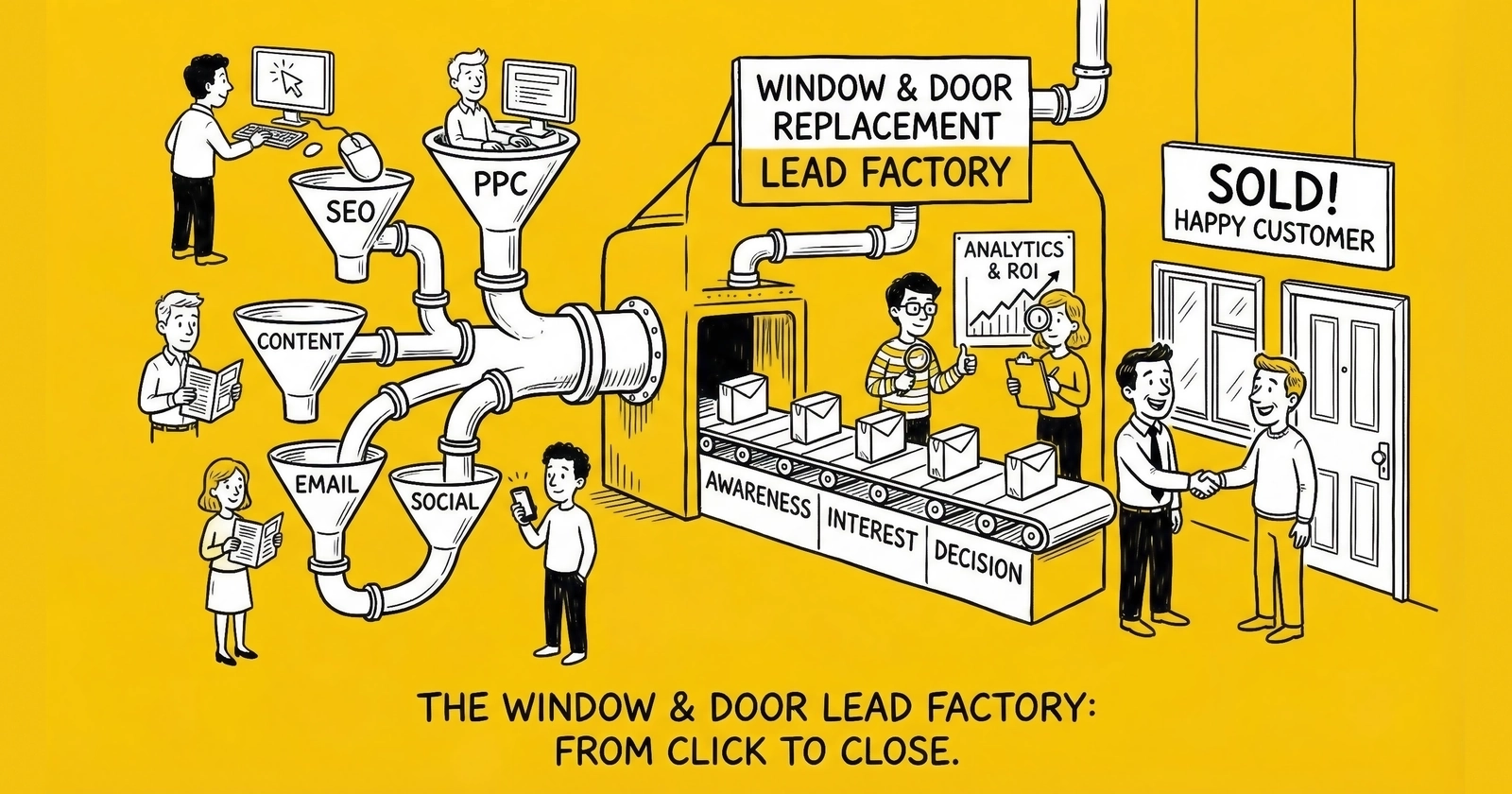
High-ticket home improvement sales, seasonal demand patterns, and the qualification strategies that separate profitable window and door lead operations from those drowning in tire-kickers.
Window and door replacement represents one of the most attractive verticals in home improvement lead generation. Average project values range from $8,000 to $25,000 for full-home replacements, with some luxury installations exceeding $50,000. These ticket sizes support lead prices that would be unsustainable in lower-value verticals while still delivering acceptable customer acquisition costs for contractors.
The window and door replacement market is projected to reach $12.8 billion by 2030, growing at approximately 4.2% annually. Energy efficiency concerns, aging housing stock, and building code updates continue driving demand. For lead generators, this creates sustained opportunity across both residential and light commercial segments.
This comprehensive guide provides the complete framework for window and door replacement lead generation: market dynamics, seasonal patterns, qualification requirements, contractor relationships, pricing strategies, and the operational considerations that determine profitability. Every number comes from current market data. Every recommendation comes from operational experience in the home improvement lead vertical.
Market Overview: The Window and Door Replacement Landscape
The U.S. window replacement market operates within a broader home improvement ecosystem that generates over $600 billion annually. Windows and doors represent approximately $50-60 billion of that total when including installation labor, a substantial segment with distinct characteristics.
Market Size and Growth Drivers
Several factors drive sustained demand for window and door replacement leads.
Energy efficiency mandates continue expanding at federal, state, and local levels. The Energy Star program reports that replacing single-pane windows with Energy Star-certified products can save $101 to $583 annually on utility bills depending on climate zone. The Inflation Reduction Act of 2022 extended tax credits for energy-efficient home improvements, including windows and doors, at 30% of project cost up to $1,200 for windows and $250 to $500 per door through 2032.
Aging housing stock creates ongoing replacement demand. The median age of U.S. homes is approximately 40 years, and windows typically last 15 to 30 years depending on material and climate exposure. This means millions of homes have windows approaching or exceeding their functional lifespan.
Extreme weather events damage windows and doors while highlighting the importance of impact-resistant products. Hurricane-prone regions like Florida and the Gulf Coast show elevated demand for impact windows, with project values 40-60% higher than standard replacements.
Aesthetic and functionality upgrades drive replacement even when windows are still functional. Homeowners renovating kitchens and bathrooms often include window replacement to complete the updated look.
Current Lead Pricing Benchmarks
Window and door lead pricing reflects the high-ticket nature of projects and the substantial margins available to contractors.
| Lead Type | Price Range | Typical Close Rate | Effective CPA |
|---|---|---|---|
| Exclusive, qualified | $60-$150 | 12-20% | $400-$900 |
| Shared (2-3 buyers) | $25-$60 | 6-12% | $350-$700 |
| Set appointments | $100-$200 | 20-35% | $400-$750 |
| Live transfer | $75-$150 | 25-40% | $300-$500 |
| Aged leads (30+ days) | $5-$20 | 2-5% | $300-$600 |
The math demonstrates why contractors pay these premiums. A typical window replacement project generates $10,000-$15,000 in revenue with gross margins of 35-50%. Even at the high end of lead costs, a $150 exclusive lead converting at 15% yields an effective cost per acquisition of $1,000 against potential gross profit of $4,000-$6,000 per sale. The unit economics support aggressive lead acquisition.
Major Market Players
National contractors dominate brand awareness but account for a minority of actual installations.
Renewal by Andersen operates as the retail replacement division of Andersen Corporation, the largest window manufacturer in North America. Their direct-to-consumer model includes in-home consultations, proprietary Fibrex material, and premium pricing positioning. They generate leads through national television advertising, digital campaigns, and a network of local franchisees. Renewal by Andersen serves as the brand benchmark in the category.
Window World operates a franchise model with over 200 locations nationally. Their positioning emphasizes value pricing with a signature $189 window (plus installation) that serves as a traffic driver. Window World franchisees typically purchase leads from corporate programs and supplement with local marketing.
Pella Windows and Doors manufactures premium windows sold through company-owned showrooms, independent dealers, and big-box retailers. Their model includes both new construction and replacement segments, with replacement leads often flowing through showroom traffic and referrals.
Regional and local contractors represent the majority of the market. These operators range from established multi-crew operations with 20+ years of history to smaller owner-operator businesses. For lead generators, regional contractors often represent the best partnership opportunities due to their need for external lead sources and their ability to make purchasing decisions without corporate bureaucracy.
Product Segmentation
Window and door leads segment by product type, each with different economics and contractor requirements.
Vinyl replacement windows represent the volume core of the market. Price points of $300 to $800 per window installed make full-home projects accessible to middle-market homeowners. Margins are moderate but volume is consistent.
Wood and wood-clad windows command premium pricing of $500 to $1,500 or more per window installed. These leads convert at lower rates but generate higher project values. Contractors specializing in wood windows often prefer exclusive leads and longer sales cycles.
Impact windows dominate coastal Florida and Gulf Coast markets. Product costs 40-60% higher than standard vinyl translate to project values of $15,000 to $40,000 for typical homes. Hurricane season creates seasonal demand spikes, though year-round installations occur for new purchases and renovations.
Entry doors range from $1,000 to $5,000 installed depending on material (steel, fiberglass, or wood) and features like glass inserts and smart locks. Entry door leads often convert as standalone projects or combine with window replacements.
Patio doors and sliding doors represent higher-value standalone projects at $2,000 to $8,000 installed. Leads specifically seeking patio door replacement often indicate larger renovation projects.
Storm doors and security doors occupy the lower-value segment at $300 to $1,500 installed. These leads generate lower revenue per project but can introduce customers who later convert to full window or entry door replacements.
Understanding which product types your leads request allows proper routing to contractors who specialize in those segments. A lead seeking impact windows in Florida requires different contractor capabilities than one seeking budget vinyl replacements in Ohio.
Seasonal Demand Patterns
Window and door replacement exhibits seasonal patterns driven by weather, construction scheduling, and homeowner behavior. Understanding these patterns allows optimized budget allocation and contractor relationship management.
Spring Peak Season (March-May)
Spring represents the highest-volume period for window and door leads in most markets. Multiple factors converge to create this demand surge.
Weather windows open after winter, allowing contractors to schedule exterior work without cold-weather complications. Homeowners who delayed decisions during winter months move forward as temperatures moderate. Tax refunds arriving in March and April provide down payment capital for financing-dependent customers, and leads generated during tax refund season often show higher closing rates due to available cash for deposits.
Spring cleaning psychology drives home improvement consideration as homeowners evaluate their properties after winter. They notice window drafts, condensation between panes, and aesthetic deterioration that accumulated during cold months. Pre-summer motivation emerges as homeowners anticipate air conditioning season, making drafty or inefficient windows a priority fix before summer utility bills arrive.
Spring Pricing and Operations
Lead pricing reaches annual highs during spring. Standard exclusive CPLs range from $80 to $120, while appointment-set leads command $120 to $180. Shared leads price between $35 and $55 per buyer.
Operationally, contractor capacity fills quickly during this period, making it essential to build relationships before peak demand arrives. Lead response time expectations compress as competition intensifies, and quality differentiation matters more as volume increases. Plan to allocate 120-140% of your average monthly spend to capitalize on spring demand.
Summer Shoulder Season (June-August)
Summer maintains solid demand with notable regional variations. Hot weather in southern markets makes homeowners acutely aware of inefficient windows and doors, with air conditioning bills providing monthly reminders of energy loss. However, installation becomes challenging in extreme heat, affecting contractor scheduling and project timelines.
Northern markets remain active during summer, with pleasant weather supporting both sales appointments and installations. Longer daylight hours extend work windows for installation crews. At the same time, vacation interruptions affect lead response and sales cycles. Homeowners traveling in summer may delay decisions, extending time from lead to close.
Hurricane season preparation from June through November drives impact window demand in coastal markets, with Florida and Texas seeing seasonal spikes in impact window leads.
Summer Pricing and Operations
Lead pricing softens slightly from spring peaks, with standard exclusive CPLs ranging from $70 to $100. Regional premiums persist in hurricane-prone areas where impact window demand remains elevated.
Contractor scheduling becomes more challenging during summer months, so confirm capacity before scaling lead volume. Leads may require longer nurturing as homeowners delay decisions for vacations and summer activities. Plan to allocate 100-110% of your average monthly spend during this period.
Fall Secondary Peak (September-November)
Fall creates a secondary demand surge driven by approaching winter. Pre-winter urgency motivates homeowners who want energy-efficient windows before heating season, and leads generated in September and October often close faster than spring leads due to deadline pressure.
End-of-year tax planning influences customers considering energy efficiency tax credits. Homeowners wanting to claim credits on current-year returns must complete projects before December 31, creating natural urgency. Post-summer assessment also drives demand as homeowners review summer cooling costs and attribute high bills to window inefficiency.
Holiday entertaining preparation drives entry door and aesthetic window upgrades. Homeowners planning Thanksgiving and December gatherings want their homes looking their best, making fall an unexpectedly strong period for curb appeal improvements.
Fall Pricing and Operations
Standard exclusive CPLs range from $75 to $110 during fall months, with premium pricing available for guaranteed pre-winter installation. Appointment-set leads command particular premiums as contractors compete for spots on crowded installation schedules.
Contractor backlogs extend significantly during fall, and leads generated late in the season may not install until spring. Setting realistic timeline expectations with both contractors and prospects becomes critical. The year-end tax credit deadline creates genuine urgency for motivated buyers who understand the financial benefit. Plan to allocate 110-120% of your average monthly spend to capture fall demand.
Winter Trough (December-February)
Winter presents challenges in most markets but offers strategic opportunities for those who understand the dynamics.
Northern market decline is pronounced. Installation becomes difficult or impossible in cold weather, and homeowners focus on holidays rather than home improvement. Lead volume drops 40-60% from peak levels. However, southern market stability continues throughout winter. Florida, Texas, Arizona, and Southern California maintain year-round installation capacity, and winter can actually be advantageous as snowbird populations increase demand in warm-weather states.
Planning-stage leads emerge during winter as homeowners research during cold months with intent to purchase in spring. These leads require longer nurturing sequences but can convert when weather improves. At the same time, contractor availability improves dramatically. Contractors who were booked solid in spring and fall become hungry for work, and lead generators can negotiate better terms and build relationships during slower periods.
Winter Pricing and Operations
Standard exclusive CPLs drop to $50-$80 range, with significant price softening in northern markets while southern markets maintain near-normal pricing. Aged lead purchasing opportunities expand as volume buyers seek inventory at reduced costs.
Operationally, focus on nurturing existing leads for spring conversion rather than aggressive new acquisition. Build contractor relationships during this low-competition period when you have their full attention. Consider aged lead strategies for volume buyers who can work longer sales cycles. Plan to allocate 60-80% of your average monthly spend during winter months.
Geographic Seasonal Variations
Seasonal patterns vary significantly by region, and understanding these variations allows for more precise budget allocation across territories.
The Northeast and Midwest exhibit the most pronounced seasonality, with peak demand concentrating in April through June and again in September and October. December through February represents minimal activity except for emergency replacements.
The Southeast shows compressed seasonality with mild winters extending the installation window considerably. Florida operates year-round with hurricane season creating June through September spikes for impact products.
The Southwest maintains relatively consistent demand throughout the year. Mild winters allow year-round installation, though summer heat in Arizona and Nevada can slow activity as homeowners avoid in-home appointments during extreme temperatures.
The Pacific Northwest faces weather-related challenges with heavy rainfall affecting installation scheduling. Dry months from July through September represent peak periods when contractors can work efficiently.
California operates nearly year-round with slight summer softening in inland areas experiencing extreme heat. Coastal markets remain consistent regardless of season.
Lead Qualification Requirements
Window and door leads require rigorous qualification to avoid wasting contractor time on prospects who cannot or will not purchase. The high-ticket nature of projects makes qualification more critical than in lower-value home services.
Homeownership Verification
The fundamental qualification question is whether the prospect owns the home and has authority to make installation decisions.
Self-reported ownership is unreliable on its own. Leads should verify homeownership through qualification questions, but understand that approximately 10-15% of self-reported owners are actually renters, living in family-owned properties, or otherwise unauthorized to make installation decisions.
Property database matching through services like ATTOM, CoreLogic, or DataTree verifies name-to-address matches and ownership status. Cost ranges from $0.50 to $2.00 per lead. This verification should occur before leads route to contractors.
HOA and condo considerations add complexity to homeownership verification. Condominium owners may own their units but have no authority over exterior modifications including windows. Homeowners in deed-restricted communities may require architectural review approval. Qualification questions should identify these situations to avoid wasted appointments.
Project Scope Qualification
Understanding the scope of the project determines lead value and proper contractor routing.
Full-home replacement involving typically 8 to 20 windows represents the highest-value opportunity, with project values of $8,000 to $25,000 or more. These leads justify premium pricing and exclusive delivery to top-performing contractors.
Partial replacement involving 3 to 7 windows indicates targeted improvements, often in specific rooms or facing specific exposures. Project values range from $3,000 to $10,000. Still valuable but lower than full-home opportunities.
Single window or door replacement may indicate emergency repair needs or budget constraints. Project values of $500 to $3,000 may not justify high lead costs for some contractors. Route these leads to contractors who accept lower-value projects and can service them profitably.
New construction or addition leads require different contractor capabilities since new construction installation differs from replacement installation. These leads may involve builder relationships rather than direct homeowner sales.
Commercial projects involving storefronts and small commercial buildings require specialized contractors and often involve bid processes rather than direct sales. Separate these from residential lead flows.
Essential Qualification Questions
Qualification questions should capture project scope accurately. Ask how many windows need replacement, seeking either an exact count or a room-by-room estimate. Determine whether entry doors, patio doors, or both are included in the project. Clarify whether this is for a primary residence, rental property, or business. Identify the property type as single-family house, condo, or townhome.
Timeline and Urgency
Timeline qualification separates ready-to-buy prospects from long-cycle researchers.
Immediate timelines within 30 days indicate motivated buyers ready for in-home consultations. These leads should receive priority routing and fastest delivery.
Near-term timelines of 1 to 3 months represent the sweet spot for most contractors. Homeowners have decided to purchase but are in active shopping mode, comparing options and gathering quotes.
Planning stage timelines of 3 to 6 months indicate research-phase prospects. These leads often convert but require nurturing sequences and may benefit from shared distribution rather than exclusive delivery.
Future consideration timelines of 6 months or more suggest low immediate intent. These leads may enter nurture sequences but should not command premium pricing. Aged lead treatment is appropriate.
Emergency replacement situations involving broken windows, break-in damage, or storm damage create immediate urgency with compressed sales cycles. These leads command premiums but represent relatively small volume.
Budget and Financing Qualification
Window and door projects typically require financing or substantial cash outlay. Pre-qualifying financial capability reduces wasted sales appointments.
Budget range questions should be positioned carefully. Asking “What is your budget?” often yields unrealistic low numbers. Better approaches frame the question within realistic ranges, such as explaining that full-home window replacement typically costs $8,000 to $20,000 depending on the number of windows and features, then asking if the prospect is prepared to invest in this range. Alternatively, mention that most customers use financing with monthly payments of $150 to $400 and ask if that fits their household budget.
Financing interest should be captured on every lead. Contractors with in-house financing options like 12-month same-as-cash or extended payment plans convert leads at higher rates. Leads indicating financing interest should route to contractors offering flexible payment options.
Credit qualification presents sensitivity challenges. Direct credit questions may reduce form completion rates. Softer approaches work better, such as noting that financing partners require good credit of 660 or higher and asking if the prospect expects to qualify, or asking whether they have been approved for home improvement financing before.
For premium exclusive leads, soft credit verification before delivery can confirm qualification. The cost is justified when leads sell for $100 or more and contractors expect pre-qualified prospects.
Property Condition Assessment
Property characteristics affect installation feasibility and project complexity.
Home age correlates with window condition. Homes built before 1980 likely have original windows in poor condition, creating clear replacement need. Homes built in the 2000s may have windows with remaining useful life, making the sale more challenging and requiring different messaging.
Current window type matters for replacement complexity. Replacing wood windows with vinyl requires different installation approaches than vinyl-to-vinyl replacement. Historic homes with original wood windows may require specialized preservation contractors rather than standard replacement services.
Previous work indicates buying propensity. Homeowners who have completed other home improvement projects like roofing, siding, or HVAC demonstrate willingness to invest in their homes and often convert at higher rates.
Rental versus owner-occupied status affects decision dynamics. Owner-occupants purchase for comfort and aesthetics, often willing to pay for premium products. Landlords purchase for durability and ROI, typically selecting different products and expecting lower price points.
Traffic Acquisition Strategies
Effective window and door lead generation requires multi-channel traffic acquisition optimized for the high-consideration nature of the purchase.
Paid Search (Google Ads)
Paid search remains the highest-intent traffic source for window and door leads. Homeowners actively searching for replacement services demonstrate immediate interest and convert at higher rates than any other channel.
Keyword Strategy
High-intent keywords command premium CPCs but deliver superior conversion. These include location-modified terms like “window replacement near me” and “window replacement [city],” cost-focused queries like “replacement windows cost” and “window replacement prices,” and service provider searches like “window installation company” and “window contractors.” Energy efficiency terms and brand terms for companies like Renewal by Andersen, Pella, and Window World also perform strongly.
Informational keywords capture earlier-stage prospects at lower cost. Terms like “how much does window replacement cost,” “best replacement windows 2026,” and “vinyl vs fiberglass windows” indicate research-phase intent. Content addressing “signs you need new windows” and “energy efficient window ratings” can capture prospects before they reach the buying stage.
Negative keywords prevent wasted spend on irrelevant traffic. Block automotive terms like “auto,” “car,” and “vehicle” to avoid auto glass searches. Exclude “repair” which often indicates glass repair rather than replacement, and block “DIY” and “how to install” from prospects not buying installation services. Also exclude “cleaning” and “washing” for window cleaning services, and “free” which tends to attract low-intent or fraud-prone traffic.
Landing Page and Bidding Optimization
Landing page optimization is critical for paid search campaigns. Match headlines to search query intent and display phone numbers prominently since 30-40% of leads may call directly. Place forms above the fold with minimal required fields and include trust signals covering licensing, years in business, and manufacturer partnerships. Photo galleries of completed projects provide visual proof of quality work.
Bidding strategies should optimize for conversions rather than clicks. Target CPA bidding works well once you have sufficient conversion volume for algorithmic learning. Apply geographic bid adjustments based on service area coverage and demand density. Use dayparting to emphasize business hours when contractors can respond immediately, and consider device bid adjustments since mobile often converts at lower rates for high-consideration purchases.
Facebook and Meta Advertising
Social advertising captures demand among homeowners not actively searching but open to home improvement messaging. The key lies in sophisticated audience targeting combined with compelling creative.
Audience Targeting Approaches
Interest-based targeting forms the foundation of most window and door campaigns. Target homeowners who follow home improvement and renovation content, specific window brand pages, and design-focused content from HGTV and similar sources. New homeowner signals indicate prospects likely to invest in their properties.
Life event targeting captures prospects during decision-triggering moments. Recent home purchases and recently moved signals identify homeowners evaluating their new properties. Engaged couples often trigger home improvements as they prepare for married life together.
Behavioral targeting reaches prospects based on demonstrated purchasing patterns. Focus on home improvement store purchasers, luxury home furnishing buyers, and high household income segments who can afford quality window replacement.
Lookalike audiences extend reach based on your best performers. Build lookalikes from past customer lists for highest value, form submission converters for intent signals, landing page visitors for interest indicators, and video view completers for engaged audiences.
Creative Approaches That Work
Before/after imagery demonstrating transformation resonates strongly with homeowners. Split-screen comparisons showing old windows versus new installations drive engagement and help prospects visualize results.
Energy savings messaging appeals to cost-conscious homeowners. Headlines like “Stop Paying to Heat the Outdoors” or “Cut Your Energy Bills with New Windows” connect directly to pain points that motivate purchases.
Problem awareness content educates homeowners on signs of window failure, including condensation between panes, drafts, difficulty opening or closing, and visible deterioration. This content creates recognition moments that move prospects toward action.
Testimonial video from actual customers builds trust and demonstrates results in ways static imagery cannot match.
Lead Form Ads vs. Landing Pages
Facebook Lead Ads reduce friction by keeping users on-platform but often generate lower-quality leads. Landing page conversion campaigns create more friction but deliver higher-intent leads who have invested more effort in the process.
Testing both approaches is essential. Many practitioners find Lead Ads work for volume and top-of-funnel awareness, while landing page campaigns deliver higher-intent leads worth premium routing to exclusive contractor relationships.
Local SEO and Organic Search
Organic search provides sustainable, low-cost leads for operators willing to invest in content and local optimization. While slower to build than paid channels, organic traffic compounds over time.
Google Business Profile Optimization
Google Business Profile optimization follows similar principles to other home services but requires consistent attention. Complete all profile fields thoroughly, add photos of completed projects to demonstrate quality, and collect reviews systematically with a target of at least 10 new reviews monthly. Post weekly updates about projects, special offers, or company news to signal activity to Google. Ensure NAP (name, address, phone) consistency across all directories to avoid confusing search algorithms.
Local Landing Pages
Local landing pages for each service area capture geographic search intent. Create dedicated pages for “[City] window replacement” targeting your primary markets, along with service area pages for surrounding communities. Address local considerations like climate challenges, typical housing stock, and relevant building codes to demonstrate local expertise.
Content Marketing
Content marketing builds organic visibility through helpful, search-optimized articles. High-intent locally targeted content like “Cost of window replacement in [city]” captures prospects actively researching prices. Climate-specific guides addressing the best windows for cold climates, hot climates, or hurricane zones attract relevant geographic audiences. Comprehensive guides on choosing replacement windows serve research-phase prospects. Comparison content addressing vinyl versus wood windows helps prospects make informed decisions. Seasonal content like winter preparation checklists drives timely traffic and demonstrates expertise.
Home Improvement Platforms
Marketplace platforms provide access to homeowner demand without requiring operators to build their own marketing infrastructure.
Angi and HomeAdvisor generate significant window and door lead volume. Leads are typically shared with 3 to 4 contractors, with CPL ranging from $15 to $50 depending on project scope and location. Response time is critical for shared lead success on these platforms. Quality varies considerably, so dispute invalid leads promptly to maintain economics.
Yelp for Business works in urban markets with review-conscious consumers. Window contractor profiles with strong reviews generate organic inquiries, and advertising products extend reach beyond organic discovery.
Thumbtack operates on a quote-request model where homeowners describe projects and contractors pay to submit quotes. This model works for planned purchases but is less effective for urgent needs.
Google Local Services Ads provides a “Google Guaranteed” badge for verified contractors. The pay-per-lead model with costs typically ranging from $30 to $80 for window and door leads offers an alternative to traditional paid search.
Houzz reaches design-conscious homeowners during renovation planning. While not a traditional lead platform, Houzz advertising can capture high-value prospects planning comprehensive renovations that include window replacement.
Referral and Partnership Programs
Low-cost lead sources complement paid acquisition and often deliver higher-quality prospects through trusted introductions.
Contractor referral networks involve partnering with complementary home improvement contractors like roofers, siders, HVAC technicians, and remodelers who encounter window replacement opportunities during their work. Referral fees of $50 to $200 per closed deal create mutual benefit and sustainable relationships.
Real estate agent partnerships can generate consistent volume. Agents helping clients prepare homes for sale often recommend window replacement as part of pre-listing improvements. Agents with investor clients can generate ongoing referral volume from portfolio renovations.
Insurance claim referrals tap into damage-driven demand. Property insurance agents and adjusters encounter window damage claims regularly. Building relationships with local insurance professionals can generate storm and vandalism replacement leads with immediate urgency.
Manufacturer programs operated by some window manufacturers route inquiries to authorized dealers. Participation may require minimum volume commitments or product exclusivity, but these leads often arrive pre-qualified for specific product lines.
Landing Page and Conversion Optimization
Window and door replacement requires specialized landing page approaches given the high-consideration nature of purchases.
Essential Landing Page Elements
Headline clarity immediately communicates what the visitor can accomplish. Headlines like “Get Your Free Window Replacement Quote” or “See How Much New Windows Will Cost” set clear expectations without confusion.
Trust signals must appear above the fold to establish credibility before visitors scroll. Display years in business, number of installations completed, manufacturer partnerships and certifications, license and insurance information, and review ratings with volume such as “4.8 stars from 500+ reviews.”
Benefit-focused copy connects features to outcomes that matter to homeowners. Address energy savings with messaging like “Lower your heating and cooling bills.” Highlight comfort improvement with “No more drafts or cold spots.” Emphasize home value with “Increase your home’s value and curb appeal.” Include noise reduction benefits with “Enjoy a quieter, more peaceful home.”
Visual social proof reinforces written claims. Include before/after project galleries showing transformations, video testimonials from actual homeowners, logos of recognized manufacturers to borrow credibility, and award badges and certifications that differentiate from competitors.
Clear calls to action guide visitors toward conversion. Keep forms minimal with only essential fields like name, phone, email, and ZIP code. Display phone numbers prominently with click-to-call functionality on mobile. Include a secondary CTA for those not ready to request quotes but willing to take a smaller step.
Form Optimization
Window and door lead forms must balance information capture with conversion friction. Asking too little leaves leads unqualified, while asking too much drives prospects away.
Essential fields that every form should capture include name, phone number, email address, and ZIP code or full address. These provide the minimum information needed for contractor follow-up and geographic routing.
Valuable qualification fields enhance lead quality without creating excessive friction. Include number of windows to replace, timeframe for project completion, a homeowner verification question, and best time to contact. These fields help contractors prioritize and prepare for conversations.
Some fields actively reduce conversion and should be avoided or saved for follow-up. Detailed budget questions asked too early in consideration feel premature and invasive. Credit score questions are too personal for initial contact. Extensive property details can wait until the sales conversation.
Multi-Step Form Structure
Multi-step forms often outperform single-page forms for window and door leads. Breaking qualification across two to three steps with progress indicators maintains engagement while capturing more data through psychological commitment.
An effective multi-step structure begins with property type and ZIP code in step one, establishing basic qualification. Step two captures number of windows and project scope to assess opportunity value. Step three collects contact information and preferred contact time. This progressive approach typically improves both completion rates and lead quality.
Mobile Optimization
Mobile traffic represents 60-70% of home improvement searches, making mobile optimization essential rather than optional.
Click-to-call prominence matters because many window shoppers prefer calling over form completion. Make phone numbers prominent and tappable with clear visual hierarchy drawing attention to the call option.
Simplified forms improve mobile conversion. Reduce field count compared to desktop versions and auto-populate where possible using location detection for ZIP codes. Every field you can eliminate or pre-fill improves completion rates on small screens.
Fast loading prevents abandonment. Mobile users leave slow pages quickly, so target under three-second load times. Compress images, minimize scripts, and test regularly on actual mobile networks rather than just desktop simulations.
Thumb-friendly design ensures usability. Size buttons and form fields appropriately for touch interaction, with adequate spacing to prevent mis-taps. The frustration of trying to tap small targets on mobile can drive prospects to competitors with better-optimized experiences.
Working with Window and Door Contractors
For lead generators working with window and door contractors (rather than operating as contractors themselves), relationship quality determines long-term success.
Contractor Selection Criteria
Not all window and door contractors make good lead buyers. Selecting contractors who can convert leads effectively protects your reputation and ensures sustainable relationships.
Operational Requirements
Operational capabilities determine whether a contractor can actually work the leads you provide. Look for adequate sales staff for timely follow-up, with a minimum of two to three salespeople for any meaningful volume. The contractor should have a showroom or professional presentation capability that instills buyer confidence. A CRM or lead management system must be in place to track leads and follow-up activity. Installation capacity matters too, whether through in-house crews or reliable subcontractor relationships. Financing options should be available since many window purchases require payment plans.
Financial Stability
Financial stability protects you from payment problems and ensures long-term partnership potential. Prefer established businesses with three or more years in operation for window contractors, as this industry has significant startup failure rates. Look for consistent payment history with other vendors and adequate credit lines for lead purchasing at scale. Any history of payment disputes should raise red flags.
Reputation Indicators
Reputation indicators reveal how customers experience working with the contractor. Positive Google reviews with a 4.0+ average and ideally 100+ reviews demonstrate consistent customer satisfaction. Manufacturer certifications and authorizations indicate training and product knowledge. BBB ratings, where applicable, provide additional reputation signals. Watch for significant complaint patterns that might indicate systemic problems. Verify valid licensing and insurance before routing any leads.
Product and Service Alignment
Product and service alignment ensures leads match contractor capabilities. Premium leads should route to premium contractors whose products and pricing match lead expectations. Service area coverage must match lead geography to avoid wasted appointments. Verify that the contractor has capacity to handle your lead volume without overwhelming their sales team, as lead quality suffers when contractors cannot follow up promptly.
What Contractors Actually Want
Understanding contractor priorities helps structure lead products that command premium pricing.
Contact rate above 70% matters enormously. Window replacement sales require in-home consultations, and leads that do not answer the phone waste sales time completely. Phone verification at form submission, followed by immediate delivery, maximizes contact rate and protects contractor investments in lead purchases.
Qualified homeowners represent a non-negotiable requirement. Contractors lose hours driving to appointments with renters, tire-kickers, and price-shoppers who never intended to purchase. Pre-qualification for homeownership, project scope, and timeline justifies premium pricing and builds contractor loyalty.
Accurate project scope enables proper preparation. A salesperson prepared for a 15-window full-home quote arrives at a 3-window partial replacement with different materials, different pricing, and different expectations. Leads that capture window counts and project scope enable salespeople to show up ready to close.
Realistic timeline expectations separate closable opportunities from endless research. Leads seeking quotes “just to compare prices” with no installation timeframe convert at low rates. Leads with specific timelines tied to events like before winter, after tax refund arrival, or before a home sale convert dramatically better.
Exclusivity transparency protects relationships. Contractors who believe they are receiving exclusive leads but are actually competing with other buyers discover the truth and stop buying. Be transparent about your model from the beginning.
Appointment Setting vs. Lead Delivery
Window and door contractors often prefer set appointments over raw leads due to the in-home consultation requirements. Both models have distinct economics and operational implications.
Raw lead delivery operates at lower cost per lead, typically $60 to $100, with the contractor responsible for all follow-up activity. This model supports higher total volume potential and works best for contractors with dedicated sales intake staff who can work leads quickly and persistently.
Appointment setting commands higher pricing, typically $100 to $200 or more per lead, but delivers pre-scheduled in-home consultations. Close rates run significantly higher at 20-35% compared to 12-20% for raw leads. This model suits contractors who want to focus sales time exclusively on qualified appointments rather than phone prospecting.
For lead generators, appointment setting commands significant premiums but requires call center infrastructure and careful quality control. The appointment must actually occur, with the prospect present and ready for consultation, or returns erode margins quickly.
Pricing and Terms
Lead pricing should align contractor and generator incentives while reflecting the value and risk in each transaction.
Per-lead pricing remains the simplest and most common approach. It works for both exclusive and shared models, with clear economics for both parties. Per-appointment pricing operates at higher price points with payment tied to confirmed appointments, though this requires verification that appointments actually occurred.
Revenue share models are more complex but align incentives fully when both parties trust each other. This approach requires visibility into contractor sales data and works best with established relationships where transparency flows both ways. Subscription or retainer models provide predictable costs for contractors and guaranteed revenue for generators, again working best with established partnerships where volume and quality are consistent.
Term considerations beyond pricing include exclusivity radius for geographic territory protection, return policies defining what qualifies for credit, payment terms ranging from net 15 to net 30 to prepaid arrangements, volume commitments with associated pricing tiers, and seasonal pricing adjustments to reflect demand fluctuations.
Compliance and Regulatory Considerations
Window and door lead generation operates under the same regulatory framework as other lead verticals, with some industry-specific considerations.
TCPA Compliance
The Telephone Consumer Protection Act governs outbound calling and texting to leads. Window and door leads require proper consent documentation.
Prior Express Written Consent (PEWC) is required for any telemarketing calls to cell phones using automated systems or prerecorded messages. Lead forms must include clear consent language that identifies the specific companies that may call, discloses that calls may be made using automated systems, specifies that consent is not a condition of purchase, and allows consumers to provide prior express written consent through the form submission.
Though the FCC’s one-to-one consent rule was vacated in January 2025, many sophisticated buyers still require consent to be specific to each seller. Lead generators selling to multiple contractors should capture consent for each buyer or implement comparison shopping disclosure frameworks that clearly identify all potential recipients.
TrustedForm or Jornaya certificates should document consent capture for every lead. These certificates prove the consumer completed the form and saw consent language, providing defense against TCPA claims.
Do Not Call Registry scrubbing is required before outbound calling campaigns. Leads should be scrubbed against the federal DNC list and any applicable state DNC registries before delivery to contractors.
Home Improvement Licensing
Window and door installation typically requires contractor licensing. Lead generators should verify that buyer contractors hold appropriate licenses for their service areas.
State licensing requirements vary significantly. California requires a C-17 Glazing Contractor license or B General Contractor license. Florida requires a Specialty Contractor license or General Contractor license. Many states require home improvement contractor registration even without specific window installer categories. Some municipalities layer additional licensing requirements on top of state regulations.
Selling leads to unlicensed contractors exposes both the contractor and lead generator to regulatory action. Verify licensing during contractor onboarding and periodically thereafter to ensure continued compliance.
Advertising Compliance
Window and door advertising faces FTC scrutiny for common deceptive practices.
Bait and switch concerns arise when advertising extremely low per-window prices like “$189 windows” that expand dramatically after in-home consultations. Such practices can trigger FTC action. Lead generation advertising should accurately represent likely project costs rather than using unrealistic hooks that create consumer complaints.
Energy savings claims must be substantiated with documentation. Claims like “cut your energy bills in half” require supporting evidence. Use manufacturer-provided efficiency data and Energy Star estimates to support any energy-related claims.
Financing disclosures must comply with Regulation Z (Truth in Lending). Offers like “no interest for 12 months” require proper disclosure of terms, conditions, and deferred interest provisions that apply if balances remain unpaid.
Made in USA claims require that products be “all or virtually all” manufactured in the United States. Many “American” window brands actually manufacture components overseas. Verify claims before using in advertising to avoid FTC enforcement actions.
Performance Analytics and Optimization
Measuring and optimizing window and door lead generation requires tracking from traffic acquisition through final sale.
Key Performance Indicators
Acquisition Metrics
Acquisition metrics measure the efficiency of traffic generation. Track cost per lead by channel and campaign to identify your most efficient sources. Form completion rate reveals landing page effectiveness, while click-to-call rate shows phone-preference behavior. Traffic quality indicators like bounce rate and time on site signal whether you are attracting serious prospects or casual browsers.
Lead Quality Metrics
Lead quality metrics assess whether leads represent genuine opportunities. Contact rate measures whether contractors actually reached prospects after delivery. Qualification rate indicates whether leads were legitimate, qualified opportunities meeting basic criteria. Appointment set rate matters for appointment-focused models. Return rate by source identifies problematic traffic channels requiring optimization or elimination.
Conversion Metrics
Conversion metrics track progress through the sales funnel. Lead-to-appointment rate shows how effectively leads convert to scheduled consultations. Appointment-to-sale rate (close rate) reveals contractor effectiveness and lead quality simultaneously. Average project value determines revenue potential, while revenue per lead combines close rate and project value into a single performance indicator.
Unit Economics
Unit economics determine profitability at the lead level. Cost per acquisition divides CPL by close rate to show true customer acquisition cost. Revenue per lead multiplies average project value by close rate to estimate expected revenue. Contribution margin per lead subtracts costs from revenue to show profit potential. Lifetime value including repeat purchases and referrals provides complete customer value assessment.
Attribution and Tracking
Window and door projects have extended sales cycles, making attribution challenging but essential for optimization.
Lead-to-sale tracking requires integration with contractor CRM systems or feedback loops. Without this data, optimization relies on proxy metrics like contact rate and qualification rate rather than actual conversion. Building these feedback loops takes effort but transforms optimization capability.
Multi-touch attribution matters for long-consideration purchases. A homeowner might see a Facebook ad, search on Google, visit the landing page, and return directly before converting weeks later. Understanding the full journey informs budget allocation across channels.
Call tracking is essential given the percentage of leads that call rather than complete forms. Dynamic number insertion by traffic source enables accurate attribution for phone conversions that would otherwise appear as direct traffic.
Offline conversion tracking through Google Ads and Meta requires uploading conversion data from contractor sales. This closes the loop between online advertising spend and actual sales, enabling algorithmic optimization toward true conversions rather than form submissions.
Frequently Asked Questions
What is the average cost per lead for window replacement?
Window replacement CPL varies by lead type and market. Exclusive, qualified leads typically range $60-$150, with set appointments commanding $100-$200+. Shared leads cost $25-$60 per buyer. Live transfer leads range $75-$150. The relevant metric is cost per acquisition, not cost per lead. Calculate CPA targets based on average project value ($10,000-$15,000) and acceptable customer acquisition costs (typically 8-12% of project value), then work backward to acceptable CPL based on expected close rates.
How do seasonal patterns affect window and door lead generation?
Window and door leads exhibit pronounced seasonality. Spring (March-May) represents peak demand with highest lead prices and stiffest contractor competition. Fall (September-November) creates a secondary peak driven by pre-winter urgency and tax credit deadlines. Summer maintains solid demand with some regional variation. Winter represents the trough in northern markets with 40-60% volume declines, though southern markets remain active. Successful operators allocate 120-140% of average monthly budget to spring peak, 110-120% to fall, and 60-80% to winter months.
What qualification data should window lead forms capture?
Essential fields include homeowner verification, property address or ZIP code, number of windows to replace, project timeline, and contact information. Highly valuable additional fields include current window type, specific rooms or areas needing replacement, entry door and patio door interest, financing preference, and best time to contact. Balance information capture with conversion friction. Multi-step forms often outperform single-page forms by progressively qualifying while maintaining engagement.
Should I sell window leads as exclusive or shared?
Both models have merit. Exclusive leads command $60-$150 but require higher traffic quality, thorough verification, and faster delivery. Shared leads (2-3 buyers) generate $25-$60 per buyer, potentially more total revenue per lead but with lower close rates for each buyer. Most successful operations offer both: premium exclusive inventory from verified high-intent traffic and shared leads from broader sources. Start with one model based on your traffic quality and buyer relationships, then expand.
How do I verify that window leads are legitimate homeowners?
Three verification methods work effectively. Property database matching through ATTOM, CoreLogic, or similar services costs $0.50-$2.00 per lead and catches obvious fraud. Address validation ensures real deliverable addresses. Self-reported homeownership questions filter some renters but are not fully reliable. For premium exclusive leads, combining database verification with additional qualification questions (property type, years in home, previous home improvements) creates a high-confidence qualification stack.
What makes a high-converting window replacement landing page?
High-converting window landing pages include clear headlines matching search intent, trust signals above the fold (years in business, installation count, review ratings), benefit-focused copy emphasizing energy savings and comfort, visual social proof through project galleries and testimonials, and streamlined forms with minimal required fields. Phone numbers should be prominent with click-to-call functionality. Multi-step forms often outperform single-page forms. Mobile optimization is essential as 60-70% of traffic is mobile.
How do I build relationships with window contractors?
Focus on metrics that matter to contractors: contact rate above 70%, accurate qualification data, realistic project scope information, and honest exclusivity representation. Start with regional contractors in your strongest geographic markets rather than national players. Deliver leads during business hours for maximum contact rate. Track and share performance data including contact rate, appointment rate, and close rate when available. Proactively manage volume based on capacity signals. Contractors who see consistent quality and transparency become long-term partners willing to pay premium prices.
What is the typical close rate for window replacement leads?
Close rates vary by lead type and contractor execution. Shared marketplace leads close at 6-12%. Exclusive qualified leads close at 12-20%. Set appointment leads close at 20-35%. Live transfer leads close at 25-40%. However, execution matters more than averages. Contractors who respond within 5 minutes, present professionally, offer financing options, and follow up systematically significantly outperform averages. The same leads delivered to different contractors can show 2-3x variance in close rates.
How does energy efficiency tax credit affect window lead demand?
The Inflation Reduction Act extended tax credits for energy-efficient windows at 30% of product cost up to $1,200 through 2032. This creates ongoing demand driver as homeowners can offset project costs significantly. Leads generated in October-December often show urgency to complete installations before year-end to claim credits on current-year taxes. Advertising and landing page messaging should reference available tax credits. Contractors with knowledgeable sales teams who can explain tax credit benefits close at higher rates.
What are common quality issues with window leads?
Common quality problems include non-homeowners (renters, unauthorized occupants), unrealistic timelines (just researching, no purchase intent), geographic mismatches (lead outside contractor service area), duplicate submissions, and invalid contact information. Verification stacks including phone validation, property database matching, and qualification questions reduce these issues from typical 20-30% rejection rates to under 10%. Track quality metrics by source to identify problem traffic channels. Establish clear return policies for leads that fail basic qualification.
Key Takeaways
-
Window and door replacement leads command premium pricing ($60-$150 exclusive, $100-$200+ for set appointments) because average project values of $8,000-$25,000 support substantial customer acquisition costs. Calculate cost per acquisition targets based on typical close rates of 12-20% for exclusive leads.
-
Seasonality creates dual peaks: spring (March-May) represents highest demand with premium pricing, while fall (September-November) creates secondary urgency from pre-winter motivation and tax credit deadlines. Winter trough in northern markets represents opportunity for relationship building and aged lead strategies.
-
Lead qualification determines profitability more than lead volume. Verify homeownership, capture project scope (window count, doors included), and qualify timeline. A qualified lead with 15-window scope and 60-day timeline has 3-5x the value of an unqualified inquiry.
-
Landing page optimization for high-consideration purchases requires trust signals above the fold, benefit-focused messaging, visual social proof, and streamlined forms. Phone numbers must be prominent as 30-40% of prospects prefer calling.
-
Contractor relationships require understanding their priorities: contact rate above 70%, accurate qualification data, realistic timeline expectations, and transparent exclusivity representation. Building relationships during slower seasons creates capacity access during peak demand.
-
Multi-channel acquisition combining paid search (highest intent), social advertising (demand generation), local SEO (sustainable low-cost), and marketplace platforms (volume) provides diversification and optimization opportunity.
-
Compliance requirements including TCPA consent, licensing verification, and advertising substantiation protect both lead generators and contractor partners. Document consent with TrustedForm or Jornaya certificates.
-
Performance tracking from traffic acquisition through final sale enables true optimization. Proxy metrics like contact rate and qualification rate are valuable, but lead-to-sale tracking through contractor feedback or CRM integration reveals actual unit economics.
Understanding window and door replacement lead generation requires appreciating the high-consideration, high-ticket nature of the purchase. Homeowners making $10,000-$25,000 decisions research thoroughly, compare options, and expect professional handling from first contact through installation. Lead generators who deliver qualified, verified, high-intent prospects to capable contractors build sustainable businesses in this premium vertical.