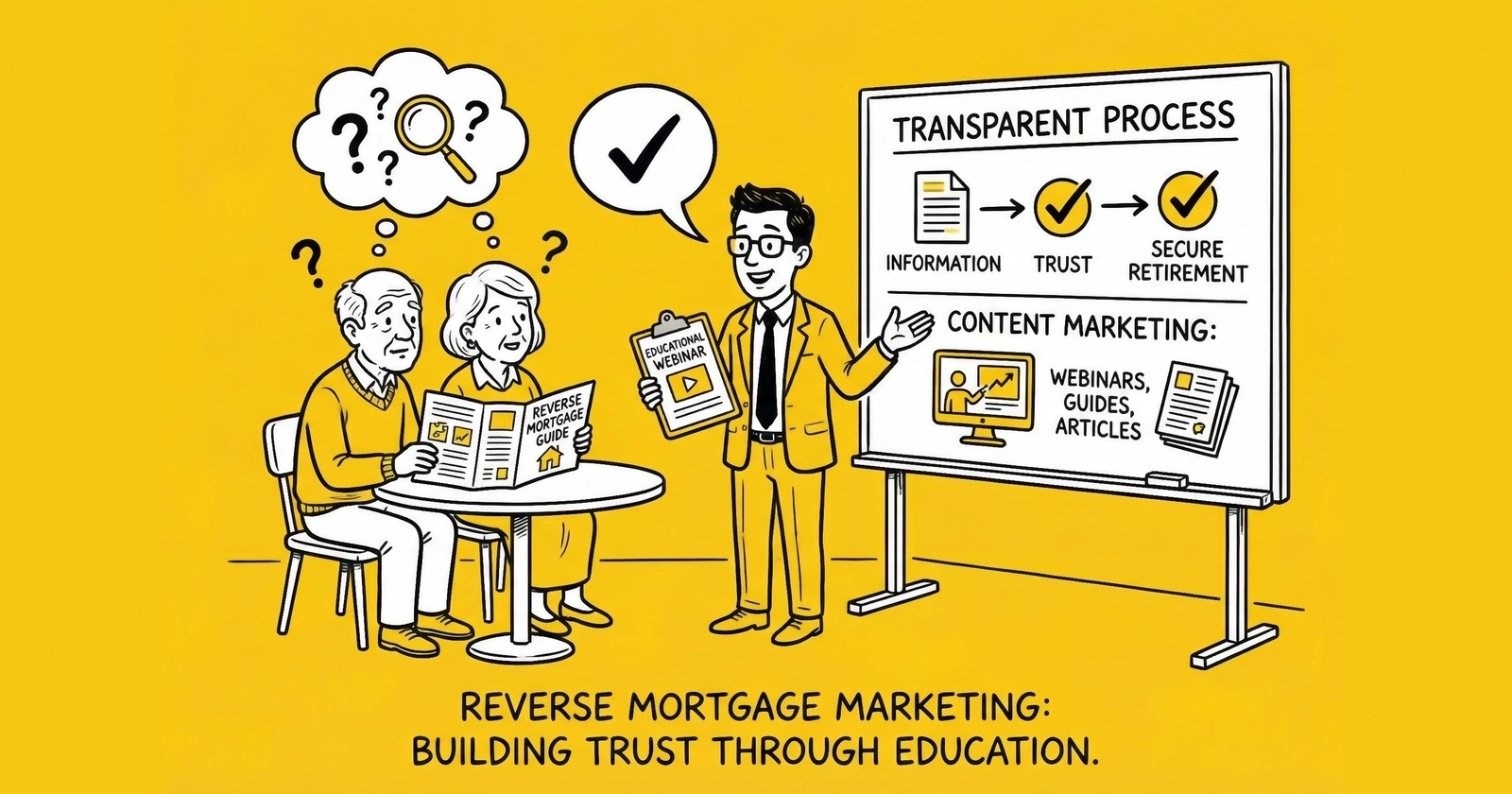
HECM products serve seniors who need to access home equity without monthly payments. The opportunity is substantial. The ethical obligation is absolute.
The reverse mortgage industry exists at the intersection of demographic necessity and regulatory scrutiny. Over 10,000 Americans turn 65 every day, and many enter retirement with substantial home equity but limited liquid assets. The Home Equity Conversion Mortgage program, administered by HUD and insured by the FHA, provides a legitimate solution for seniors who need to access that equity without the burden of monthly mortgage payments. When properly marketed to appropriate candidates, reverse mortgages can provide genuine financial relief and retirement security.
When improperly marketed, they can devastate elderly borrowers who did not fully understand the product, the costs, or the consequences.
This distinction defines everything about reverse mortgage lead generation. Those who succeed long-term in this vertical understand that ethical marketing to seniors is not merely a regulatory requirement or reputational consideration. It is the foundation of sustainable business. Lenders and originators facing regulatory enforcement, class action litigation, or consumer protection investigations are not buying leads. Compliance-focused operations that generate informed, appropriate prospects for legitimate HECM products build the buyer relationships and pricing power that sustain profitability.
This guide covers the complete landscape of reverse mortgage lead generation: HECM product fundamentals, senior targeting ethics and accessibility requirements, HUD and FHA compliance frameworks, channel strategies that reach appropriate prospects, CPL benchmarks, and the operational infrastructure that protects both your business and the consumers you serve.
Understanding the Reverse Mortgage Market
The reverse mortgage market operates differently from traditional mortgage lead generation in nearly every dimension. The product itself is fundamentally distinct, the borrower population has unique characteristics and protections, the regulatory framework is more prescriptive, and the buyer landscape is more concentrated. Understanding these differences is essential before entering the vertical.
What Is a HECM?
A Home Equity Conversion Mortgage is a federally insured loan that allows homeowners aged 62 or older to convert part of their home equity into cash while continuing to live in the home. Unlike traditional mortgages, HECMs require no monthly mortgage payments. The loan balance increases over time as interest and fees accrue, with repayment deferred until the borrower sells the home, moves out permanently, or passes away.
HECMs constitute approximately 90% of the U.S. reverse mortgage market. The remaining market consists of proprietary reverse mortgages, often called jumbo reverse mortgages, which serve borrowers with homes exceeding the HECM lending limit. The Federal Housing Administration insures HECM loans, providing protection for both borrowers and lenders. This federal insurance is funded through Mortgage Insurance Premiums paid by borrowers.
Key HECM Features
Borrowers can receive funds through several disbursement options: lump sum, monthly payments, a line of credit, or combinations of these methods. The line of credit option has grown increasingly popular because the unused portion grows over time at the same rate as the loan balance.
The maximum claim amount for HECM loans in 2025 is $1,209,750, meaning borrowers cannot receive more than this limit regardless of home value. For homes worth more than this amount, proprietary reverse mortgages may provide additional access to equity, though without federal insurance protections.
Borrowers retain title to the home and remain responsible for property taxes, homeowner’s insurance, and home maintenance. Failure to meet these obligations can trigger loan default and potential foreclosure, one of the most serious consumer protection concerns in the industry.
The non-recourse feature protects borrowers and their heirs. When the loan becomes due, borrowers or heirs will never owe more than the home’s value at the time of sale, even if the loan balance exceeds that value. The FHA insurance covers any shortfall.
Market Size and Dynamics
The reverse mortgage market has experienced significant volatility over the past decade. HECM endorsements peaked at approximately 114,000 in fiscal year 2009, declined sharply following financial crisis housing corrections, and have fluctuated between 30,000 and 60,000 annual endorsements in recent years.
Fiscal year 2024 saw approximately 33,000 HECM endorsements, reflecting continued challenges from elevated interest rates that reduce principal limit factors and correspondingly reduce the loan amounts available to borrowers. Higher rates mean borrowers can access less of their home equity, making the product less attractive for some use cases.
The proprietary reverse mortgage segment has grown as lenders develop products for borrowers with high-value homes who want to access equity above HECM limits. This segment represents a smaller volume but higher loan amounts and potentially different lead economics.
Despite near-term volume challenges, long-term demographic trends strongly support market growth. The 65+ population in the United States exceeded 58 million in 2024 and is projected to reach 80 million by 2040. Many of these seniors will enter retirement with substantial home equity but insufficient liquid retirement savings. The Insured Retirement Institute has estimated that the percentage of households headed by someone 65 or older with home equity exceeding $100,000 will continue to grow, creating an expanding pool of potential HECM candidates.
Major Players in Reverse Mortgage Origination
The reverse mortgage lending market is concentrated among a relatively small number of specialized lenders, with larger banks having largely exited the space over the past decade.
Specialized HECM Lenders
Finance of America Reverse, formerly known as American Advisors Group (AAG), represents one of the largest HECM originators. The company has invested heavily in direct-to-consumer marketing, including national television advertising campaigns, and maintains substantial appetite for third-party lead acquisition.
Longbridge Financial, Mutual of Omaha Reverse Mortgage, Reverse Mortgage Funding, and Liberty Reverse Mortgage (a subsidiary of PHH Mortgage) constitute the next tier of significant originators. Each maintains active lead acquisition programs and works with third-party lead generators.
Wholesale and Correspondent Channels
Beyond retail origination, wholesale and correspondent channels allow smaller originators to participate in the reverse mortgage market. These channels create additional lead buyer opportunities, though with different qualification requirements and potentially different pricing.
Financial Advisors and Estate Planners
An emerging channel involves financial advisors and estate planners who recognize reverse mortgages as a legitimate retirement planning tool. Lead generation targeting this referral channel differs from direct-to-consumer approaches but can produce high-quality prospects with appropriate professional guidance already in place.
The Ethics of Senior Marketing
Senior marketing ethics is not a compliance checkbox. It is the operational foundation that determines whether your reverse mortgage lead generation business will exist in five years.
The regulatory agencies overseeing reverse mortgages, including HUD, the FHA, the CFPB, and state attorneys general, view senior financial protection as a priority enforcement area. The legal environment has produced substantial settlements and enforcement actions against originators and marketers whose practices were deemed deceptive, misleading, or abusive. Even practices that might be marginally acceptable in other financial services verticals can trigger enforcement in reverse mortgages.
More practically, the lenders and originators who purchase reverse mortgage leads have strong incentives to work only with ethical lead sources. A lender whose lead funnel includes consumers who were misled about the product, pressured into inquiries they did not fully understand, or targeted based on financial distress signals faces disproportionate regulatory scrutiny, customer complaints, and loan performance problems. These lenders will pay premium prices for leads they trust and will quickly terminate relationships with sources that create problems.
Understanding Senior Consumer Vulnerability
The 62+ population that qualifies for reverse mortgages is not a monolithic demographic. It includes sharp, sophisticated financial decision-makers alongside individuals experiencing cognitive decline, isolation, or financial desperation. Ethical marketing requires understanding this spectrum and designing processes that protect vulnerable consumers.
Cognitive Considerations
Cognitive processing speed declines with age, affecting how quickly seniors can evaluate complex information. Working memory capacity diminishes, making it harder to hold multiple product features in mind while comparing options. These are normal aging effects that do not indicate incapacity but do require adapted communication approaches.
Forms, landing pages, and marketing materials should present information clearly and sequentially rather than asking seniors to synthesize complex, multi-part disclosures simultaneously. Adequate time must be provided for decision-making; high-pressure tactics or artificial urgency are both ethically inappropriate and practically counterproductive.
Dementia and significant cognitive impairment affect a meaningful percentage of the 75+ population, and mild cognitive impairment rates are higher still. Lead generation processes should include appropriate screening, and marketing should not target demographics or channels associated with cognitive vulnerability.
Financial Desperation Targeting
One of the most serious ethical violations in reverse mortgage marketing involves targeting seniors experiencing financial distress. Marketing that emphasizes “eliminate your debts” or “stop foreclosure” to consumers who may be in financial crisis attracts prospects making decisions under duress who may not fully understand the long-term implications.
This does not mean reverse mortgages cannot legitimately help seniors in financial difficulty. They can. But the marketing approach must allow for informed decision-making rather than capitalizing on desperation.
Isolation and Lack of Family Involvement
Seniors without family involvement in financial decisions face particular vulnerability. Research consistently shows that elder financial exploitation often targets isolated individuals. Ethical marketing encourages family involvement in the decision process rather than discouraging it.
Lead forms that ask about family situation or whether the prospect has discussed reverse mortgages with family members can serve multiple purposes: improving lead quality by identifying appropriate decision-making support, and screening for situations that warrant additional care.
Prohibited and Problematic Practices
Certain marketing practices are prohibited by regulation, clearly unethical, or both.
Deceptive Claims About Government Programs
Marketing that implies reverse mortgages are government programs offering “free money” from the government, or that uses government agency names and imagery in ways that suggest official endorsement, violates federal advertising regulations. The FHA insures HECM loans but does not endorse or recommend them. Marketing materials must be clear that reverse mortgages are loan products, not government benefits.
Misleading Comparisons to Government Benefits
Framing reverse mortgages as equivalent to Social Security, Medicare, or other government benefits exploits seniors’ trust in these programs. This practice has been the subject of enforcement actions and should be absolutely avoided.
Urgency and Scarcity Tactics
Creating artificial urgency (“This program may not be available next month”) or scarcity (“Limited funds remaining”) exploits decision-making biases in ways that are particularly problematic with senior consumers. These tactics are common in other marketing contexts but are inappropriate for financial products targeting seniors.
Testimonials Without Context
Testimonials from satisfied borrowers can be legitimate marketing content, but testimonials that imply typical results without appropriate disclaimers, or that feature individuals who are actors rather than actual customers, create regulatory risk.
Targeting Based on Financial Distress Signals
Using data sources that identify consumers in foreclosure, bankruptcy, or severe financial distress for aggressive reverse mortgage marketing raises serious ethical concerns. While reverse mortgages can legitimately help some consumers facing financial challenges, targeting based on distress signals increases the likelihood of marketing to consumers in poor positions to make informed decisions.
Accessibility Requirements for Senior Marketing
Beyond ethical considerations, practical accessibility requirements affect reverse mortgage marketing effectiveness.
Form and Website Accessibility
Senior users require larger font sizes than younger demographics. Minimum 16-pixel body text, with 18 pixels preferred, improves readability. High contrast between text and background colors, particularly avoiding gray-on-gray or low-contrast design trends popular in younger-focused design, is essential.
Form field labels should be clear and positioned consistently. Error messages should be specific and helpful rather than cryptic. Progress indicators in multi-step forms help users understand where they are in the process.
Mobile optimization matters, but desktop usage among seniors remains higher than in younger demographics. Approximately 40-50% of senior financial product research occurs on desktop devices, compared to 25-35% for younger consumers in other financial verticals.
Phone as Primary Channel
Telephone remains the dominant communication preference for the 65+ demographic making complex financial decisions. Research consistently shows that 60-75% of seniors prefer phone contact over email or digital communication for financial services. Lead forms should capture phone numbers as required fields, and phone validation takes on elevated importance.
Landing pages should prominently feature phone numbers for consumers who prefer calling directly rather than completing forms. Many seniors will research online but prefer human conversation for actual decision-making.
Reading Level and Clarity
Marketing materials should aim for 8th-grade reading level or lower. Complex financial terminology should be explained in plain language. Sentences should be shorter and paragraph structures simpler than might be used for younger demographics.
This is not “dumbing down” content. It is recognizing that working memory and processing speed considerations affect how effectively complex information can be absorbed.
HECM Product Fundamentals for Lead Generators
Effective reverse mortgage lead generation requires understanding what you are marketing well enough to qualify prospects appropriately and avoid misleading claims. Lead generators do not need to be HECM specialists, but they need product literacy sufficient to create accurate marketing and useful qualification.
Eligibility Requirements
Age Requirement
All borrowers on the title and loan must be at least 62 years old. If one spouse is 62+ and one is younger, options exist but are more complex. The age of the youngest borrower affects the loan amount available, with younger borrowers receiving lower principal limits.
Property Requirements
The property must be the borrower’s primary residence. Investment properties and second homes do not qualify. Eligible property types include single-family homes, HUD-approved condominiums, manufactured homes meeting specific requirements, and 2-4 unit properties where the borrower occupies one unit.
The property must meet FHA minimum property standards, and any significant repairs may need to be completed before or immediately after closing, with funds set aside for this purpose.
Financial Assessment
HUD implemented financial assessment requirements for HECM loans in 2014. Lenders must evaluate borrowers’ willingness and ability to meet property charges, including property taxes, homeowner’s insurance, and maintenance costs. Borrowers with insufficient documented income or poor credit history related to these obligations may be required to have a Life Expectancy Set Aside, reducing the funds available to them.
Financial assessment does not require the same income documentation as traditional mortgages, but it does require some documentation of income, assets, and credit history.
Counseling Requirement
All HECM borrowers must complete counseling with a HUD-approved reverse mortgage counselor before application. This counseling covers how reverse mortgages work, alternatives to reverse mortgages, borrower obligations, and consumer protections. The counseling requirement is designed to ensure informed decision-making.
Lead generation marketing should acknowledge the counseling requirement and not attempt to circumvent it or downplay its importance. Counseling protects consumers and, by extension, protects lenders from dealing with borrowers who did not understand the product.
How Loan Amounts Are Determined
The amount a borrower can access through a HECM depends on several factors.
Age of Youngest Borrower
Older borrowers receive higher principal limits because the loan is expected to be outstanding for a shorter period before repayment. The age factor tables published by HUD determine specific percentages.
Interest Rates
Higher interest rates reduce available loan amounts. When the expected rate on a HECM increases, the principal limit factor decreases, meaning borrowers can access less of their home’s value. This rate sensitivity has significantly impacted HECM volume during the 2023-2025 elevated rate environment.
Home Value
The appraised value of the home, up to the HECM lending limit ($1,209,750 in 2025), establishes the maximum claim amount. Borrowers with homes worth more than this limit cannot access equity above the limit through HECM, though proprietary products may be available.
Existing Mortgage Balance
Any existing mortgage on the property must be paid off from the reverse mortgage proceeds. Borrowers with substantial existing mortgages relative to home value may find that paying off the existing loan consumes most or all of the available funds.
Costs and Considerations
HECM loans carry significant costs that lead generation marketing should not obscure.
Mortgage Insurance Premiums
Initial MIP of 2% of the maximum claim amount is charged at closing. Annual MIP of 0.5% of the outstanding loan balance accrues over the life of the loan. These premiums fund the FHA insurance that protects both borrowers and lenders.
Origination Fees
Lenders may charge origination fees up to $6,000, depending on the home’s value. The specific structure involves a maximum of $2,500 for homes worth $125,000 or less, and 2% of the first $200,000 plus 1% of amounts above $200,000, with a cap of $6,000, for higher-value homes.
Closing Costs
Standard closing costs including appraisal, title insurance, recording fees, and other third-party costs apply. These can range from $2,000 to $10,000 depending on location and loan complexity.
Interest Accrual
Interest accrues on the outstanding loan balance throughout the life of the loan. Borrowers do not make interest payments; instead, the interest compounds onto the principal. This means the loan balance grows over time, reducing the equity remaining in the home.
Impact on Heirs
When the borrower passes away or permanently leaves the home, the loan becomes due. Heirs can repay the loan and keep the home, sell the home and retain any equity above the loan balance, or allow the lender to take the home. Marketing should not obscure this reality.
Regulatory Compliance Framework
Reverse mortgage lead generation operates under overlapping federal and state regulatory frameworks. The combination of FHA insurance requirements, CFPB oversight, state mortgage advertising regulations, and general consumer protection law creates a compliance environment that requires careful attention.
HUD and FHA Requirements
The Department of Housing and Urban Development and the Federal Housing Administration establish the framework for HECM lending, including requirements that affect marketing.
Advertising Standards
HUD has issued specific guidance on HECM advertising. Marketing materials must not create the impression that HECM is a government benefit or grant. Any claim about available loan amounts must be qualified to indicate that amounts depend on individual circumstances. Claims about “free money” or similar characterizations are prohibited.
Marketing must not imply that the home is not at risk. While the non-recourse feature protects borrowers and heirs from owing more than the home’s value, the home itself is collateral for the loan and can be foreclosed if borrower obligations are not met.
Any representation about costs must be complete and not misleading. Advertising that emphasizes “no monthly mortgage payments” without disclosing ongoing property charge obligations (taxes, insurance, maintenance) is incomplete and potentially misleading.
Required Disclosures
HECM advertising that mentions specific loan terms, amounts, or costs typically triggers disclosure requirements similar to traditional mortgage advertising under the Truth in Lending Act. Lead generation landing pages and advertisements should be reviewed for disclosure compliance.
CFPB Oversight
The Consumer Financial Protection Bureau has enforcement authority over reverse mortgage marketing and has been active in this area.
Enforcement History
CFPB enforcement actions have targeted reverse mortgage advertisers and lenders for deceptive marketing practices including misleading claims about government endorsement, failure to disclose loan costs adequately, and marketing tactics designed to exploit senior vulnerability.
Settlements have included civil penalties, consumer refunds, and mandatory compliance program implementation. The CFPB has indicated that reverse mortgage marketing remains a priority area.
UDAAP Standards
The prohibition on Unfair, Deceptive, or Abusive Acts or Practices applies fully to reverse mortgage marketing. Claims that are technically accurate but create misleading impressions can still constitute UDAAP violations. This requires particular care in how benefits and risks are presented.
State Regulations
State mortgage advertising regulations, state unfair and deceptive acts and practices statutes, and state attorney general consumer protection enforcement create additional compliance layers.
State Licensing Considerations
Most states regulate mortgage advertising and may impose specific requirements for reverse mortgage marketing. Some states require that reverse mortgage advertisements include specific disclosures or warnings. Lead generators should ensure their marketing complies with requirements in all states where advertisements appear.
State Attorney General Enforcement
State attorneys general have pursued enforcement actions against reverse mortgage marketers, often in conjunction with or separate from federal enforcement. Multi-state investigations have targeted national marketing campaigns with deceptive elements.
TCPA Compliance
Standard TCPA compliance applies to reverse mortgage lead generation, with no special exemptions.
Consent Requirements
Prior express written consent is required for autodialed calls or texts to mobile numbers and for prerecorded calls to any number. The consent must be clear and conspicuous and must not be a condition of purchase.
Senior-Specific Considerations
While TCPA does not have age-specific provisions, practical considerations around senior contact preferences affect compliance strategy. Seniors may be more likely to have home landlines (reducing mobile number consent issues) but also more likely to be on the National Do Not Call Registry.
Lead Purchaser Compliance Requirements
Beyond regulatory compliance, lead generators must understand that sophisticated HECM lenders impose their own compliance requirements.
Lender Due Diligence
Lenders purchasing reverse mortgage leads typically conduct due diligence on lead sources, reviewing marketing materials, consent capture mechanisms, and lead generation practices. Lenders facing regulatory scrutiny will be particularly careful about lead source compliance.
Documentation Requirements
Lead purchasers may require consent certificates, source URL verification, and form screenshot documentation. Building these documentation capabilities into your lead generation infrastructure from the beginning simplifies buyer onboarding.
Channel Strategies for Reverse Mortgage Leads
Reverse mortgage lead generation works across multiple channels, each with distinct characteristics, costs, and qualification considerations.
Paid Search Advertising
Google Ads remains a primary channel for reverse mortgage lead generation, though with significant considerations around cost and policy compliance.
Cost Per Click Benchmarks
Reverse mortgage is a competitive keyword category, with CPCs ranging from $15-40 for commercial intent keywords like “reverse mortgage rates” or “HECM lenders.” Branded keywords for specific lenders are generally prohibited for third-party bidding. Long-tail keywords around reverse mortgage alternatives, eligibility requirements, and educational queries can provide lower CPCs at $8-20 while reaching consumers earlier in the research process.
Google Advertising Policies
Google has specific policies for financial services advertising, including requirements for proper disclosure and prohibitions on misleading claims. Accounts that violate these policies face ad disapprovals, account suspensions, or permanent bans. Policy-compliant accounts are essential for sustainable paid search operations.
Landing Page Optimization
Reverse mortgage landing pages for paid search should emphasize clear information, prominent phone numbers, and simple form structures. Page load speed matters across demographics but particularly for seniors on older devices or slower connections. Trust signals including lender partnerships, industry certifications, and consumer protection disclosures improve conversion rates.
Facebook and Social Advertising
Meta platforms provide substantial reach to the 62+ demographic, with Facebook in particular indexing heavily toward older users.
Age Targeting
Facebook allows age targeting to reach 62+ users, the minimum age for HECM eligibility. This targeting capability is essential for reverse mortgage campaigns to avoid wasting spend on ineligible younger consumers.
Creative Considerations
Visual creative should feature age-appropriate individuals and settings. Testimonial formats work well when properly disclosed. Educational content about reverse mortgage fundamentals can drive engagement and lead capture.
Compliance Challenges
Facebook’s financial services advertising policies require proper licensing and disclosure. Additionally, Meta’s policies around “special categories” of advertising (including housing) impose limitations on targeting and optimization that affect campaign efficiency.
Television and Radio
Traditional broadcast media remains highly effective for reaching the 62+ demographic, though with higher entry costs than digital channels.
Direct Response Television
National cable networks with older-skewing demographics, including news networks and classic entertainment channels, provide efficient reach. Direct response formats with prominent phone numbers generate call leads that can be routed to lender call centers or third-party lead buyers.
Radio
AM talk radio and news formats reach older demographics effectively. Radio offers lower production costs than television while maintaining the audio format that resonates with senior consumers preferring phone contact.
Content Marketing and SEO
Organic search traffic from educational content about reverse mortgages can provide high-quality leads at favorable unit economics.
Content Strategy
Educational content addressing common reverse mortgage questions, eligibility requirements, alternatives, and costs attracts consumers in the research phase. This content naturally attracts an older demographic because younger consumers rarely research reverse mortgages.
Keyword Targeting
Informational keywords like “how does a reverse mortgage work” or “reverse mortgage requirements” attract earlier-stage researchers. Commercial keywords like “best reverse mortgage lenders” attract consumers closer to decision. Both can convert but at different rates and with different content needs.
Authority Development
Reverse mortgage is a YMYL (Your Money or Your Life) topic under Google’s quality guidelines, meaning content quality and source authority significantly impact rankings. Building genuine expertise signals through quality content, authoritative citations, and user experience investments supports sustainable SEO performance.
Direct Mail
Direct mail remains effective for reaching older demographics who may be less digitally engaged.
Targeting Data
Age-qualified homeowner lists provide the foundation for reverse mortgage direct mail. Additional filters for home value, estimated equity, and geographic targeting improve efficiency.
Compliance in Print
Direct mail must comply with the same advertising standards as digital channels. Required disclosures must be present and legible. Claims must be substantiated and not misleading.
Response Mechanisms
Phone response remains primary for direct mail to seniors. QR codes and URLs provide secondary response options for digitally comfortable recipients.
Referral and Partnership Channels
Professional referral relationships can generate high-quality reverse mortgage leads from trusted intermediary sources.
Financial Advisors
Certified financial planners and retirement specialists increasingly recognize reverse mortgages as legitimate retirement planning tools. Educational partnerships that help advisors understand when reverse mortgages are appropriate for their clients can generate qualified referrals.
Estate Planning Attorneys
Attorneys working on estate planning may encounter clients for whom reverse mortgages address specific planning objectives. Referral relationships should be structured to avoid prohibited referral fees while allowing appropriate compensation for marketing services.
Real Estate Professionals
Real estate agents working with seniors considering downsizing may encounter situations where reverse mortgages provide alternatives to selling. This channel requires careful education about when reverse mortgages are and are not appropriate.
CPL Benchmarks and Lead Economics
Reverse mortgage lead pricing varies substantially based on lead quality, qualification depth, and market conditions.
CPL Ranges by Lead Type
Basic Inquiry Leads
Leads consisting of contact information and basic eligibility confirmation (age 62+, homeowner, primary residence) typically price at $45-75. These leads require substantial follow-up qualification by purchasers and convert at lower rates.
Qualified Leads
Leads with additional qualification including estimated home value, existing mortgage balance, and reason for interest command $75-125. Higher qualification reduces purchaser follow-up burden and improves conversion rates.
Counseling-Ready Leads
Leads where the consumer has expressed commitment to completing HUD counseling and proceeding with the loan process represent the highest form lead quality. These leads price at $125-200 and convert at substantially higher rates.
Live Transfers
Inbound calls or warm transfers where consumers are connected directly to loan officers price at $150-300 depending on qualification depth and exclusivity. Despite higher per-lead costs, the conversion rates often produce better unit economics than form leads.
Market Factors Affecting Pricing
Interest Rate Environment
When rates are elevated and HECM loan amounts are correspondingly reduced, some potential borrowers find the product less attractive, reducing overall market demand. This can compress lead pricing as lead generators compete for reduced buyer demand.
Lender Capacity and Appetite
The concentrated reverse mortgage lender market means that capacity changes at major lenders significantly impact market-wide lead demand and pricing. When major originators expand marketing and lead acquisition, prices rise. When they contract, prices fall.
Seasonal Patterns
Reverse mortgage leads show modest seasonality, with Q1 often stronger as seniors review financial situations at year-start and Q4 sometimes slower as holiday activities reduce decision-making. The seasonality is less pronounced than in other mortgage or insurance verticals.
Conversion Rate Benchmarks
Reverse mortgage conversion rates run lower than traditional mortgage leads due to the product’s complexity and the extended decision-making process common among senior consumers.
Form Lead Conversion
Basic form leads convert to funded loans at 1-3%, depending on lead quality and lender follow-up effectiveness. Qualified leads convert at 3-6%. Counseling-ready leads convert at 6-12%.
Live Transfer Conversion
Live transfers convert at 8-15%, reflecting the higher engagement level and immediate connection to loan officers.
Sales Cycle Length
The average time from lead to funded reverse mortgage loan runs 60-120 days, significantly longer than traditional purchase mortgages. This extended cycle reflects both the complexity of the product and senior decision-making patterns that appropriately involve family consultation and careful consideration.
Building Compliant Operations
Sustainable reverse mortgage lead generation requires purpose-built compliance infrastructure that protects both the business and the consumers it serves.
Documentation and Consent
Consent Capture
Standard TCPA consent requirements apply, with consent capture including timestamp, IP address, user agent, and certificate generation. Third-party verification platforms like TrustedForm or Jornaya provide independent consent documentation.
Marketing Material Archive
Maintain archived versions of all landing pages, advertisements, and marketing materials with effective dates. If regulatory or lender inquiries arise, demonstrating exactly what consumers saw when they converted provides essential protection.
Call Recording
Any telephone contact with consumers should be recorded in compliance with applicable one-party or two-party consent laws. Recordings document what was said and protect against mischaracterization.
Quality Assurance
Lead Validation
Phone number validation, address verification, and age qualification checking should occur before leads enter distribution. Delivering leads that fail basic eligibility requirements damages buyer relationships and wastes purchaser resources.
Source Monitoring
If working with affiliate or sub-publisher traffic, implement source-level performance tracking and compliance monitoring. Bad traffic from a single source can damage your entire buyer relationship if not identified and addressed quickly.
Conversion Feedback
Work with lead purchasers to receive conversion feedback, even if delayed. Understanding which leads convert and which do not allows optimization of traffic sources, landing pages, and qualification criteria.
Buyer Relationship Management
Compliance Transparency
Sophisticated reverse mortgage lenders will conduct compliance reviews before purchasing leads. Welcome this scrutiny; it demonstrates the quality of your operation and builds trust. Lenders who do not ask questions may not be the long-term partners you want.
Accurate Representation
Represent your lead generation methods accurately to purchasers. Leads generated through aggressive tactics that misrepresent the product will produce poor conversion rates and customer complaints. Even if initial sales occur, the relationship will not survive once purchasers understand true lead quality.
Responsive Communication
When purchasers raise lead quality or compliance concerns, respond promptly and seriously. A lead purchaser raising concerns is doing you a favor by identifying problems before they become larger issues.
Frequently Asked Questions
What is the minimum age for reverse mortgage eligibility, and how does this affect lead targeting?
The minimum age for HECM reverse mortgages is 62 years old. All borrowers whose names will be on the loan must meet this age requirement. This creates a clear targeting parameter for lead generation, with age-based targeting on platforms like Facebook and age-qualified data sources for direct mail essential for campaign efficiency. Leads from consumers under 62 represent wasted cost and should be filtered or excluded. Some lead generators capture spouse information to identify situations where one spouse qualifies and one does not, as this affects product options.
How do HUD-required counseling requirements affect the lead generation process?
HUD requires all HECM borrowers to complete counseling with a HUD-approved reverse mortgage counselor before loan application. This counseling covers how reverse mortgages work, alternatives, borrower obligations, and consumer protections. For lead generators, this requirement means that the sales cycle includes a counseling step that is not controlled by the lender or lead generator. Marketing should acknowledge rather than obscure this requirement. Leads where consumers understand and accept the counseling requirement convert at higher rates than leads from consumers who are surprised by it later in the process.
What marketing claims about reverse mortgages are prohibited?
Prohibited claims include implying that reverse mortgages are government programs or benefits (they are federally insured loans, not government grants), suggesting that homes are not at risk (homes are collateral and can be foreclosed if borrower obligations are not met), claiming specific loan amounts without qualifying that amounts depend on individual circumstances, and using urgency or scarcity tactics that pressure seniors into decisions. Claims that are technically accurate but create misleading impressions can also violate UDAAP standards. Marketing should accurately represent both benefits and costs of reverse mortgages.
What CPL should I expect for reverse mortgage leads?
Basic inquiry leads with minimal qualification typically price at $45-75. Qualified leads with home value estimates, existing mortgage information, and stated reason for interest command $75-125. Counseling-ready leads from consumers committed to proceeding price at $125-200. Live transfers and inbound calls range from $150-300 depending on qualification depth and exclusivity. These ranges vary with market conditions, interest rate environment, and lender capacity. The 2023-2025 elevated rate environment has compressed some pricing as reduced loan amounts made the product less attractive to some borrower segments.
How do I ensure my reverse mortgage marketing is accessible to senior consumers?
Accessibility requirements include larger fonts (minimum 16 pixels, 18 pixels preferred), high contrast between text and background, simple single-column layouts with generous whitespace, large click targets (minimum 44x44 pixels), clear error messages and progress indicators, and phone numbers prominently displayed for consumers preferring voice contact. Desktop optimization matters more than in younger demographics, with 40-50% of senior financial research occurring on desktop devices. Reading level should target 8th grade or lower, with complex terminology explained in plain language.
Can I target consumers in financial distress for reverse mortgage leads?
Targeting consumers specifically identified through financial distress signals (foreclosure lists, bankruptcy filings, collection accounts) raises serious ethical and regulatory concerns. While reverse mortgages can legitimately help some consumers facing financial challenges, aggressive marketing to consumers in distress increases the risk of reaching people poorly positioned for informed decision-making. Regulatory enforcement has targeted practices perceived as exploiting vulnerable seniors. The safest approach is to market to age-qualified homeowners broadly rather than specifically targeting distress indicators.
What compliance documentation should I maintain for reverse mortgage leads?
Maintain consent documentation including timestamp, IP address, and consent certificate for all leads. Archive all versions of landing pages, advertisements, and marketing materials with effective dates. Record all telephone contacts with consumers in compliance with applicable consent laws. Document lead source and traffic source for all leads. Maintain buyer contracts and compliance attestations. Recommended retention periods are at least five years for consent documentation and marketing materials, though specific retention requirements may vary by state and buyer contract terms.
How do proprietary reverse mortgages differ from HECMs for lead generation purposes?
Proprietary reverse mortgages, sometimes called jumbo reverse mortgages, are private products not insured by the FHA. They serve borrowers with home values exceeding the HECM limit ($1,209,750 in 2025) who want to access equity above that limit. Proprietary products have different eligibility requirements, costs, and terms than HECMs. Lead generation for proprietary products requires working with specific lenders offering these products and understanding their particular criteria. The market is smaller than HECM but growing, with potentially higher lead values for qualified high-home-value prospects.
What role do family members play in reverse mortgage lead generation?
Family involvement in reverse mortgage decisions is common and should be encouraged rather than discouraged. Seniors making major financial decisions often appropriately involve adult children or other family members. Marketing that discourages family involvement or suggests that family members should not be consulted raises ethical red flags. Lead forms that capture information about family involvement can improve lead quality by identifying decision-making dynamics. Lenders appreciate leads where family members are engaged and supportive of the borrower’s decision.
How do interest rates affect the reverse mortgage lead market?
Interest rates directly impact the loan amounts available through HECMs. Higher interest rates reduce principal limit factors, meaning borrowers can access less of their home equity. During the 2023-2025 elevated rate environment, this reduced the attractiveness of reverse mortgages for some use cases, contributing to volume declines. For lead generators, rate environments affect both consumer demand and lender acquisition appetite. When rates are high and loan amounts reduced, lead volume and pricing may compress. When rates decline and loan amounts improve, demand typically increases.
Key Takeaways
Ethical marketing is the foundation of sustainable reverse mortgage lead generation. The regulatory environment, lender due diligence, and senior consumer protection focus mean that aggressive or misleading marketing tactics create existential business risk. Practitioners who build compliance-first operations access premium buyer relationships and sustainable pricing.
HECM product literacy enables accurate marketing and appropriate qualification. Understanding eligibility requirements (age 62+, primary residence, financial assessment), loan amount determinants (age, interest rates, home value), and costs (MIP, origination fees, interest accrual) prevents misleading claims and improves lead quality.
Senior accessibility is a practical requirement, not optional. Larger fonts, high contrast, simple layouts, phone-prominent design, and appropriate reading levels are necessary for effective conversion among the 62+ demographic. Forms and landing pages that work for 30-year-olds do not work for reverse mortgage prospects.
Multiple channels reach reverse mortgage prospects effectively. Paid search, social advertising, television, radio, content marketing, direct mail, and professional referral channels each have roles in a comprehensive strategy. Channel mix depends on budget, compliance infrastructure, and lead buyer requirements.
CPL benchmarks range from $45-300 depending on lead type and qualification. Basic inquiry leads at $45-75 require substantial lender follow-up. Qualified leads at $75-125 improve conversion rates. Counseling-ready leads at $125-200 and live transfers at $150-300 provide premium quality with corresponding pricing.
Compliance documentation protects both business and consumers. Consent capture with independent verification, marketing material archives, call recording, and source tracking create the evidence base needed if regulatory or legal questions arise.
The long-term market opportunity is substantial. Despite near-term volume challenges from elevated interest rates, the demographic reality of 10,000 Americans turning 65 daily, many with substantial home equity and limited liquid retirement assets, creates enduring demand for reverse mortgage solutions. Practitioners who build ethical, compliant operations now position themselves for this growing market.
Statistics and regulatory information current as of late 2025. HUD and FHA requirements, CFPB enforcement priorities, and market conditions change. Verify current compliance requirements and market benchmarks before acting on any specific claims.